

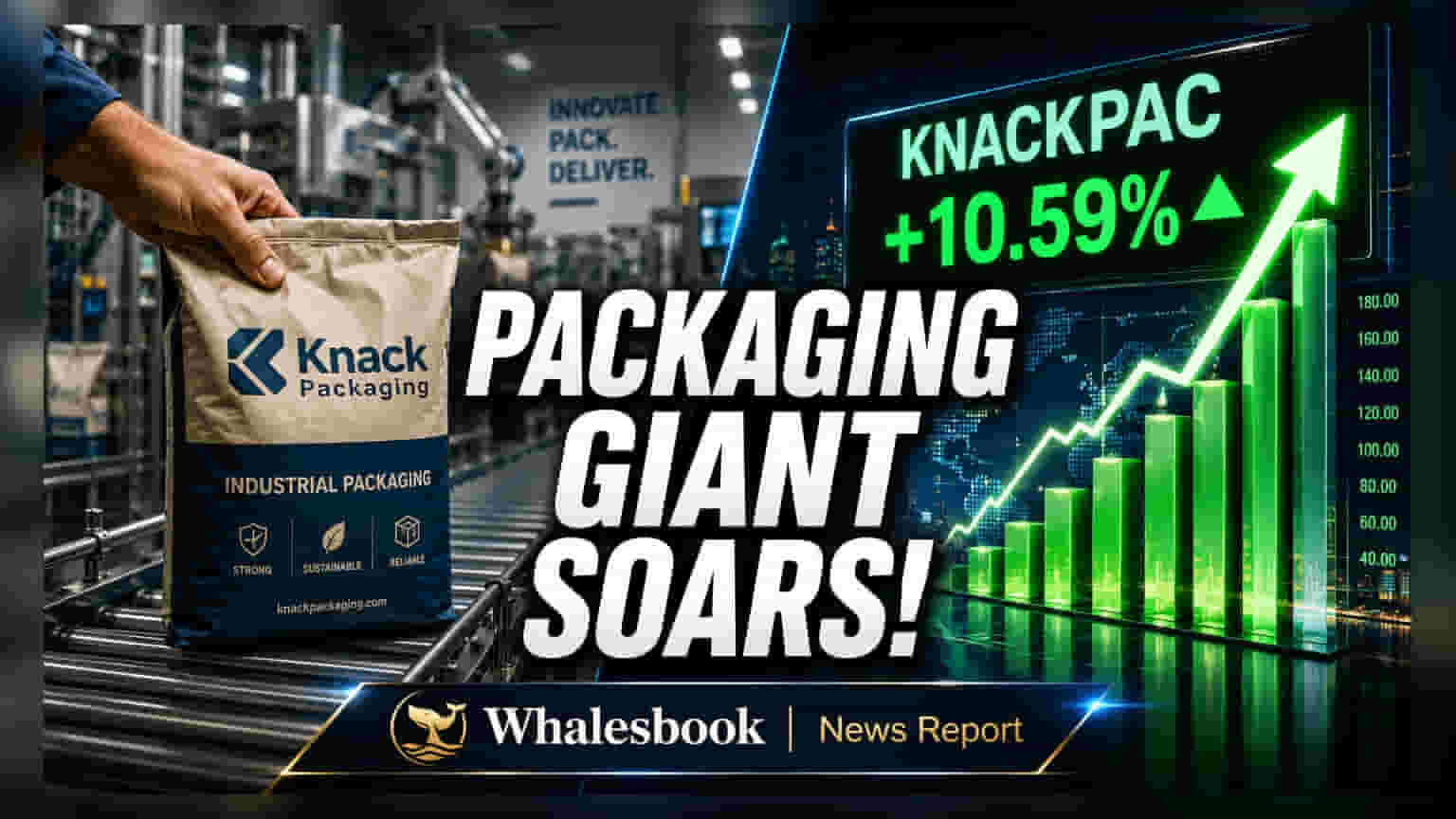
Knack Packaging shares began trading today at Rs 188 on the NSE, a 10.59% gain over its Rs 170 issue price. The company raised Rs 439.5 crore to fund a new manufacturing facility in Gujarat. Investors may track how the company executes this expansion to maintain its growth trajectory following strong subscription demand.
Knack Packaging Limited made its stock market debut on July 8, 2026, with shares opening at a premium on both the National Stock Exchange and the Bombay Stock Exchange. On the NSE, the stock started trading at Rs 188, which is 10.59% higher than the final issue price of Rs 170 per share. On the BSE, the shares opened at Rs 186.
Strong Market Entry After High Subscription
The company’s Initial Public Offering, valued at Rs 439.5 crore, saw significant demand during the subscription period between July 1 and July 3. The issue was subscribed 83.33 times, indicating high investor interest in the packaging sector. Before the public launch, Knack Packaging raised Rs 131.25 crore from anchor investors, providing a base of institutional support. Following the listing, the company’s total market capitalization is approximately Rs 2,275.99 crore.
Expansion Plans and Business Focus
Headquartered in Ahmedabad, Knack Packaging focuses on the production of specialized packaging materials, including Printed and Laminated Woven Polypropylene (PLWPP) bags and pinch bottom bags. These products are primarily used by companies in the food and pet food industries. The primary use for the funds raised from the IPO is to set up a new manufacturing unit in Borisana, Kadi, located in the Mehsana district of Gujarat.
For investors, the success of this expansion is a key monitorable. The company’s ability to complete the project on time and start production as planned will be important for managing future revenue growth. Because this is a new facility, the company will need to focus on securing enough orders to use the new capacity effectively. Additionally, like other companies in the industrial packaging space, the financial performance will depend on the cost of raw materials such as polypropylene and the company's ability to pass on price changes to its customers.
Investors may look to upcoming quarterly results and management updates to track how the new capital is being used and whether the company can sustain its profit margins as it scales up operations.