 Whalesbook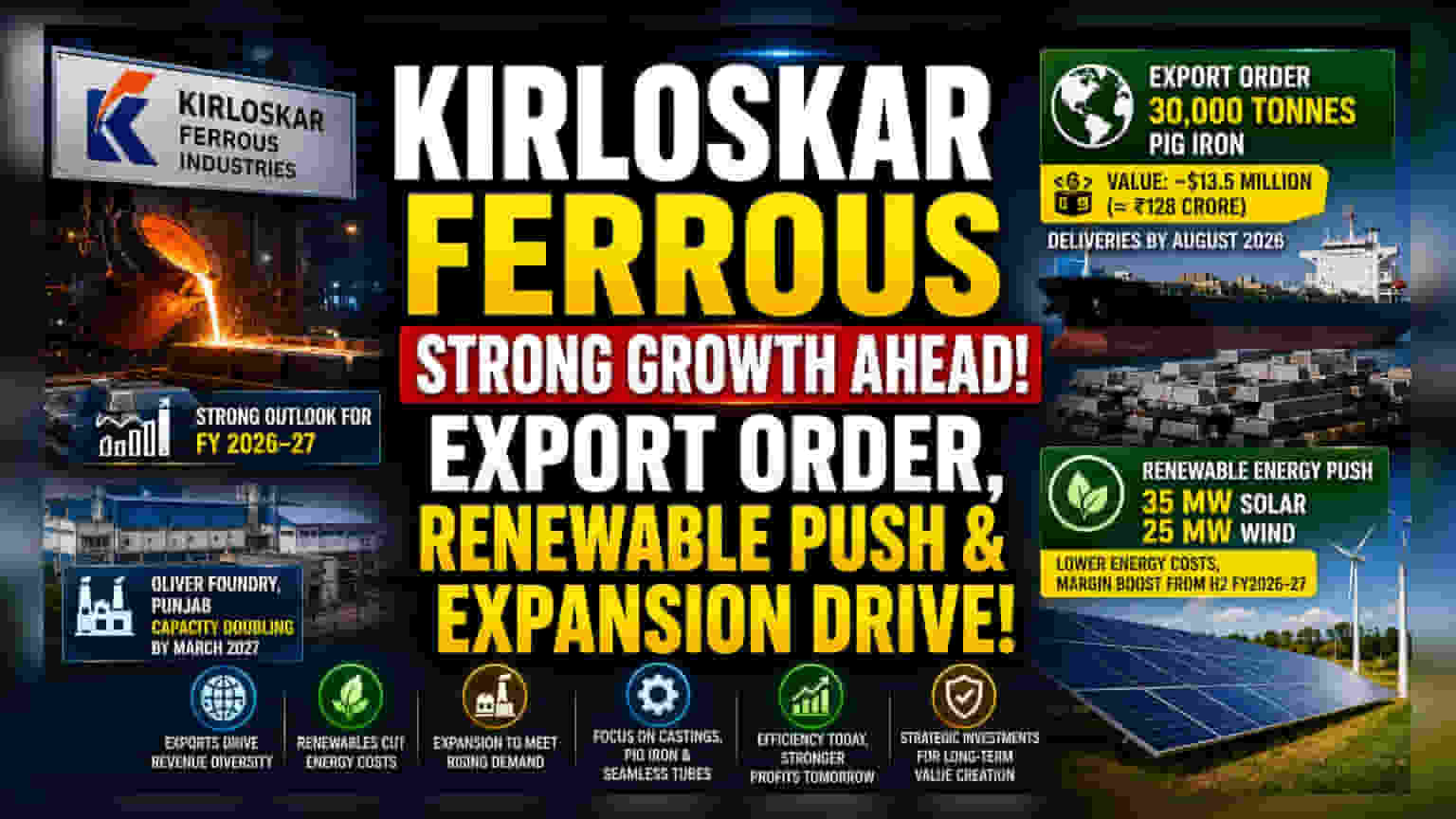
Kirloskar Ferrous Industries is targeting double-digit volume growth in FY27, backed by a new $13.5 million export order and a shift toward renewable energy to cut costs. As the company expands capacity at its Oliver Foundry, investors are weighing these growth moves against the risks of industry cyclicality and high capital spending.
What Happened
Kirloskar Ferrous Industries has shared a positive outlook for the financial year 2026-27, expecting strong volume growth across its key segments: pig iron, iron castings, and seamless tubes. The company recently announced a new export order for 30,000 tonnes of pig iron, valued at approximately $13.5 million (roughly ₹128 crore). Deliveries for this order are scheduled to be completed by August 2026.
To support this growth, the company is finalizing a renewable energy push, including 35 MW of solar and 25 MW of wind power projects. These initiatives are designed to improve profit margins by reducing energy costs, with benefits expected to show up in the company's financial performance starting from the second half of the fiscal year. Additionally, the company is doubling the capacity of its Oliver Foundry unit in Punjab by March 2027 to meet rising demand from northern India.
Why This Matters For Investors
The company is trying to balance growth with better operational efficiency. By securing international export orders, it is diversifying its revenue stream beyond the Indian market, which can help stabilize income during domestic demand fluctuations. The focus on renewable energy is a strategic move to lower the high electricity costs typically associated with manufacturing iron and steel products. For shareholders, this could lead to more stable profit margins if the cost-saving targets are met.
How Investors May Read This
While the expansion and export wins are positive, the metal industry is naturally cyclical. This means demand for pig iron and castings often moves up and down based on the health of the automotive and infrastructure sectors. Investors should monitor whether the company can maintain consistent margins while managing the large expenses required for these projects. The management's ability to integrate new capacity from the Oliver Foundry merger while keeping debt in check will be a key factor for the company's financial health.
The Capex and Debt Question
Kirloskar Ferrous has been investing heavily in new projects, including the renewable energy installations and capacity upgrades at its foundries. While these investments are intended to drive future growth and efficiency, they also put pressure on the balance sheet. Investors often keep a close watch on the company’s debt levels when it goes through a heavy expansion phase. The benefit of these investments—specifically the expected savings from lower energy costs—will be important to verify in the coming quarterly results to ensure the spending translates into higher profits.
Sector and Competitive Context
The company operates in a sector that is sensitive to raw material price changes, particularly coking coal and iron ore. Because these are global commodities, price swings can hurt profit margins. While the company has taken steps toward backward integration (owning or controlling its own supply of raw materials), it remains exposed to global price volatility. Compared to some larger steel players, Kirloskar Ferrous has a specialized focus on intricate castings and pig iron, which allows it to maintain niche relationships with automotive and tractor manufacturers, though it lacks the sheer scale of the massive integrated steel giants.
What Could Go Wrong
The primary risks for the company include potential delays in the commissioning of its renewable energy projects or the capacity expansion at the Oliver Foundry. If the projects take longer than planned, the expected cost savings may be delayed. Furthermore, if demand from the automotive or tractor sectors cools down, the increased capacity might not be fully utilized, which could hurt return on investment. The company's profitability is also exposed to fluctuations in foreign exchange rates and the volatile costs of imported raw materials.
What Investors Should Track Next
Key monitorables for the next few quarters include the progress on the 60 MW renewable energy projects (35 MW solar and 25 MW wind), the actual realization of cost savings from these initiatives, and the successful ramp-up of the Punjab foundry. Investors will also look for updates on debt levels and how the management plans to manage cash flow while continuing to fund ongoing capital expenditure.

