 Whalesbook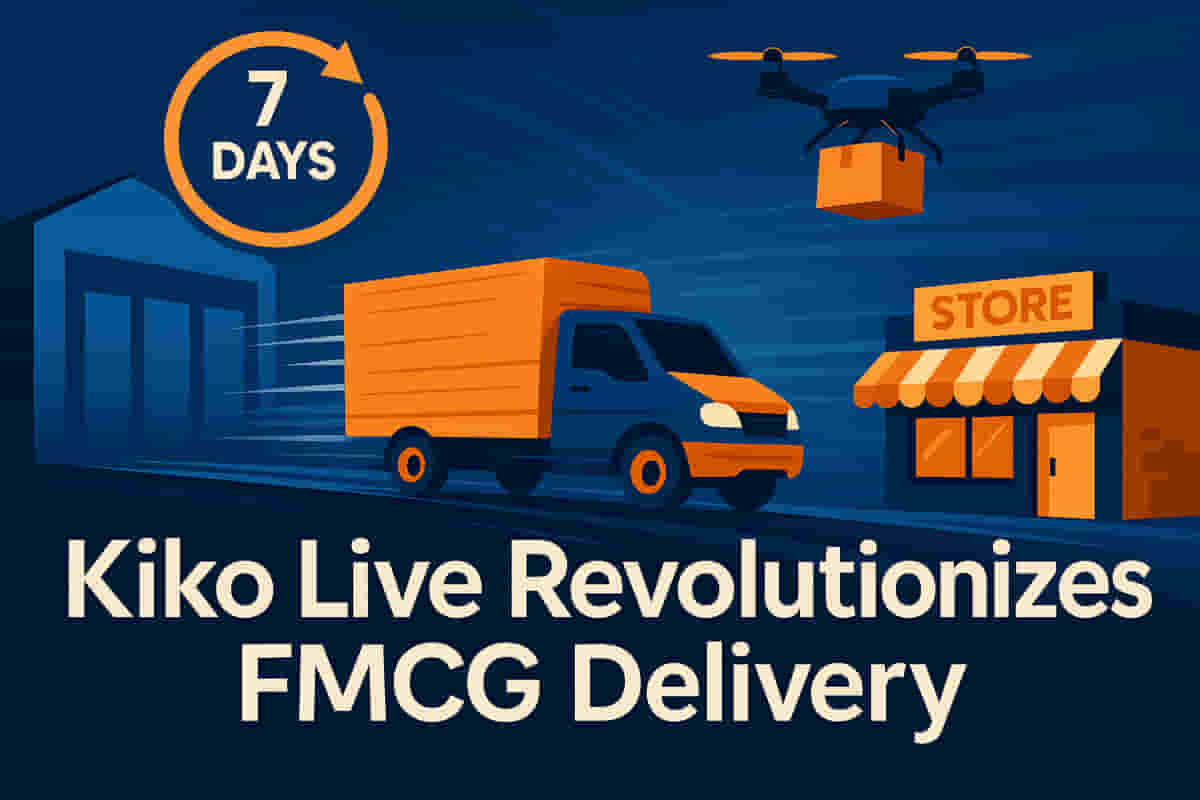
Kiko Live, a platform serving kirana retailers, has launched India's first business-to-business (B2B) quick-commerce service specifically for the fast-moving consumer goods (FMCG) sector. The service dramatically cuts down delivery times for small retailers, from the current average of up to seven days to a mere 24 hours. This is a significant development, considering that kirana stores manage approximately 80% of India's FMCG sales but often face slow restocking processes compared to larger organized retail players.
The Kiko Live platform allows these neighborhood stores to place orders directly with FMCG brands online. Deliveries are managed through an advanced on-demand logistics network that offers real-time tracking, automated routing, and digital proof of delivery. Co-founder Alok Chawla highlighted that while consumers enjoy rapid B2C deliveries, B2B distribution for retailers has remained "offline and sluggish." Kiko Live's goal is to bridge this gap, unlocking efficiency and potentially saving billions in logistics costs.
Traditional secondary distribution networks in India are often manual and slow, leading to stockouts and inefficiencies. Kiko's automated system handles everything from order synchronization to dispatch, using a shared-capacity model to reduce costs for distributors and ensure faster replenishment for retailers. The company is currently operational in Mumbai and plans to expand to Pune, Hyderabad, and the National Capital Region soon. Its platform is API-ready to integrate with existing systems.
Impact:
This initiative could significantly boost the operational efficiency and profitability of FMCG brands and kirana retailers by streamlining the supply chain. It may lead to better inventory management, reduced stockouts, and improved working capital cycles. The ability for brands to reach more retailers directly can also enhance market share and promotional effectiveness. The rating for the potential impact on the FMCG supply chain and related businesses is 8/10.
Difficult Terms:
Kirana retailers: Small, independently owned neighborhood grocery stores common in India.
B2B (Business-to-Business): Transactions or services conducted between two businesses, rather than between a business and a consumer.
Quick-commerce: A type of e-commerce that emphasizes extremely fast delivery times, often within minutes or hours.
FMCG (Fast-Moving Consumer Goods): Everyday items sold quickly and at relatively low cost, such as packaged foods, beverages, toiletries, and over-the-counter drugs.
Secondary distribution networks: The logistics process that moves goods from a central warehouse or distributor to smaller retailers.
API (Application Programming Interface): A set of rules and protocols that allows different software applications to communicate with each other.