

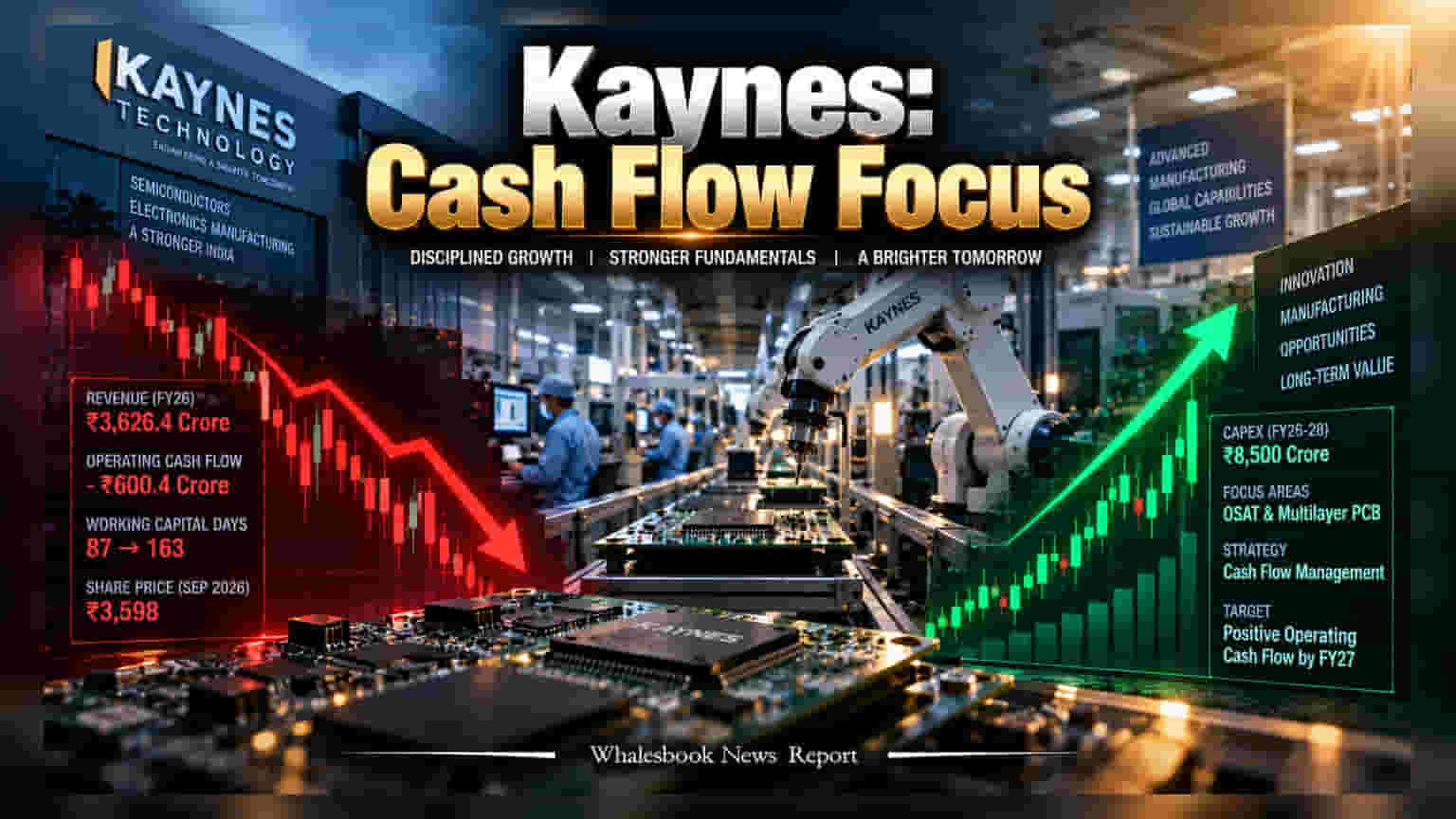
Kaynes Technology is prioritizing cash collection over rapid revenue expansion after reporting a negative operating cash flow of ₹600.4 crore in FY26. The company is moderating growth in its smart-metering business to ease mounting working capital pressures. Investors are closely watching how management balances this operational discipline with a planned ₹8,500 crore capital expenditure program.
Kaynes Technology is changing its business strategy as it attempts to address recent financial challenges. The company is moving away from an aggressive pursuit of revenue growth and is now prioritizing cash flow management. This strategic shift follows a period where the company’s performance failed to meet market expectations, leading to a noticeable impact on its share price, which was trading around ₹3,598 in early September 2026.
In the fiscal year 2026, Kaynes Technology reported a revenue of ₹3,626.4 crore. More concerning for investors was the company’s operating cash flow, which stood at a negative ₹600.4 crore. In simple terms, this means the company spent more cash on its day-to-day operations than it collected from its customers. For investors, this metric is a critical indicator of a company’s ability to generate its own funds, and a negative figure often signals that the business is consuming rather than creating liquid capital.
The root of this cash flow pressure lies in rising working capital requirements. The company has a significant amount of money tied up in trade receivables, meaning that customer payments are not coming in as quickly as the company incurs costs. This issue is particularly visible in the smart-metering segment. To address this, the company has seen its working capital cycle stretch significantly, with working capital days rising from 87 days in fiscal 2025 to 163 days by the first quarter of fiscal 2027. Management has now decided to slow down growth in this specific segment, favoring a more controlled, manufacturing-led approach to ensure that cash collections improve.
While trying to fix its current cash position, the company remains committed to a massive capital expenditure program. It has announced plans to spend ₹8,500 crore through fiscal year 2028. This money is earmarked for high-growth areas such as OSAT (a specialized process in semiconductor manufacturing) and multilayer PCB manufacturing. While these projects are intended to secure the company’s long-term future, they bring significant risks. Investors are increasingly focused on the execution risk associated with these large investments, as well as the potential for depreciation charges to impact profit margins in the near term.
Management aims to reach positive operating cash flow by the end of fiscal year 2027, but the market is likely to remain cautious until they see consistent evidence of improvement. The company’s ability to manage its liquidity while continuing to build out its new manufacturing units will be the key test. Moving forward, investors may track the company’s quarterly updates for signs of better cash conversion, the status of collections in the smart-metering business, and progress on the commissioning of new facilities.