

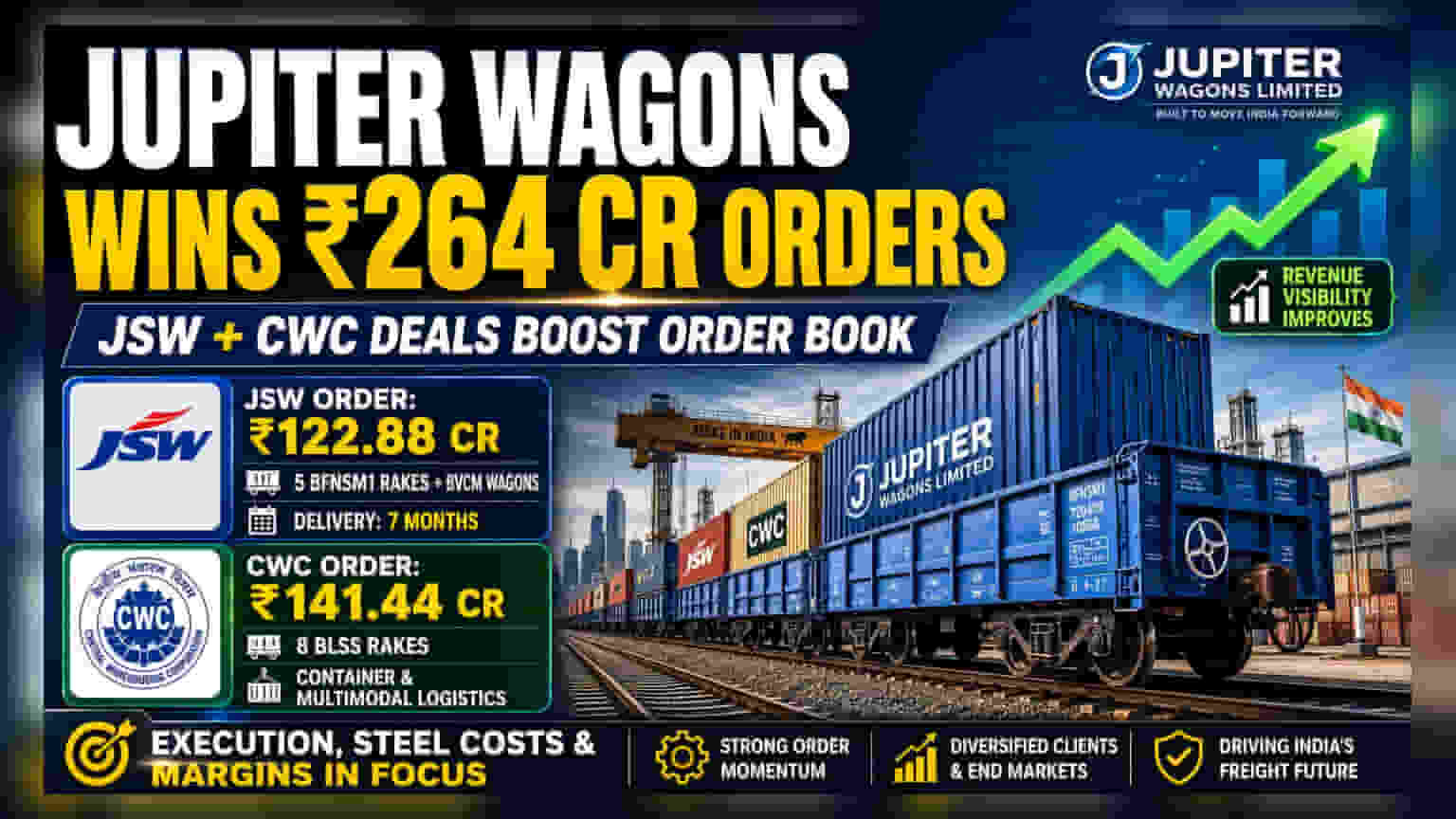
Jupiter Wagons has secured orders worth ₹264.32 crore from JSW Rail Logistics and Central Warehousing Corporation for the supply of freight wagons. These contracts provide revenue visibility and align with the company's focus on expanding its manufacturing capacity for the rail logistics sector. Investors will monitor the company's ability to execute these deliveries within the stipulated timelines.
What Happened
Jupiter Wagons Ltd has secured two major contracts for the manufacturing and supply of freight wagons, totaling ₹264.32 crore. The company received a Letter of Intent from JSW South Rail Logistics Private Limited for a ₹122.88 crore order, which involves supplying five BFNSM1 rakes and associated BVCM wagons. This specific order has a delivery timeline of seven months. Additionally, the company secured a ₹141.44 crore contract from the government-owned Central Warehousing Corporation (CWC) to supply eight BLSS rakes. This CWC order includes 32 BLSS-A wagons, 352 BLSS-B wagons, and eight brake vans, which are designed for container and multimodal logistics operations.
Why This Matters for Revenue
For a manufacturing company like Jupiter Wagons, these orders are essential for maintaining steady revenue flow and utilizing factory capacity. Winning repeat or new contracts from both private logistics players and government agencies demonstrates the company's capability to meet diverse freight requirements. These orders add to the company's existing backlog, providing clearer visibility into upcoming quarterly revenues. By securing contracts that span different types of rolling stock, the company is also diversifying its manufacturing output to align with the specific needs of modern rail freight.
The Execution and Margin Test
While order wins are positive, the financial impact for investors depends on how effectively Jupiter Wagons manages execution. Railway wagon manufacturing is sensitive to the cost of raw materials, particularly steel. If steel prices fluctuate significantly, profit margins can come under pressure unless the company has pass-through mechanisms in its contracts. Furthermore, these orders require timely delivery to avoid potential penalties or cost overruns. Investors often watch whether the company can maintain its operating margins while handling higher volumes, as efficiency in production is key to turning order book value into actual profit.
The Rail Infrastructure Context
These orders reflect a broader trend in India where logistics are increasingly shifting from road to rail. Government initiatives, such as the PM Gati Shakti National Master Plan, aim to improve logistics efficiency, which naturally supports demand for specialized rolling stock. As major logistics companies and public sector units expand their container and freight networks, manufacturers like Jupiter Wagons are positioned to benefit. However, the sector remains competitive, with other established players also vying for these large-scale railway contracts. The company's growth is tied to the pace at which these infrastructure projects are commissioned and the demand for high-capacity freight wagons remains strong.
What Investors Should Track
Going forward, the primary monitorables for investors include the execution progress of these specific JSW and CWC orders. Delays in delivery or supply chain bottlenecks could affect the timeline for recognizing revenue. Additionally, investors should look for updates in future quarterly filings regarding raw material costs and how they are impacting EBITDA margins. Management commentary on the current utilization levels of their manufacturing facilities will also provide insight into how much further the company can scale without needing significant new capital spending.