

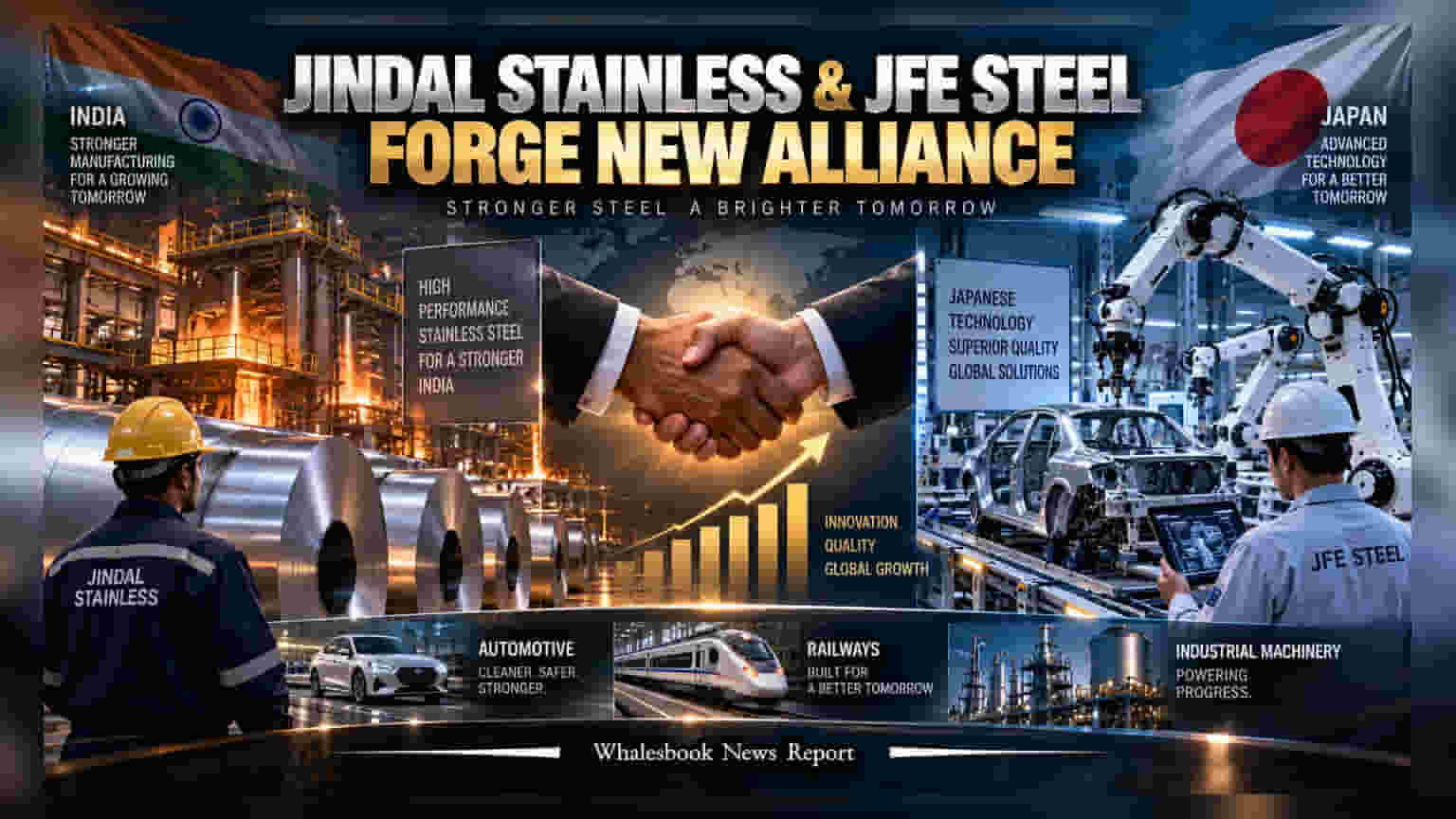
Jindal Stainless has signed a technical assistance agreement with Japan’s JFE Steel to refine its production of ferritic stainless steel. The move aims to improve quality for automotive and infrastructure applications. Investors are monitoring how this technology transfer influences operational efficiency and profit margins, especially as the company balances its Q1 FY27 financial results.
Jindal Stainless has entered into a technical assistance agreement with Japan’s JFE Steel Corporation to enhance its manufacturing processes and product quality. This partnership focuses specifically on the production of ferritic stainless steel grades, which are increasingly used in automotive manufacturing, railway coach construction, and industrial machinery. By adopting JFE Steel’s methodologies, the company aims to standardize its high-grade production output to better meet international demand.
Targeting Efficiency in High-Growth Sectors
The strategic focus of this collaboration is to strengthen the company’s position in sectors that require durable and corrosion-resistant materials. As infrastructure and automotive industries continue to modernize, the demand for high-quality stainless steel has risen. Through this partnership, the company intends to refine its internal processes to produce more consistent ferritic grades, which can help in competing more effectively for high-value contracts. Following the announcement, the company’s stock saw a modest increase of approximately 0.29%.
Financial and Operational Context
This move comes at a time when Jindal Stainless is balancing expansion with financial stability. In its Q1 FY27 results, the company reported consolidated net revenue of ₹11,279 crore. On the balance sheet, the company’s net debt stood at ₹2,950 crore. The management’s focus remains on maintaining a healthy capital structure, with a net debt-to-equity ratio of 0.14x as of the latest quarter. This relatively low debt level gives the company room to invest in technology upgrades like this collaboration without placing undue stress on its cash flow.
Managing Industry Risks
While the partnership is designed to improve product quality, the company continues to operate in a sector facing specific external pressures. A key risk for domestic stainless steel producers remains the inflow of substandard imports, particularly those rerouted through ASEAN countries, which can exert pricing pressure on local manufacturers. Additionally, the company faces operational risks related to supply chain stability, such as the availability of industrial gases required for high-temperature steel processing, an issue that had impacted performance in the previous quarter. Investors will now track how quickly the technical improvements are implemented and whether they result in measurable gains in operating margins or the ability to secure larger orders in the automotive and infrastructure segments.