 Whalesbook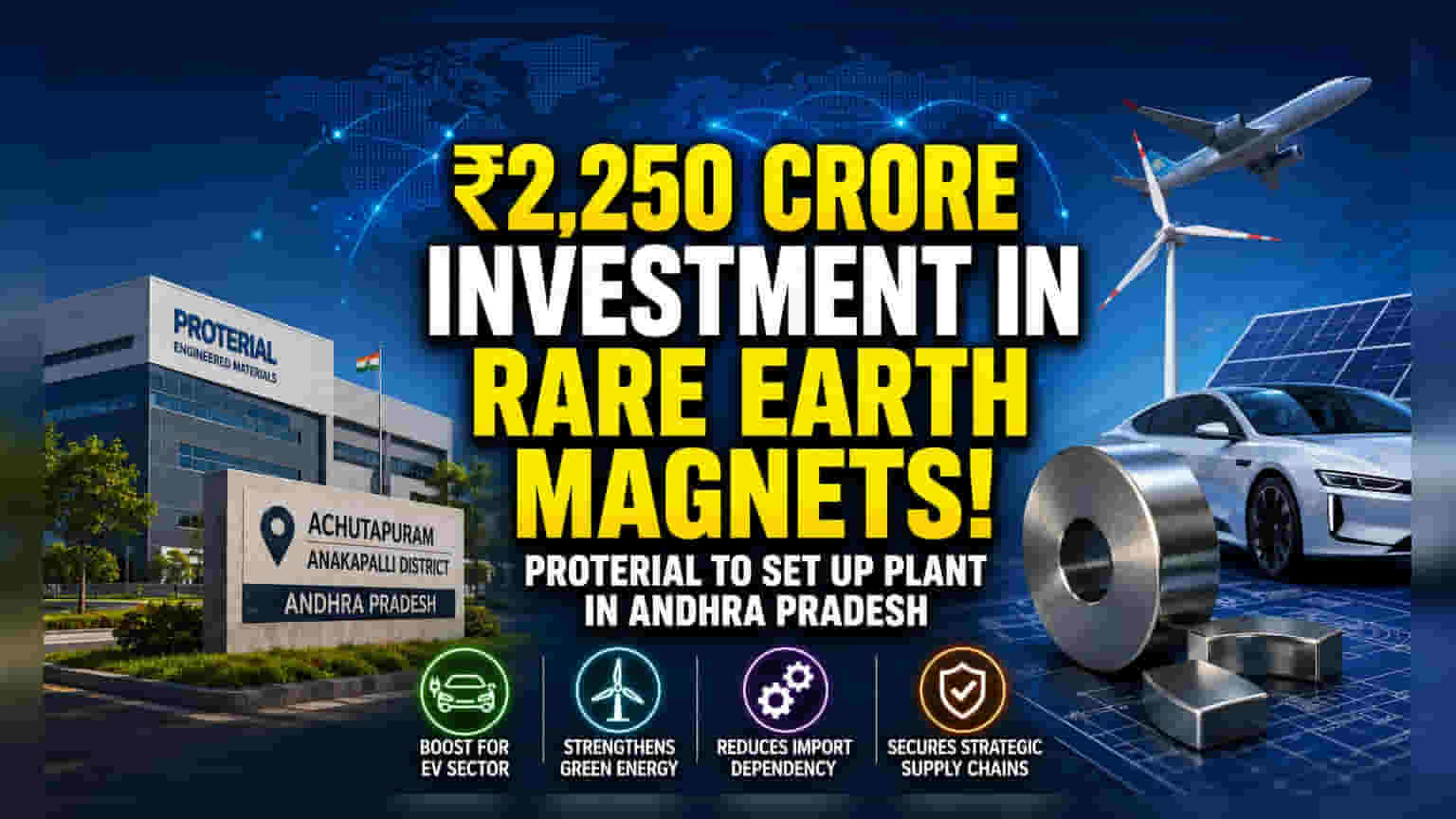


Japan’s Proterial is investing ₹2,250 crore to build a rare earth magnet plant in Andhra Pradesh. The facility will produce sintered NdFeB magnets essential for EVs and wind energy, helping India reduce its reliance on Chinese imports. This move strengthens the domestic EV supply chain, providing a strategic boost for Indian green energy and auto companies.
What Happened
Japan-based Proterial, formerly known as Hitachi Metals, has announced a major investment of ₹2,250 crore to establish a manufacturing facility for rare earth permanent magnets in Andhra Pradesh. The plant will be located in Achutapuram, in the Anakapalli district. The State Investment Promotion Committee has approved the project, which aims to produce 1.2 kilotonnes per annum of sintered neodymium-iron-boron (NdFeB) magnets. These specialized magnets are a vital component for high-performance motors used in electric vehicles, wind turbines, aerospace, and defense applications.
Why This Matters For Investors
For the Indian market, this development is significant because of the supply chain shift it represents. Currently, India relies heavily on imports for these magnets, with China being the dominant global supplier. By localizing the production of high-tech NdFeB magnets, the company is aiming to reduce this dependency.
While Proterial is not a publicly listed company in India, this move has a direct impact on Indian stock market participants. Many Indian companies in the electric vehicle (EV) and renewable energy sectors have been struggling with supply chain vulnerabilities. Having a local, high-quality manufacturer of these essential components can help domestic automakers and wind turbine manufacturers secure a stable supply chain, potentially reducing their cost of goods and logistical hurdles in the long run.
The Business Context
Proterial is a recognized global player in advanced materials. The company's decision to enter the Indian manufacturing space follows the central government's efforts to promote the production of critical components under various incentive programs. These magnets are not just simple hardware; they are the heart of permanent magnet motors, which are highly efficient and necessary for modern electric mobility.
The Rare Earth Supply Chain Challenge
The most critical aspect to understand about this industry is the raw material bottleneck. Rare earth elements are not widely available in every country. Processing them requires sophisticated technology and environmentally sensitive handling. Even with a local manufacturing plant, the company will face the challenge of securing a consistent supply of raw rare earth materials. Historically, China has dominated both the mining and processing of these materials. If global supply chains face disruption or if raw material prices spike, the operational costs for such a plant could be pressured. Investors should be aware that the success of this project depends heavily on the company's ability to secure raw material access and maintain high-quality production standards at competitive costs compared to imported Chinese alternatives.
How Investors May Read This
Investors should not view this as a direct stock opportunity in Proterial, as it is a private entity. Instead, the real value for investors lies in the broader ecosystem. As this facility comes online, it may improve the profit margins or supply security for Indian EV manufacturers and wind energy companies that currently import these magnets. This could be a positive factor for the long-term cost structures of companies in the auto and green energy sectors.
What Investors Should Track
Moving forward, the key monitorables for investors will be the project's timeline and the commissioning date. Tracking the company’s ability to secure raw material supply chains will be crucial, as this is the primary risk for magnet manufacturers globally. Additionally, investors should watch for any government policy updates or incentives that might be granted to domestic magnet producers, as this will determine the competitive landscape for companies trying to compete with established global players.