 Whalesbook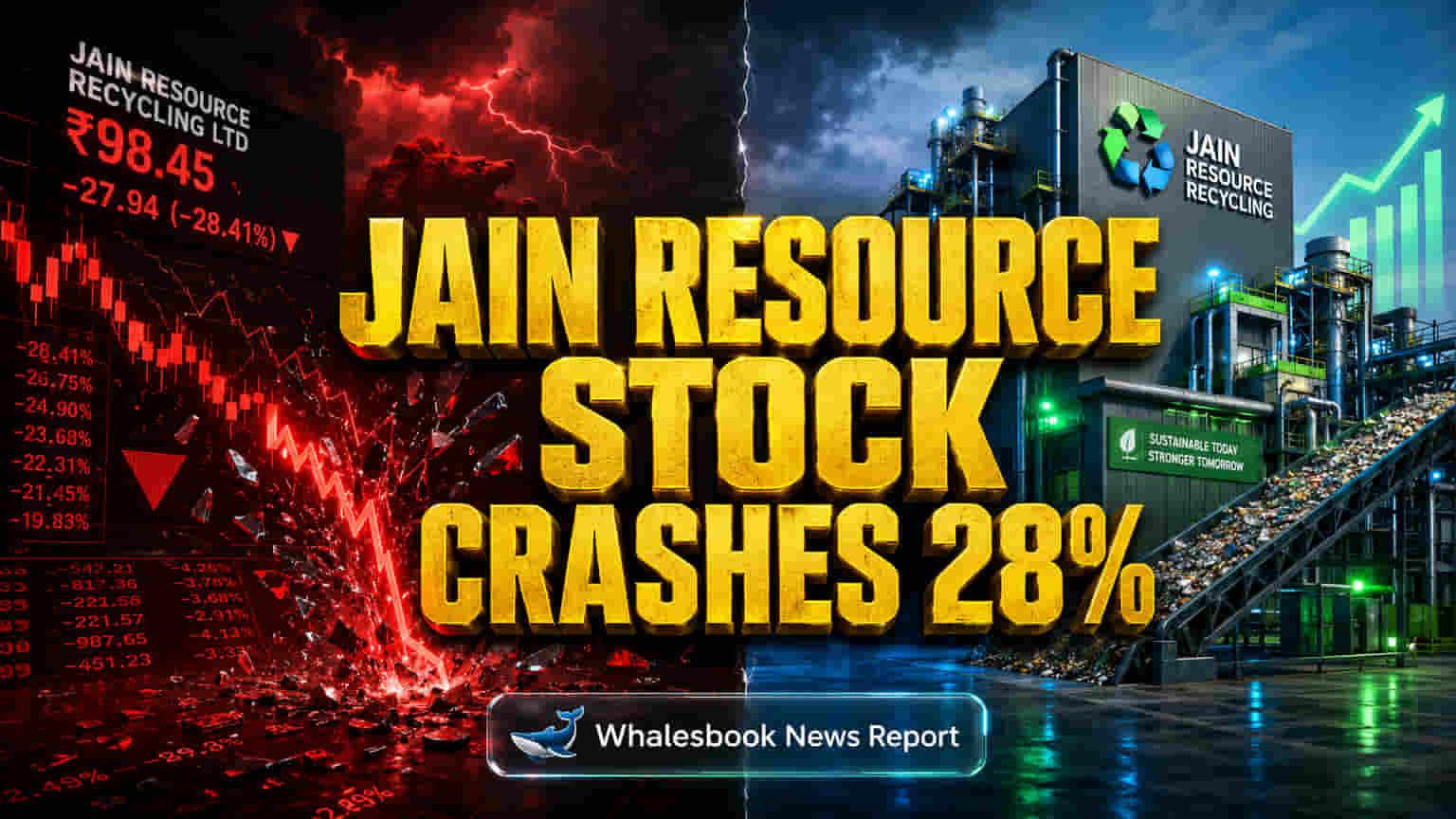


### The Revenue Surge and Profit Slump
Jain Resource Recycling (JRRL) revealed Q4 FY26 results on May 18, 2026, showcasing a remarkable 76.42% year-over-year surge in consolidated revenue from operations to ₹3,104.98 crore [16]. This top-line growth, driven by higher volumes across aluminum alloys, lead alloy ingots, and copper recycling, also pushed full-year FY26 revenue up 48.43% to ₹9,543.11 crore [16]. However, this expansion was overshadowed by a sharp sequential contraction in profitability. Net profit for the quarter plummeted 52% quarter-over-quarter to ₹66.03 crore from ₹126.25 crore in Q3 FY26 [1, 23]. While net profit increased 25.70% year-over-year to ₹66.03 crore [16], the sequential decline highlighted significant margin erosion. Profit before tax also fell sharply to ₹89.9 crore from ₹174.4 crore in the prior quarter [input]. The market responded with a 15.78% drop in JRRL's stock on May 19, 2026, contributing to an approximate 28% decline over two days [input].
### External Headwinds and Operational Costs
Motilal Oswal Financial Services identified copper price volatility, constrained scrap availability, and disruptions linked to the West Asia crisis as primary drivers of the margin pressure [input]. These factors, exacerbated by elevated logistics costs, impacted EBITDA per metric ton. The West Asia crisis, in particular, has significantly disrupted supply chains for recycled metals, leading to elevated war-risk and freight charges, making exports less viable [2, 18]. While management and some analysts suggest these impacts are temporary and expected to normalize in Q1 FY27 as shipping routes adjust and longer-term contracts take effect [input], the company also reported increases in finance costs and other operating expenses quarter-over-quarter [input]. These underlying cost pressures, coupled with external shocks, contributed to a severe operating margin contraction, with the operating margin (excluding other income) falling to 3.54% in Q4 FY26 from 7.17% in Q3 FY26 [23].
### Valuation Under Pressure
JRRL's stock has historically traded at a premium valuation. As of May 8, 2026, its price-to-earnings (P/E) ratio stood at 51x, and later 57x by May 15, 2026, significantly higher than the Indian Metals and Mining industry average of 22.3x and a peer average of 28.7x [4, 20]. Even when compared to its estimated fair P/E of 37.2x, JRRL appeared expensive [4]. While the company has demonstrated strong revenue growth and historical earnings growth of 30.7% annually, outperforming the metals and mining sector's 19.9% growth, the recent sequential profit decline questions the sustainability of these high multiples [31]. The market's sharp sell-off suggests investors are re-evaluating whether the company can grow into its elevated valuation given the deteriorating operational metrics and profit generation [23].
### Divided Analyst Consensus
Analyst sentiment towards JRRL is notably bifurcated. While Motilal Oswal Financial Services maintains a 'Buy' rating with a price target of ₹560, it reduced FY27 and FY28 earnings estimates by 15% and 16%, respectively [input]. Other sources indicate a consensus 'Buy' from two analysts with an average 12-month price target of ₹491.00, but with a high estimate of ₹560 [5]. However, a contrasting view from Bitget, citing 62 analysts, indicates an overall 'Sell' consensus with a 1-year price target of ₹833.98, reflecting a significant upside potential that clashes with the current sell-off [14]. MarketsMOJO downgraded its 'mojo grade' from Buy to Hold on May 8, 2026, reflecting a more cautious stance due to recent financial performance [17]. Some analysis suggests the premium valuation lacks fundamental justification without sustained margin improvement, indicating potential downside risk [23].
### The Bear Case: Lingering Risks and Sustainability
The steep stock decline underscores investor concerns that the margin pressures may not be as temporary as initially portrayed. Geopolitical tensions in West Asia continue to pose risks to global supply chains for metals, potentially leading to sustained higher logistics costs and shipping disruptions [18, 25]. The metal recycling market itself faces challenges like volatile scrap supply and quality fluctuations, which increase processing costs [10]. While JRRL plans a new plastic recycling facility by Q3 FY27 with a ₹15 crore capex [input], this diversification does little to immediately address the core issues in its non-ferrous metals segment. The company's rising finance costs also add another layer of concern, especially for a cyclical commodity-linked business [17].
### Future Outlook and Strategic Investments
Motilal Oswal anticipates a gradual recovery in profitability for the copper segment in Q1 FY27, citing normalization in copper realization formulas and improving material availability [input]. The company is also investing in future growth with plans for a new plastic recycling facility, expected to be operational by Q3 FY27 [input]. However, the immediate focus for investors will be on JRRL's ability to navigate the volatile commodity prices and geopolitical uncertainties, stabilize its margins, and demonstrate consistent profitability to justify its premium valuation. The divergence in analyst opinions and the sharp market reaction suggest a high degree of uncertainty surrounding the company's near-term prospects.