

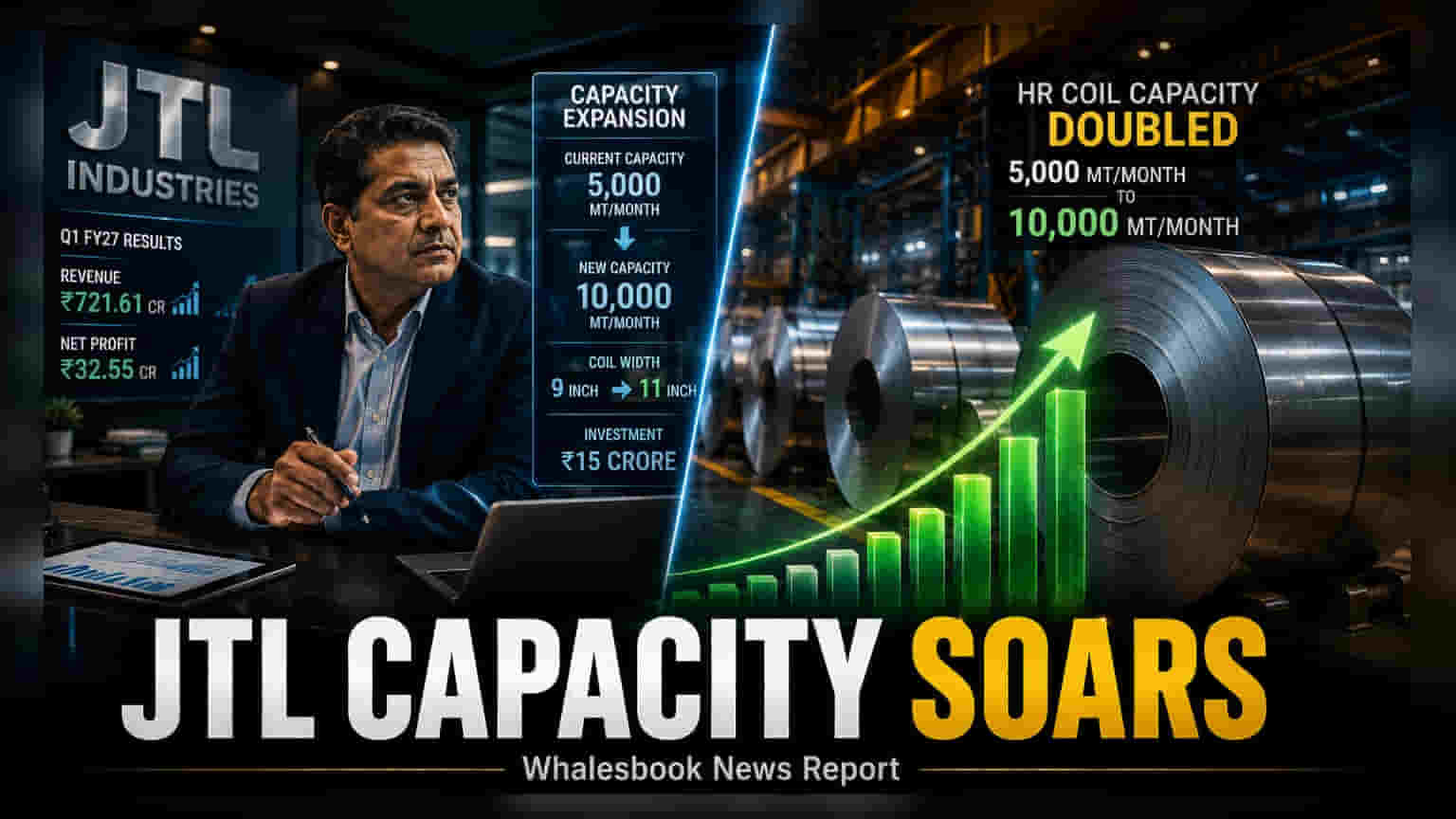
JTL Engineering is investing Rs 15 crore to double its monthly HR coil production to 10,000 MT by Q4 FY27. The project aims to increase coil width capability and support backward integration. Investors may track the project's execution timeline and its impact on profit margins amidst raw material price volatility.
JTL Engineering, a subsidiary of JTL Industries, has announced a capital spending plan of Rs 15 crore. The project is designed to double the company's hot-rolled (HR) coil manufacturing capacity, which is a key component in the production of steel tubes and pipes.
The expansion will increase the manufacturing output from the current 5,000 metric tons per month to 10,000 metric tons per month. Additionally, the company is increasing its maximum coil width capability from 9 inches (228.6 mm) to 11 inches (279.4 mm). This change is intended to help the company serve a broader range of customer needs and product specifications.
For JTL Industries, this move is part of a strategy to strengthen its backward integration. By producing its own HR coils using sponge iron and steel scrap, the company aims to better manage its raw material supply chain. In the first quarter of fiscal year 2027, JTL Industries reported consolidated revenue of Rs 721.61 crore and a net profit of Rs 32.55 crore. The Rs 15 crore investment is relatively modest compared to the company’s recent quarterly earnings, suggesting the project is unlikely to strain the company's balance sheet significantly.
While expansion is often seen as a growth signal, the steel sector faces inherent risks. The cost of raw materials like sponge iron and steel scrap is volatile. If these input costs rise, the company's profit margins could come under pressure if it cannot pass the added costs on to customers. Furthermore, the company's performance is tied to the demand for structural steel tubes and pipes. Any slowdown in infrastructure spending or construction activity can negatively affect the demand for these products.
Investors may monitor the progress of this project as it approaches the scheduled commissioning date in the fourth quarter of fiscal year 2027. Future company disclosures and quarterly financial reports will be important to see if this increased capacity leads to better efficiency and how it impacts the company’s overall profitability in the coming years.