 Whalesbook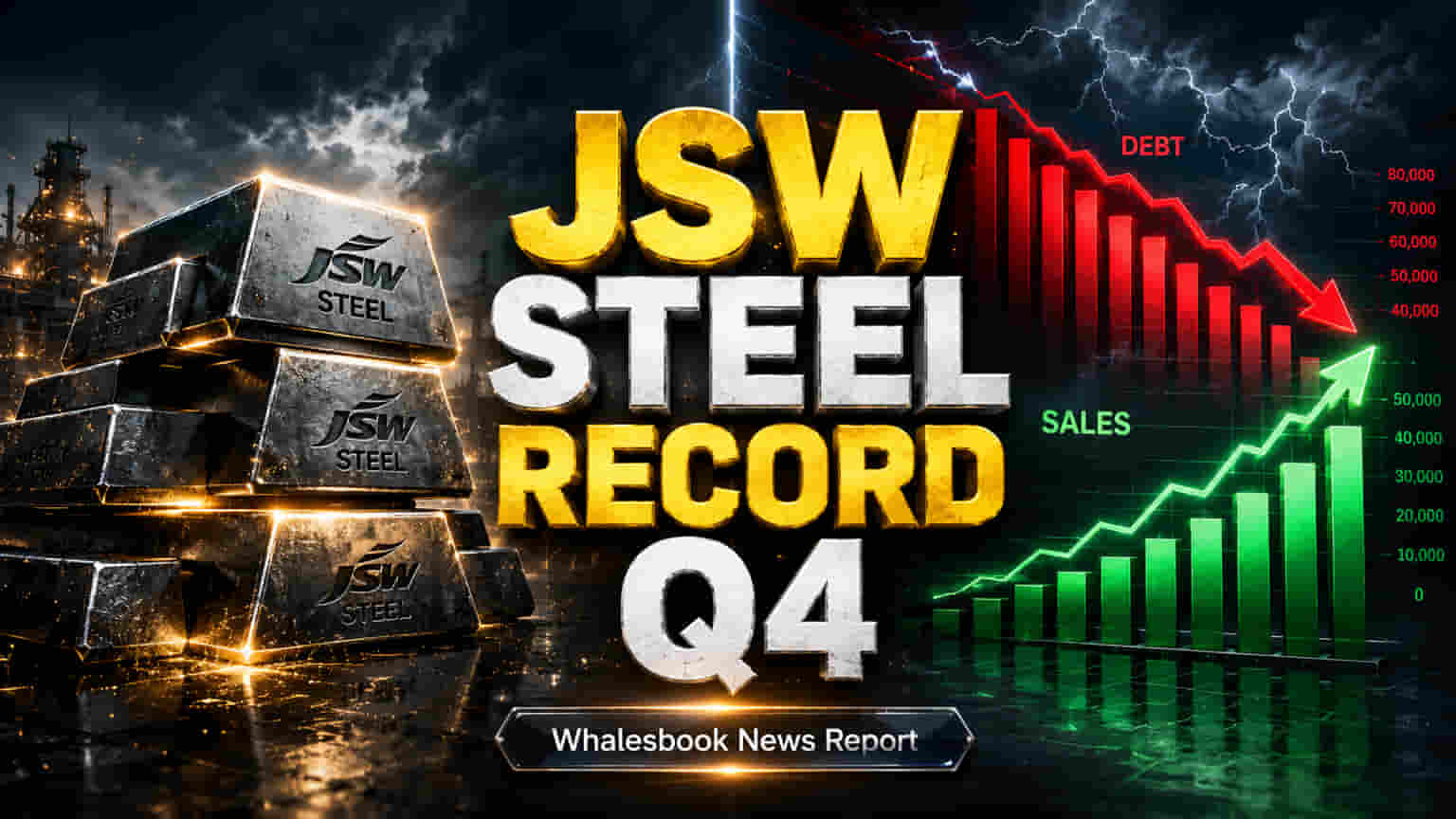


JSW Steel's fourth quarter of fiscal year 2026 marked a key moment, featuring strong deleveraging and high profits. A substantial one-time gain from the Bhushan Power and Steel Limited (BPSL) joint venture sale significantly boosted its financial results. While this improved the company's balance sheet and paved the way for ambitious growth plans, several challenges remain. These include sustaining profitability, executing major capacity expansions, and navigating significant regulatory scrutiny.
Balance Sheet Overhaul
JSW Steel significantly strengthened its balance sheet. The company slashed its net debt by about Rs 30,000 crore, helped by the Rs 18,051 crore profit from selling its stake in the BPSL joint venture. This brought the Net Debt/EBITDA ratio down to 1.81x from 3.34x last fiscal year. This deleveraging effort provides a solid financial footing for its major capital expenditure plans. For the full fiscal year 2026, total net debt was Rs 53,870 crore.
Operational Performance
Operationally, the company achieved its highest-ever quarterly consolidated steel sales at 7.97 million tonnes, up 6% year-over-year. Revenues rose 14% to Rs 51,180 crore, supported by a 7.3% increase in price realization per tonne to Rs 64,216. Adjusted EBITDA surged 50% year-over-year to Rs 9,713 crore, with a strong 19% EBITDA margin for the quarter. For the full fiscal year 2026, consolidated sales reached 29.63 million tonnes. Revenues grew 10% to Rs 1,85,470 crore, and adjusted EBITDA increased by 39.5% to Rs 32,048 crore, with margins at 17.3%.
Aggressive Expansion Goals
JSW Steel is pursuing aggressive growth, aiming for a total capacity of 80 million tonnes by FY32/33. This expansion includes acquiring BMM Ispat (adding 0.9 mtpa capacity) and building a new 6 mtpa greenfield plant in Odisha with POSCO. For FY27, JSW Steel plans capital investments of Rs 22,000-24,000 crore, part of an approved Rs 1.26 lakh crore growth plan extending to FY32. Projects like Dolvi Phase 3 and Vijayanagar BF3 are expected to add Rs 9,000-12,000 crore in EBITDA.
Market Valuation and Sector Challenges
JSW Steel currently trades at roughly 19.1x FY28 P/E and a projected 10.4x FY27E EV/EBITDA. These valuations suggest market confidence in its growth prospects and improved finances. However, the picture is mixed. While JSW Steel leads its peers like Tata Steel and SAIL in market value, its earnings have historically declined annually by 21.1%, contrasting with industry growth of 20.7%. Despite this, its share price has seen significant appreciation over the past three years. Competitors such as Tata Steel have recently performed better, outperforming JSW Steel notably in the last 12 months. While JSW Steel's debt levels are improving, the broader Indian steel sector faces challenges. Global steel demand is expected to grow moderately in 2026, with India as a key driver. Yet, rising raw material costs for iron ore and coking coal, plus potential export quota tightening to Europe, add considerable uncertainty. Analyst price targets for JSW Steel are divided, with some seeing upside and others expecting a downside, reflecting doubts about sustaining growth and profitability after one-time gains.
Key Risks and Concerns
JSW Steel's ambitious expansion plans carry substantial execution risks. The company's historical earnings decline and its reliance on future capacity to offset rising input costs and maintain leverage below 3.0x EBITDA are critical assumptions. A major concern is the ongoing antitrust investigation by the Competition Commission of India (CCI) into alleged price collusion involving JSW Steel, Tata Steel, SAIL, and 25 other entities from 2015 to 2023. The probe has named 56 senior executives, including JSW's Managing Director Sajjan Jindal. JSW has denied the allegations, but potential fines, possibly up to three times profits or 10% of annual turnover, represent a significant financial and reputational risk. This investigation, which began in 2021 following builder complaints, could materially impact the company's future performance and valuation, potentially overshadowing the benefits of deleveraging and capacity growth.
Future Outlook
For FY27, JSW Steel forecasts production of 29.75 mt and sales of 28.6 mt. Management expects new capacities to boost EBITDA and aims to keep leverage below 3.0x net debt to EBITDA, even with anticipated increases in coking coal and iron ore costs in Q1 FY27. The company also ranks highly for sustainability within the global steel sector. Analyst consensus is generally a 'Moderate Buy,' with average price targets suggesting limited upside or potential downside from current levels. This indicates a cautious market outlook amidst the company's strategic expansion and regulatory uncertainties.