 Whalesbook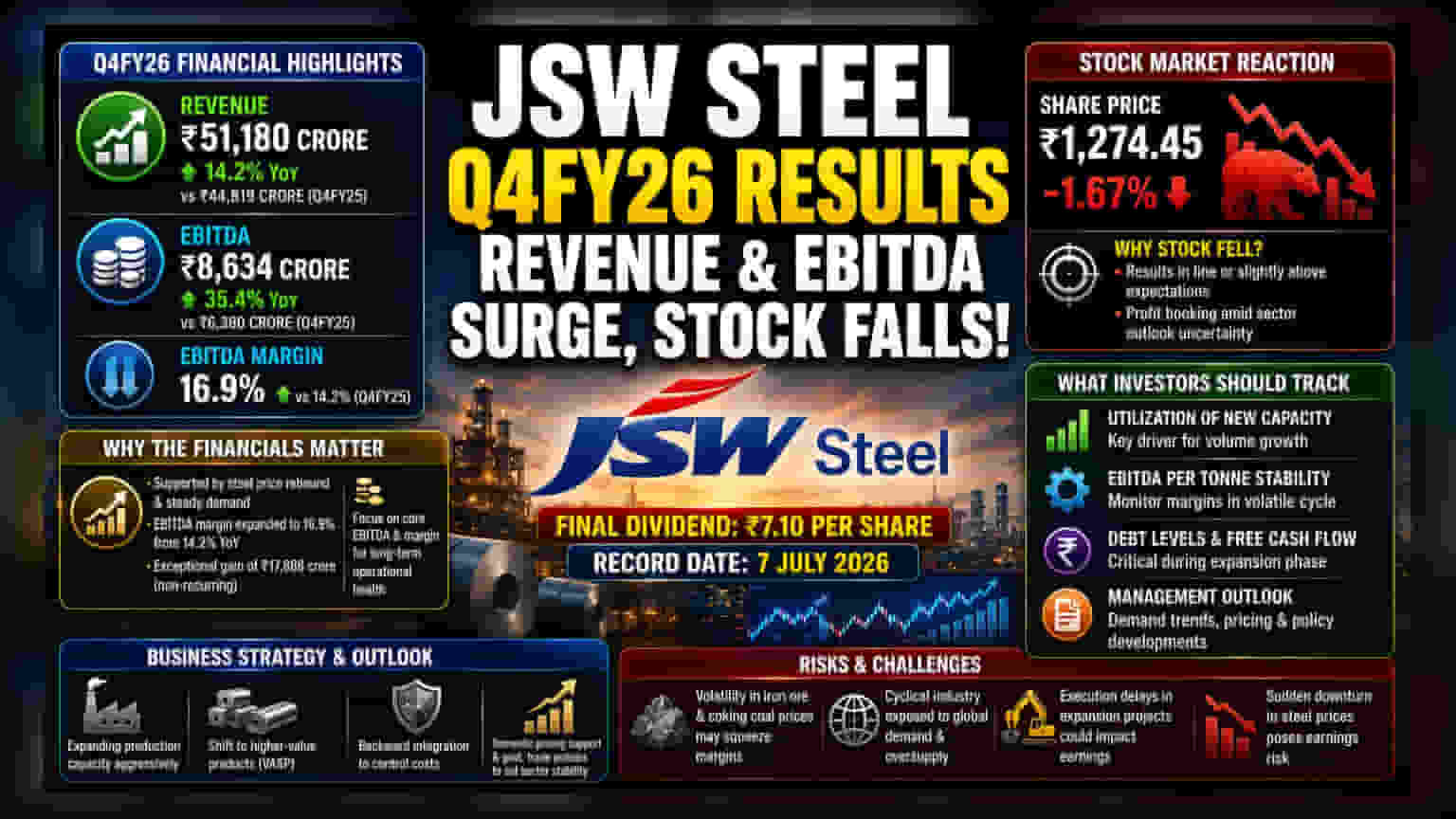


JSW Steel reported a 14.2% rise in Q4FY26 revenue to Rs 51,180 crore and improved EBITDA margins of 16.9%. Despite the growth and a dividend of Rs 7.10 per share, the stock fell 1.67%. Investors are balancing the strong quarterly performance against broader industry risks, including input cost volatility and cyclical demand trends.
What Happened
JSW Steel released its financial results for the quarter ending March 2026. The company reported revenue of Rs 51,180 crore, reflecting a 14.2% increase compared to Rs 44,819 crore in the same quarter of the previous year. Core operational profitability also showed growth, with EBITDA reaching Rs 8,634 crore, a 35.4% rise year-on-year. Alongside these figures, the company announced a final dividend of Rs 7.10 per share, with the record date set for July 7, 2026.
How The Stock Reacted
Despite the growth in both revenue and operating profit, the company’s stock price faced selling pressure, trading lower by 1.67% at Rs 1,274.45. This decline suggests that the market may have been anticipating these results, or that investors are exercising caution regarding the sustainability of these margins given the cyclical nature of the steel sector. In the stock market, results that meet or slightly exceed expectations can sometimes trigger profit booking if the broader outlook remains uncertain.
Why Financials Matter
Profitability for the quarter was supported by a rebound in steel prices and consistent demand, which helped the EBITDA margin expand to 16.9% from 14.2% in the prior-year period. It is important for investors to note that the company also recorded an exceptional gain of Rs 17,888 crore during the quarter. While exceptional gains boost the reported bottom line, they are non-recurring in nature. Analysts and investors typically focus on the core EBITDA and margin performance to judge the long-term operational health of the company.
Business Strategy And Outlook
The company is currently focused on enhancing its production capacity and improving its product mix by moving toward higher-value products, such as Value Added Special Products. Strategic initiatives like backward integration are intended to control costs and improve efficiency. Industry experts have pointed out that the ramp-up of new capacity is expected to be a major driver for future volume growth. Furthermore, potential support from domestic steel pricing and government trade policies, such as safeguard duties, is being watched as a factor that could stabilize the sector.
Risks And Challenges
The steel sector is highly sensitive to input cost volatility, particularly the prices of iron ore and coking coal. If raw material costs rise rapidly, the company's ability to maintain its profit margins depends on its pricing power in the domestic market. Additionally, as a cyclical industry, JSW Steel is vulnerable to global demand shifts and potential oversupply issues. Investors should also consider that any delays in the execution of expansion projects or a sudden downturn in steel prices could exert pressure on future earnings.
What Investors Should Track
Moving forward, the primary monitorables for investors include the utilization levels of the new capacity and the stability of EBITDA per tonne. Maintaining healthy profit margins in a volatile commodity environment will be critical. Investors may also track the company's debt levels and free cash flow as it continues its capital spending projects. Finally, monitoring the company's management commentary on demand trends and any shifts in government policy regarding steel imports will be essential for understanding the outlook for the coming quarters.