 Whalesbook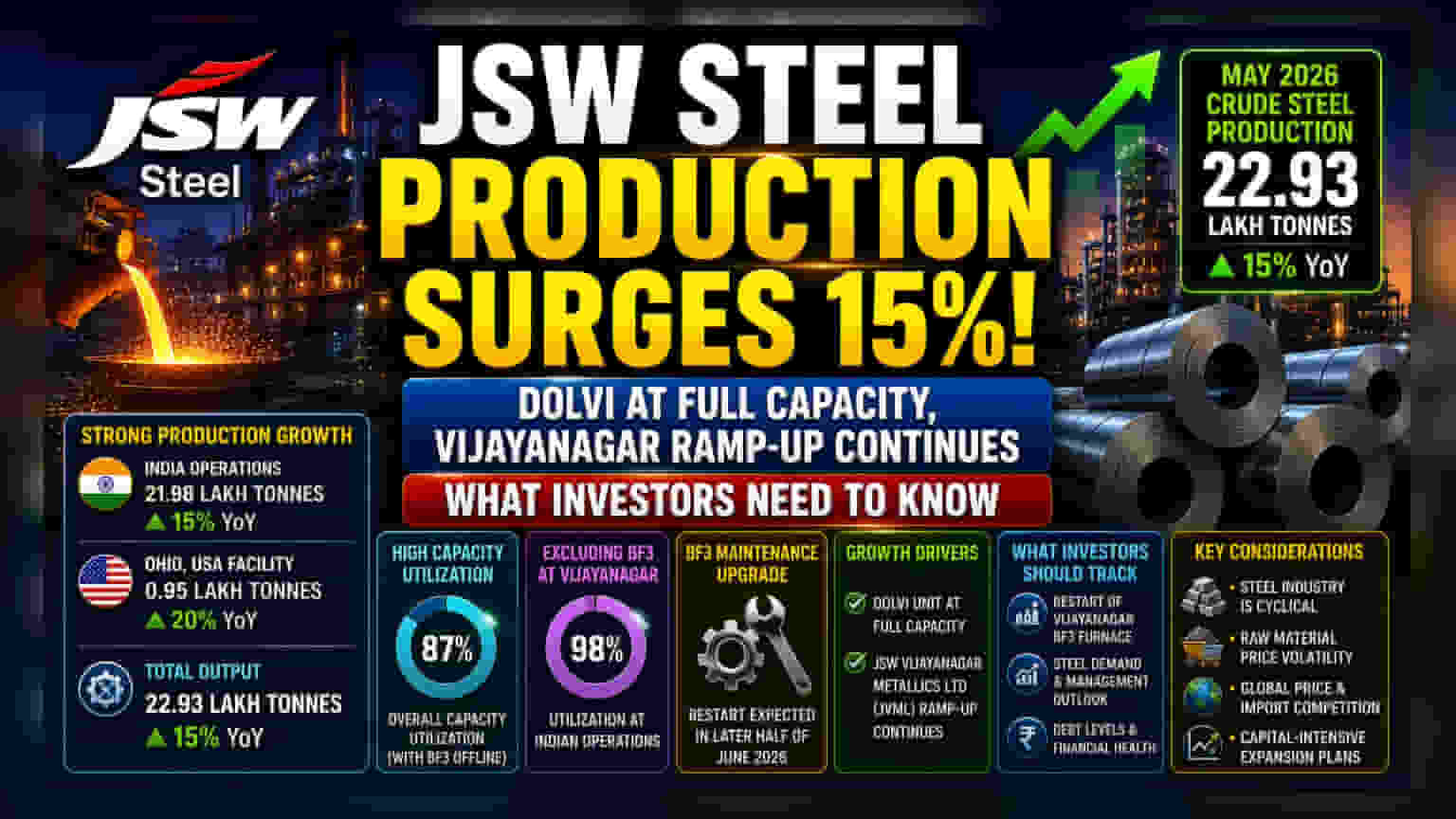


What Happened
JSW Steel has announced a solid rise in its crude steel production for May 2026. The company’s total output grew by 15% compared to the same period last year, reaching 22.93 lakh tonnes. This growth was driven primarily by the company's Dolvi unit reaching full operational capacity and the continued ramp-up of operations at its wholly-owned subsidiary, JSW Vijayanagar Metallics Ltd (JVML).
Looking at the regional breakdown, the company’s Indian operations contributed 21.98 lakh tonnes, a 15% increase from the previous year. Additionally, the company’s facility in Ohio, USA, saw a 20% increase in output, producing 0.95 lakh tonnes during the month.
Why This Matters For Investors
For investors, the headline production figure is only one part of the story. The key takeaway here is the company's operational efficiency. Even while one of its blast furnaces (BF3) at the Vijayanagar facility is offline for capacity upgrades, the company managed to achieve an overall capacity utilization rate of 87%. Excluding that specific offline unit, the utilization rate for the rest of its Indian operations was an impressive 98%. High utilization is generally a positive sign as it suggests the company is effectively using its existing infrastructure to generate revenue.
The Maintenance and Capacity Question
The temporary shutdown of the BF3 blast furnace is a scheduled event rather than an operational failure. It is part of the company's broader plan to increase its total production capacity. The company has stated that this unit is expected to restart in the latter half of June 2026. Investors should watch for the official update on when this capacity comes back online, as it will likely contribute to higher production volumes in the upcoming quarters.
Peer and Sector Context
The steel sector is famously cyclical, meaning it goes through phases of high demand and price growth, followed by periods of slowdown. Companies in this space, including JSW Steel, often spend large amounts of money on capacity upgrades to stay competitive. While these upgrades are necessary for long-term growth, they also require significant capital. Investors should keep a close eye on the company’s debt levels as it continues to fund these large-scale projects.
Furthermore, the steel industry faces constant pressure from global price fluctuations, raw material costs like coking coal and iron ore, and potential competition from cheaper imports. Any volatility in these areas can impact profit margins, regardless of how much steel the company produces.
What Investors Should Track
Moving forward, the primary monitorable is the restart of the Vijayanagar BF3 furnace. Once operational, it should help in tracking the company's ability to ramp up total output. Additionally, investors may want to track the management's commentary on steel demand, as it provides insight into whether the market can absorb the increased production. Monitoring the company's debt-to-equity ratio will also be important to ensure that the ongoing expansion projects are being managed within the company’s financial comfort zone.