

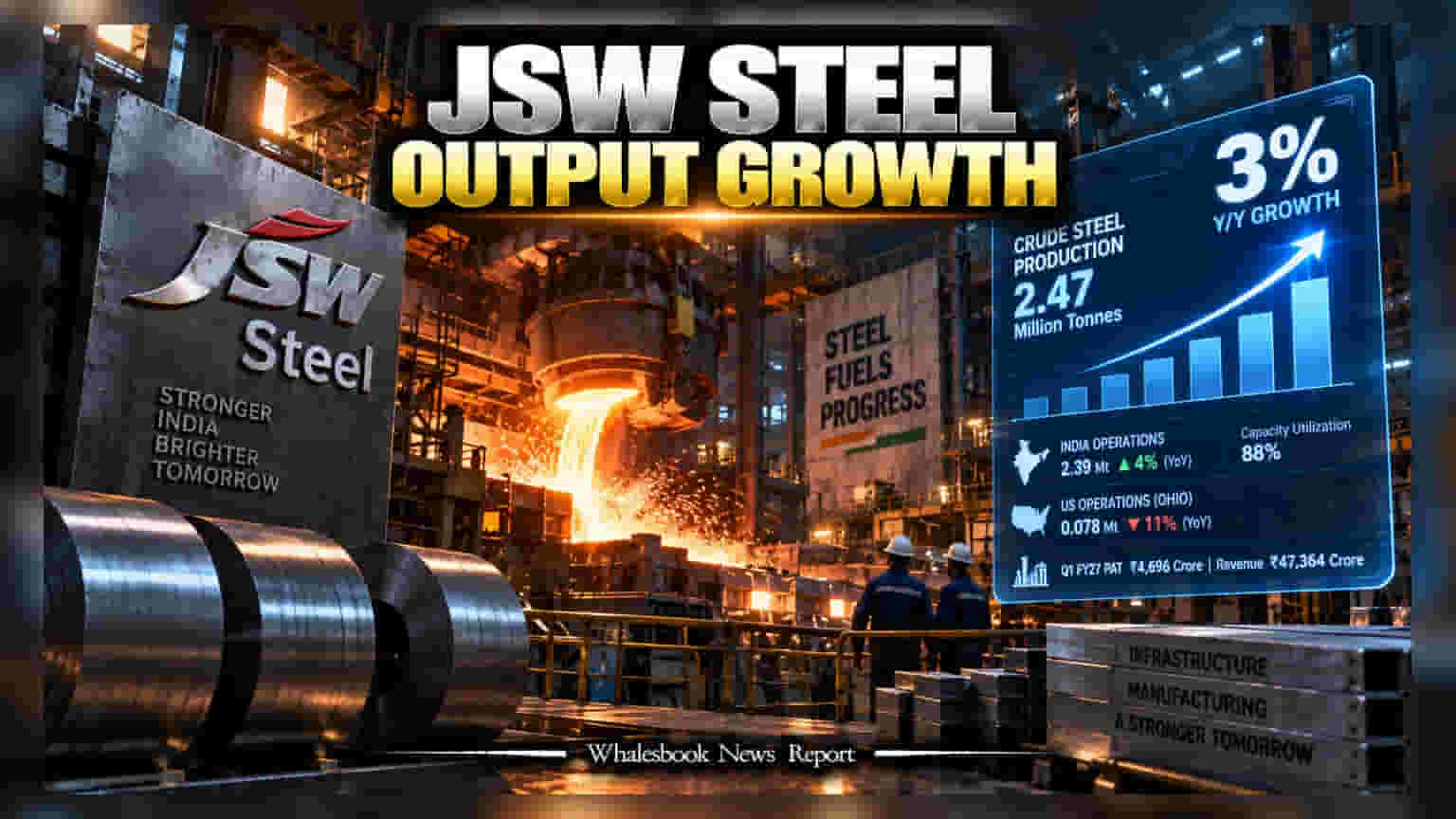
JSW Steel's consolidated crude steel production grew 3% to 2.47 million tonnes in August 2026, supported by strong domestic manufacturing. While Indian operations saw a 4% increase, the company's US business faced an 11% decline.
JSW Steel reported a 3% year-on-year increase in its consolidated crude steel production for August 2026, reaching 2.47 million tonnes. This growth was primarily fueled by the company's Indian operations, which continue to act as the main driver for its overall production volume.
The domestic business produced 2.39 million tonnes of steel in August, reflecting a 4% rise compared to the same month last year. Indian facilities operated at an average capacity utilization rate of 88%, which indicates steady manufacturing demand within the country.
While the domestic segment showed strength, the company’s performance was not consistent across all regions. The US-based subsidiary in Ohio reported a decline in production, with output falling 11% year-on-year to 0.078 million tonnes. This drop highlights the ongoing challenges in international markets, where volatile raw material costs and fluctuating market conditions often create pressure on profit margins.
Investors analyzing these figures should note that year-on-year comparisons are adjusted to reflect the transfer of Bhushan Power and Steel Limited (BPSL) to the JSW-JFE Steel joint venture. This transfer, completed in March 2026, effectively changed how some volume data is calculated compared to previous years.
Looking at the broader financial context, the company’s performance in the first quarter of fiscal year 2027 shows the scale of its operations. JSW Steel reported a profit after tax of ₹4,696 crore and revenue from operations totaling ₹47,364 crore during the April-June period. Total production for the quarter stood at 6.59 million tonnes. If the scheduled maintenance of the Vijayanagar BF-3 blast furnace had not occurred, the company noted that production growth would have been as high as 15% for the quarter.
With shares trading at ₹1,325, the company’s ability to maintain a 19.8% EBITDA margin during the last quarter demonstrates its focus on efficiency, even as costs for inputs like coking coal remain a factor.
Moving forward, the key items for investors to track will include the stability of raw material costs, the demand from major sectors like infrastructure and real estate in India, and the company’s ability to stabilize output from its overseas units. The ongoing performance of domestic capacity utilization will remain a primary indicator of the firm’s health in the coming months.