

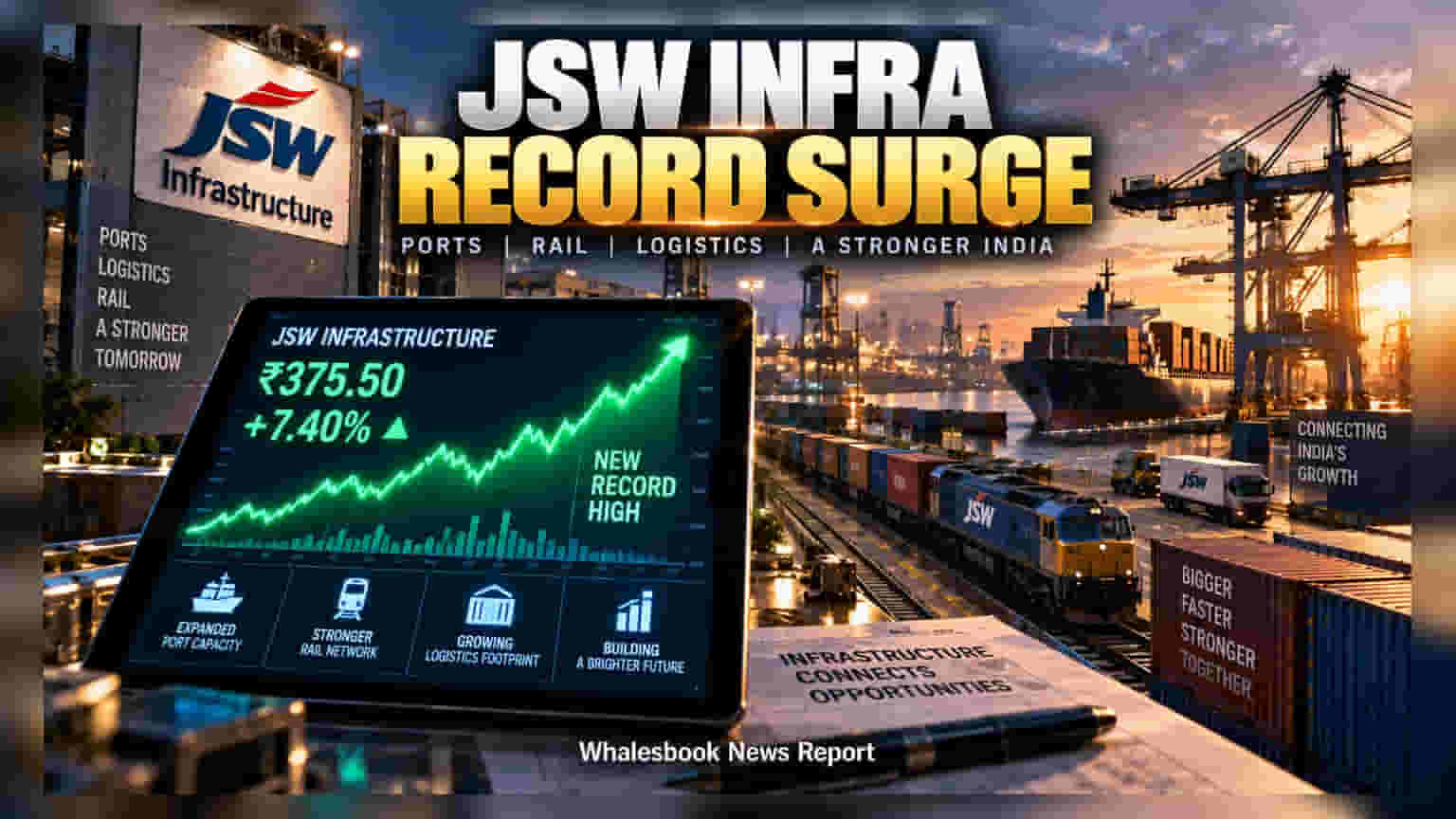
JSW Infrastructure shares rose 7.4% to a record high of ₹375.50 on Tuesday. The company recently secured a project for an Inland Container Depot in Karnataka and completed the acquisition of NCR Rail, driving investor interest. These moves are part of a wider strategy, supported by a ₹16,500 crore capital spending plan through 2028, to increase the company's port and logistics capacity.
JSW Infrastructure shares reached a record high of ₹375.50 on Tuesday, recording a 7.4% increase during the trading session. This movement follows recent company announcements focused on expanding its presence in the domestic logistics sector.
Expansion in Logistics and Rail
The company is working to grow its multi-modal logistics footprint. On September 11, the firm received a Letter of Intent from government authorities to develop an Inland Container Depot in the Ballari district of Karnataka. This facility, which will be managed by the subsidiary JSW Port Logistics, is intended to simplify the handling of import and export cargo. This project is part of a larger plan to create a Multi-Modal Logistics Park in the region to consolidate the company's domestic infrastructure network.
Furthering its reach in the rail-linked transport segment, subsidiary Khurja Rail Terminal finalized the acquisition of NCR Rail on September 10. This acquisition was executed under an NCLT-approved resolution plan, integrating new rail capabilities into the company's existing operations.
Capital Allocation and Financial Status
These expansion efforts come after the company raised ₹7,503 crore through a Qualified Institutional Placement in June. The capital raising saw participation from pension providers and long-only funds. Following these financial moves, Moody’s Ratings assigned an investment-grade 'Baa3' rating to the firm, citing improved liquidity and lower dependence on external borrowing compared to previous periods.
The company has set aside ₹16,500 crore for capital expenditure across its port and logistics divisions through 2028. While this spending is aimed at driving long-term capacity growth, it also brings the challenge of project execution. Investors often track large capital spending programs closely to ensure they stay on schedule and do not lead to cost overruns that could strain financial flexibility. The ability of the company to efficiently manage this volume of construction and integration will be important for maintaining consistent growth in revenue and EBITDA over the coming years. Market observers will monitor the progress of these specific projects and the company's ability to maintain its financial health while executing its growth plans.