 Whalesbook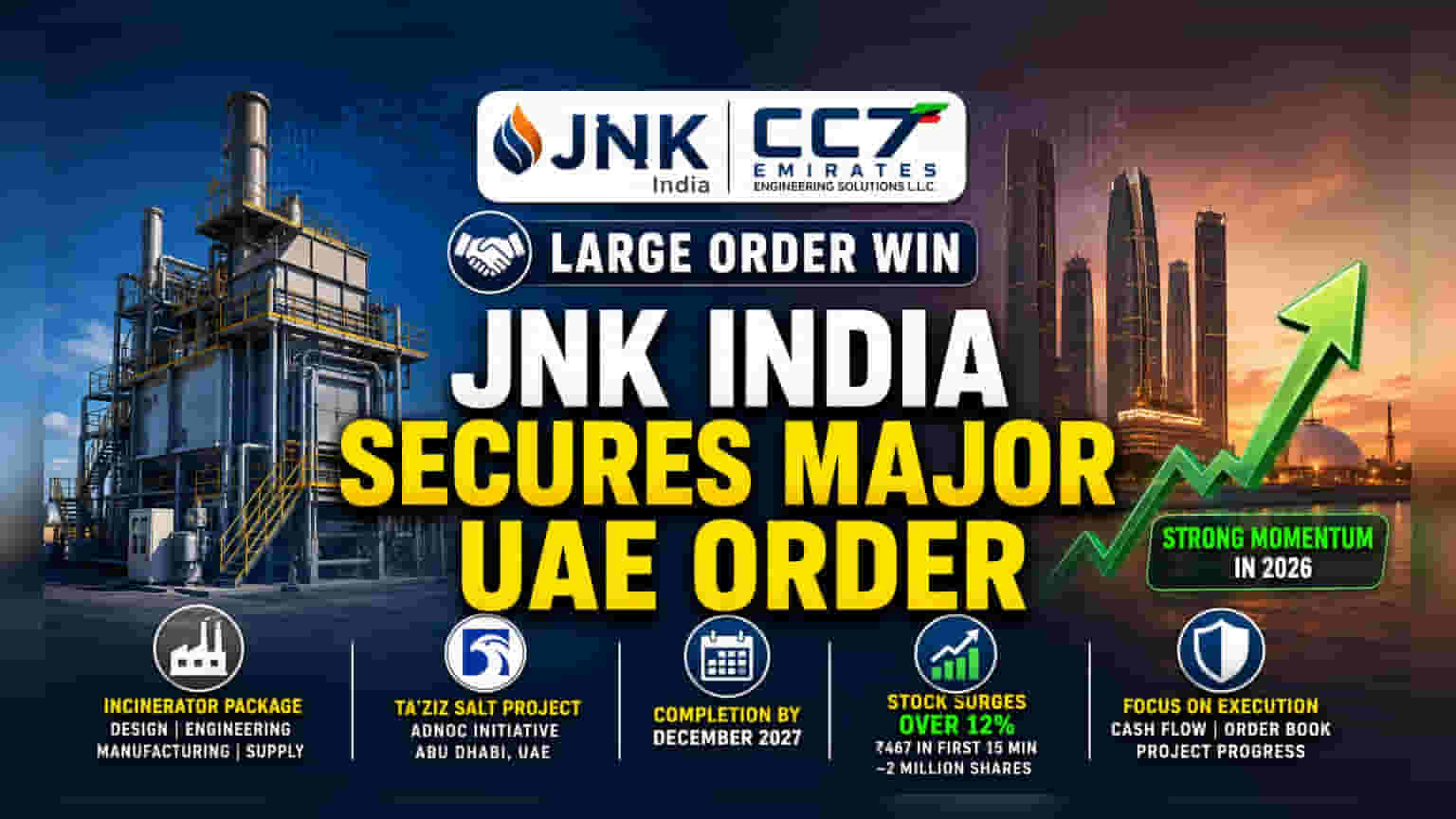


What Happened
JNK India has secured a significant order from CC7 Emirates Engineering Solutions L.L.C., a UAE-based entity. The contract involves the design, engineering, manufacturing, and supply of an Incinerator Package. The scope of work also includes providing assistance for the erection, commissioning, and performance testing of the unit for the TA’ZIZ Salt Project, an initiative driven by ADNOC in Abu Dhabi. The company classifies this contract within its 'large order' range, which it defines as contracts valued between ₹100 crore and ₹5,000 crore. The project is scheduled for completion and delivery by December 2027.
Why This Matters For Investors
For a company in the industrial heating and process equipment sector, such an order is significant for several reasons. First, it strengthens the company's international project portfolio, specifically within the Middle East, a key market for oil and gas infrastructure spending. Second, working with major entities like those involved in the ADNOC initiative can enhance the company’s reputation for future global tenders. This win adds to the order book, providing revenue visibility for the next couple of years until the project reaches its delivery date in 2027.
How The Stock Reacted
The market responded positively to the announcement, with JNK India shares surging over 12% during early trading on the National Stock Exchange. The stock saw strong buying interest, trading at around ₹467 within the first 15 minutes of the session, supported by high trading volumes of approximately 2 million shares. This move follows a strong rally for the company throughout 2026, where the stock has significantly outperformed the broader market.
Execution And Business Risks
While large order wins are positive, investors should be aware of the inherent risks in the industrial equipment business. Projects of this scale, especially those involving international clients and complex engineering requirements, are subject to execution risk. Delays in design, supply chain hurdles in sourcing high-grade materials, or changes in project site timelines can impact the company's financial performance. Furthermore, because this is an international contract, the company faces exposure to currency fluctuations. If the value of the Indian Rupee changes significantly against the currency of the contract, it could impact profit margins. Additionally, the company's business is highly dependent on capital spending cycles in the oil and gas sector. If global energy companies scale back their spending due to oil price volatility, it could affect the pipeline of future orders.
What Investors Should Track
The most important monitorable for shareholders is the project's execution progress. Investors should keep an eye on management updates regarding the project timeline and any potential cost overruns as the work progresses toward the December 2027 deadline. Because the project delivery is spread over a long period, tracking the company's quarterly cash flow and working capital position is essential. Large projects often lock up cash during the construction and supply phase. Additionally, monitoring the company's broader order book growth and its ability to win repeat business from such major international clients will provide a clearer picture of its long-term stability.