 Whalesbook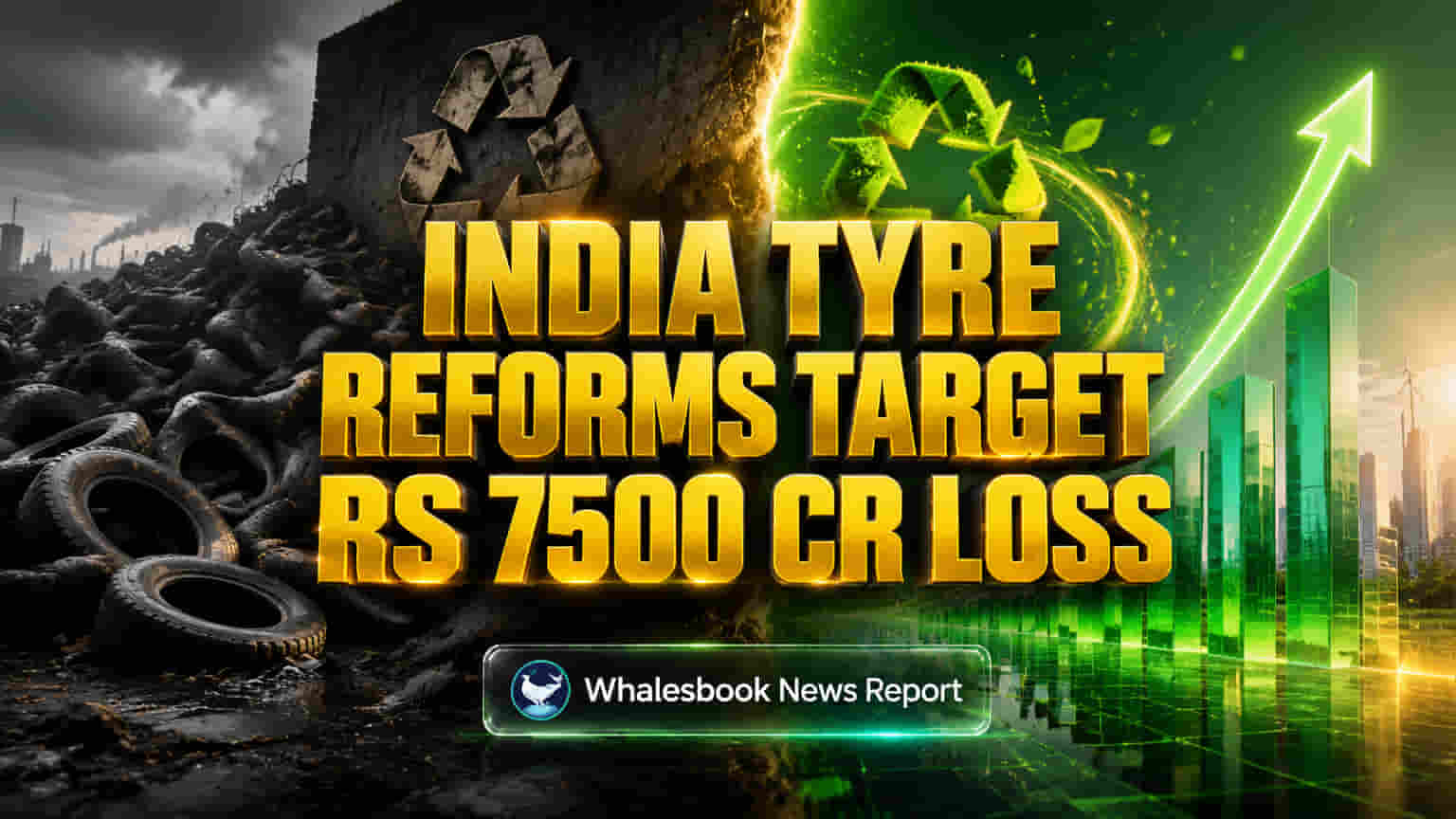


NITI Aayog Proposes Sweeping Reforms for India's Waste Tyre Sector
India's waste tyre sector faces significant economic inefficiencies. The NITI Aayog has put forth a series of reforms aimed at transforming the industry, currently losing an estimated ₹7,500 crore annually. These proposals seek to move the sector beyond low-value downcycling towards a high-value circular economy by introducing quality standards and improving market mechanisms.
Billions Lost Annually from Untapped Potential
In the 2024-2025 period, India processed approximately 3 million metric tonnes (MMT) of waste tyres, including 1.6 MMT domestically and 1.4 MMT from imports. Despite this volume, the sector suffers from a ₹7,500 crore revenue deficit. This loss is largely attributed to the absence of established quality benchmarks for key recycled products like Tyre Pyrolysis Oil (TPO) and recovered Carbon Black (rCB). Without recognized standards, these materials are often used in low-value applications, unlike in global markets where strict quality controls allow their use as valuable industrial feedstock.
Boosting Traceability and Formalizing Informal Players
Current regulations struggle with traceability, partly due to inadequate Harmonized System of Nomenclature (HSN) codes that group waste tyres and crumb rubber together. NITI Aayog recommends distinct six-digit HSN codes to enhance transparency and tracking of tyre materials, helping to prevent diversion. The reforms also aim to integrate the substantial informal recycling sector. Initiatives like the MSME Udyam Assist platform, along with potential financial aid and waivers for past environmental liabilities, are proposed to bring informal recyclers into the formal economy.
Tax Relief and Environmental Rules Targeted
The Goods and Services Tax (GST) on recycled tyre products is identified as a barrier, with an 18% rate diminishing competitiveness against virgin materials. A reduction to 5% is suggested to encourage formal sector growth. The tax difference with unstabilized petroleum products, which lack GST, also impacts TPO markets. Environmental regulations are also part of the plan, including mandatory continuous emission monitoring for pyrolysis units, which process most of the country's waste tyres. Policy shifts may also permit waste tyre imports for pyrolysis plants capable of producing rCB, with TPO from imports potentially for refineries if carbon char is upgraded to rCB.
Challenges Remain: Past Hurdles and Global Competition
Despite the detailed proposals, implementation has been a historical challenge. A report from 2025 noted persistent issues in traceability, informal recycling, and enforcement, indicating a pattern where problems are acknowledged but not fully resolved. The success of these reforms will depend on strong regulatory oversight, which has proven difficult in the past. Globally, regions like the European Union have advanced recycling technologies and stringent quality standards for TPO and rCB. This could place India's sector at a disadvantage if reforms are slow to materialize. India's tyre industry, the seventh largest globally with a 3% market share and producing 4.2 MMT annually, faces growing pressure to align its waste management with production levels. Macroeconomic conditions affecting industrial demand will also influence the adoption of recycled materials.
The Path Forward: Implementation is Key
The proposed reforms offer a strategic blueprint for India's waste tyre sector to develop into a structured, value-driven circular economy. Successful implementation could lead to increased revenue, job creation, and reduced environmental impact. However, the ultimate success hinges on the government's ability to enact these recommendations into policy and ensure consistent enforcement, which is crucial for matching India's recycling capabilities with its expanding tyre market.