 Whalesbook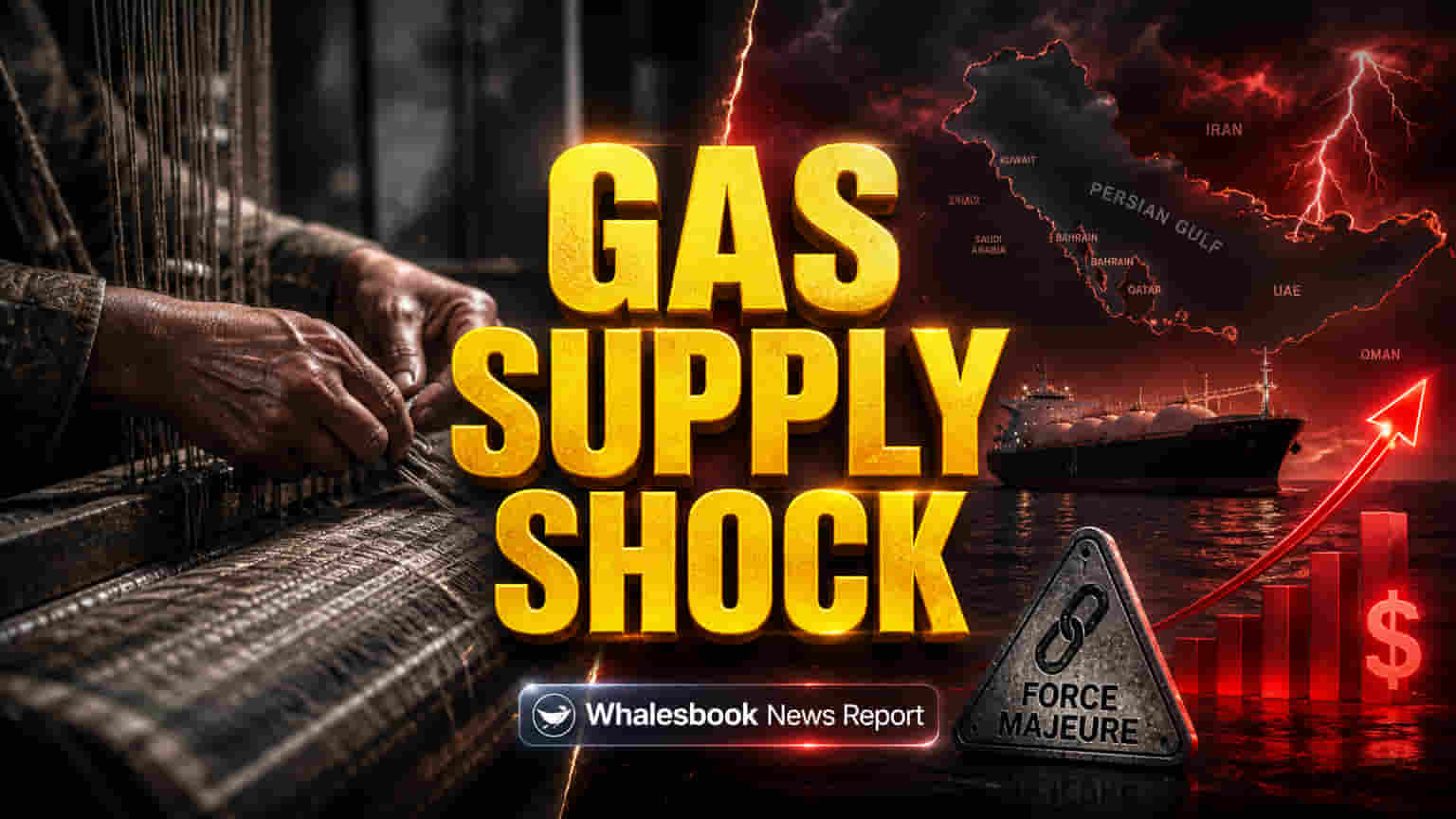


Geopolitics Disrupts Gas Supply for India's Textile Hubs
The government is assessing natural gas supplies for India's textile and handicraft hubs due to escalating geopolitical tensions impacting industrial operations. Although GAIL (India) Limited has assured it can source gas from the spot market, this comes at a premium. This higher cost signals a significant burden for industrial users, especially energy-intensive sectors like textiles.
Energy Crisis Hits Manufacturing Margins
India's industrial consumers, particularly in the textile and handicraft sectors, face both supply uncertainty and rising input costs. This is due to the conflict in West Asia and disruptions to key shipping routes like the Strait of Hormuz. GAIL, which supplies at least 80% of the natural gas for priority industrial sectors, must now rely more on the spot market. This will lead to higher operational expenses. Spot market prices have far outpaced historical averages, with GAIL reportedly paying premiums of $17-$20 per million British thermal units (MMBtu) for urgent cargoes, compared to usual Middle Eastern spot prices of $12-$15 MMBtu. India's total daily natural gas consumption is about 189 million metric standard cubic meters per day (MMSCMD), with imports covering over half, showing its vulnerability to global supply shocks.
Geopolitical Disruptions Amplify Sectoral Risks
The conflict has severely disrupted global energy trade routes. The Strait of Hormuz is a critical chokepoint for about 40% of India's crude oil, 60% of its natural gas, and over 90% of its LPG imports. This vulnerability has caused critical shortages in industrial hubs like Surat and Sanganer, key centers for India's textile and handicraft production. Reports show many factories are partially or fully shutting down, causing distress and forcing workers to return home, as observed in Surat's garment factories. The glass industry in Ferozepur also faces significant issues from insufficient natural gas. Textile processors are seeing higher costs for dyeing and operating machinery, plus increased freight and war-risk insurance expenses that are cutting into profits.
Regulatory Response & Allocation Curbs
To address these issues, the government issued the Natural Gas (Supply Regulation) Order, 2026, on March 9, 2026, under the Essential Commodities Act. This order designates priority sectors like domestic Piped Natural Gas (PNG), Compressed Natural Gas (CNG) for transport, and LPG production. Industrial consumers, including textiles and handicrafts, are in Priority Sector III/IV. They will generally receive 80% of their average consumption over the past six months. GAIL must use gas pooling, diverting supply from non-priority sectors like petrochemical plants to meet these allocations. Existing contracts may be overridden. However, this reduced allocation means operational limits and potential production caps for many factories.
Industry Faces Structural Risks and Operational Limits
The current energy supply situation highlights critical structural weaknesses in India's industrial sector. Heavy reliance on imported natural gas and LPG, worsened by geopolitical instability, leads to price volatility. This dependence on a tight global market means GAIL must buy gas at a premium, directly impacting the cost-competitiveness of Indian manufacturers. Supply disruptions can cause unpredictable operating costs, making long-term planning difficult. The worker migration from hubs like Surat due to shutdowns also shows a significant societal and economic cost, potentially harming India's position in the global fabric market. While the government's 80% allocation aims for stability, it limits production potential and offers little protection against future demand surges or supply shocks. Industries dependent on fossil fuels face immediate threats to their operations, unlike sectors shifting to renewables.
Future Outlook & Diversification Imperative
GAIL (India) Limited is working to find alternative supply routes and manage domestic distribution amid these complex market conditions. The Natural Gas Control Order offers immediate relief for shortages but doesn't fix the basic dependence on imports. To ensure long-term energy security, India needs to aggressively diversify its energy sources. This includes accelerating investments in domestic clean energy manufacturing and renewable capacity. India's targets for non-fossil fuel capacity by 2030 aim to reduce reliance on volatile imported fuels and lessen future price shocks and supply chain risks for its key manufacturing sectors. While India's natural gas consumption is projected to grow significantly by 2030, a potential gap between contracted LNG supply and projected needs after 2028 could increase reliance on the volatile spot market unless more long-term contracts are secured.