 Whalesbook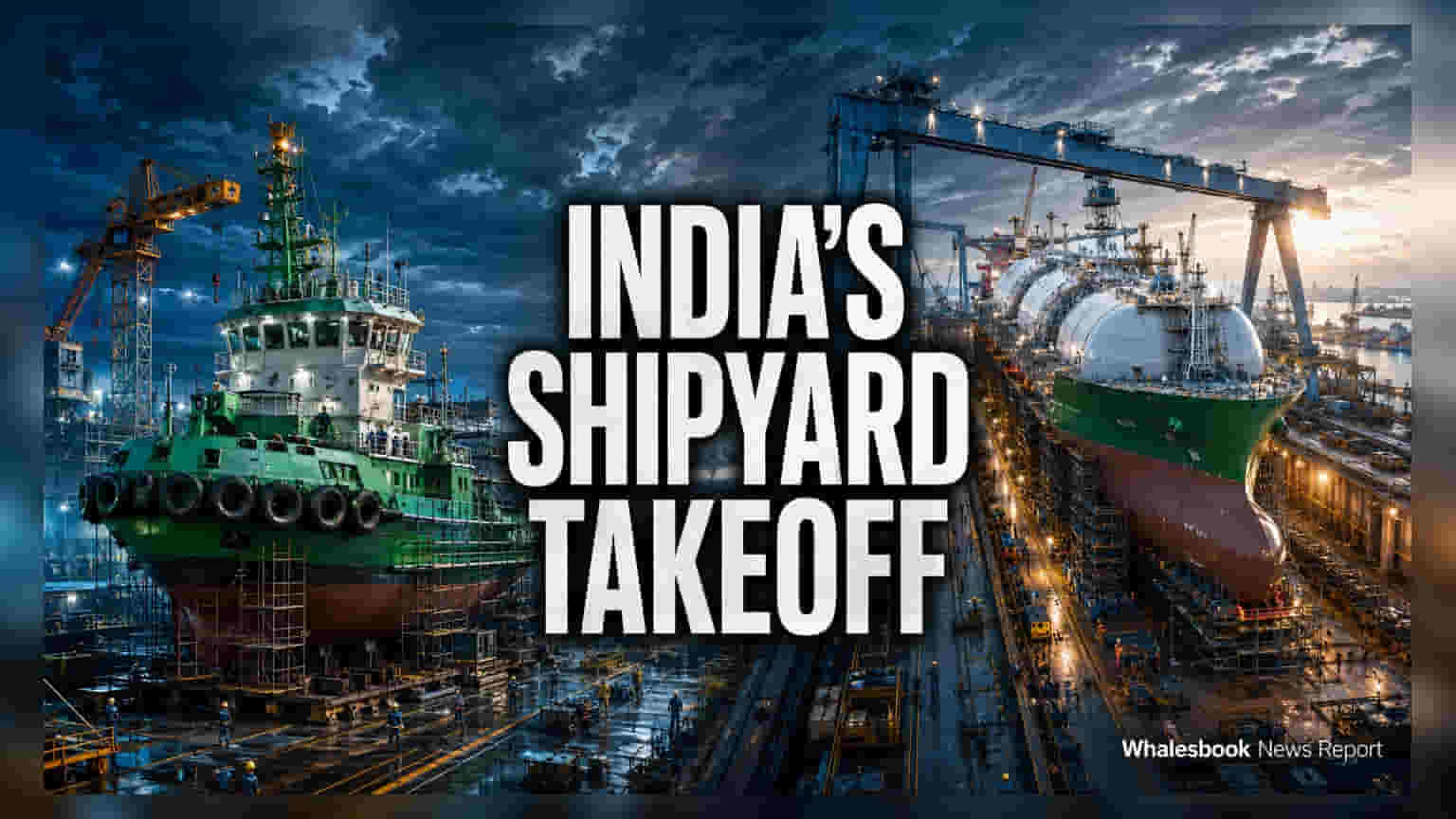


The Capital-Intensive Pivot
India’s strategic shift toward domestic maritime dominance is moving beyond government policy into heavy industrial execution. While the goal to capture a meaningful slice of the global shipbuilding market—where India currently claims less than 1%—is ambitious, the transition requires more than just order flow. The massive Rs 2 lakh crore demand from defense and commercial sectors serves as the foundation, yet the true test lies in capacity utilization and operational efficiency. Unlike the state-backed giants of South Korea or China, Indian firms are grappling with the high cost of debt and the complexity of modernizing aging infrastructure to meet international safety and environmental standards.
The Operational Reality of Mid-Cap Players
Knowledge Marine & Engineering Works (KMEW) is betting its future on a vertical integration strategy, particularly through the acquisition of Knowledge Shipyard. By focusing on green tugs and smaller workboats, KMEW is attempting to sidestep the hyper-competitive market for large-scale tankers. Their reliance on both external contracts and internal chartering provides a hedge against cyclical demand, yet the Rs 100 crore shipyard expansion injects significant execution risk. Conversely, Swan Defence and Heavy Industries (SDHI) is navigating a different set of challenges. By reclaiming the legacy Pipavav facility, the firm has secured one of the few dry docks in India capable of handling massive naval projects. However, the contrast between their high-profile international partnerships with firms like Fincantieri and their recent bottom-line performance is striking.
The Forensic Bear Case: Profitability vs. Order Books
Market participants should remain cautious regarding the financial health of these emerging players. SDHI, despite its infrastructure advantage, recently reported a substantial net loss, largely masked by one-time accounting hits. The move to raise Rs 4,000 crore highlights a desperate need for liquidity to fund complex projects like ammonia dual-fuel bulk carriers. Furthermore, historical data from the shipbuilding sector reveals that firms often struggle with cost overruns on government contracts. While KMEW demonstrates early profitability, the scaling of green vessel technology remains unproven at this volume. Investors must monitor whether these firms can maintain healthy debt-to-equity ratios while navigating the long gestation periods typical of defense and heavy industrial contracts.
Sector Benchmarking and Macro Outlook
When viewed against established defense contractors like Mazagon Dock or Garden Reach Shipbuilders & Engineers (GRSE), the newer entrants face a steeper learning curve in securing sustained Tier-1 defense orders. Market sentiment toward the broader sector remains bullish due to the Indian Navy’s 80% fleet expansion target by 2030, yet this macro tailwind does not guarantee individual success. As the industry matures, the focus will shift from order book announcements to margin expansion and the ability to navigate stringent ESG requirements for international commercial shipping clients. If the industry fails to bridge the productivity gap with global rivals, the long-term outlook for these capital-heavy projects may face significant downward revisions in analyst valuations.