

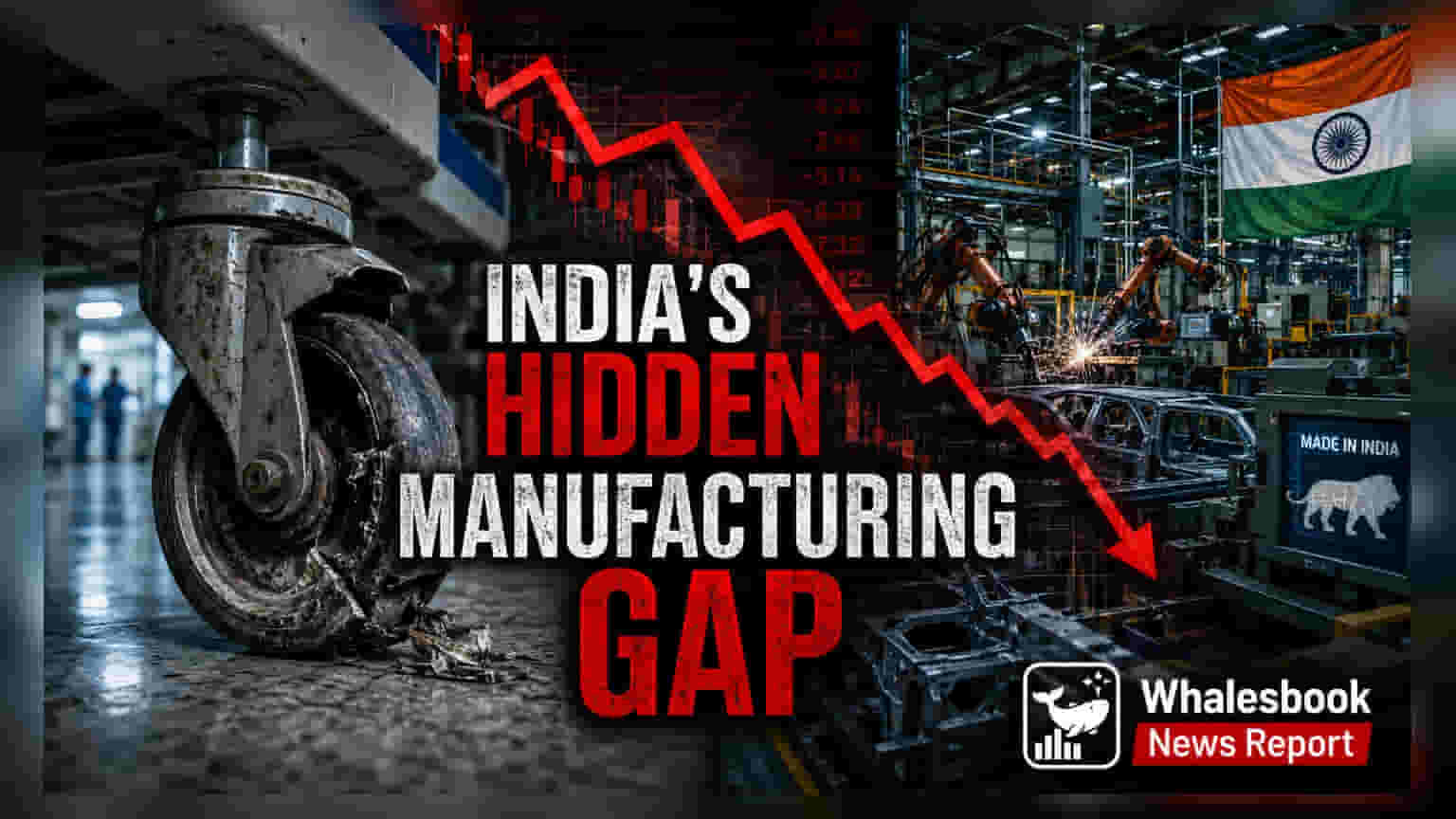
India's manufacturing sector continues to rely heavily on imported sub-components like castor wheels and bearings, primarily from China. This dependence impacts production costs and product reliability, highlighting a need to strengthen the domestic component supply chain. Local MSMEs in hubs like Rajkot and Ludhiana may play a key role in bridging this gap to improve manufacturing depth.
India’s goal to become a global manufacturing hub faces a persistent challenge in its upstream supply chain. While the country has seen significant activity in the assembly of finished goods like mobile phones, electric vehicles, and defense equipment, a substantial portion of the essential sub-components remains imported. Items such as industrial fasteners, bearings, and castor wheels are frequently sourced from international markets, with China holding a dominant position in the low-cost, high-volume segment.
The Impact of Import Dependency
The reliance on imported basic components creates structural vulnerabilities for Indian companies. When manufacturers depend on external suppliers for critical small parts, they face risks related to logistics, currency fluctuations, and inconsistent quality. For instance, in sectors like healthcare and logistics, the failure of a single imported castor wheel can affect the performance of an entire piece of equipment. This dependency often dictates production costs and limits the ability of Indian firms to scale operations efficiently, as they remain vulnerable to supply disruptions from overseas markets.
Data indicates that in the castor wheel segment, a vast majority of imports by volume originate from China. While domestic manufacturing exists for these items, local producers often find it difficult to compete with the sheer scale and price points offered by large-scale international competitors. This challenge is not limited to simple components; it extends to specialized fasteners and bearings that are foundational to the machinery and infrastructure sectors.
Building Industrial Depth
For Indian manufacturing to move beyond assembly and create higher economic value, the industry needs to develop a more robust ecosystem for sub-assemblies and raw materials. Building this depth requires investments beyond just factory floor space; it calls for localized tool rooms, advanced testing facilities, and a skilled technical workforce. Without these, India risks being viewed primarily as a destination for final assembly, which typically offers lower profit margins compared to full-chain manufacturing.
Micro, Small, and Medium Enterprises (MSMEs) represent the most significant potential for addressing this gap. Manufacturing clusters in regions such as Rajkot, Ludhiana, and Coimbatore already possess a foundational capacity for metalworking and precision engineering. If these entities can successfully transition toward producing higher-quality, standardized components, they could substitute a significant portion of current imports.
Monitorables for Future Growth
The ability of Indian manufacturers to secure a larger share of the value chain will depend on their success in meeting global standards for quality, material consistency, and cost-competitiveness. Investors may track whether upcoming industrial policies or private sector capital spending focus on deepening the local supplier base. The next important step for the sector involves shifting from simple assembly to the domestic production of critical sub-components, which will be essential for enhancing margins and reducing sensitivity to global supply chain pressures.