 Whalesbook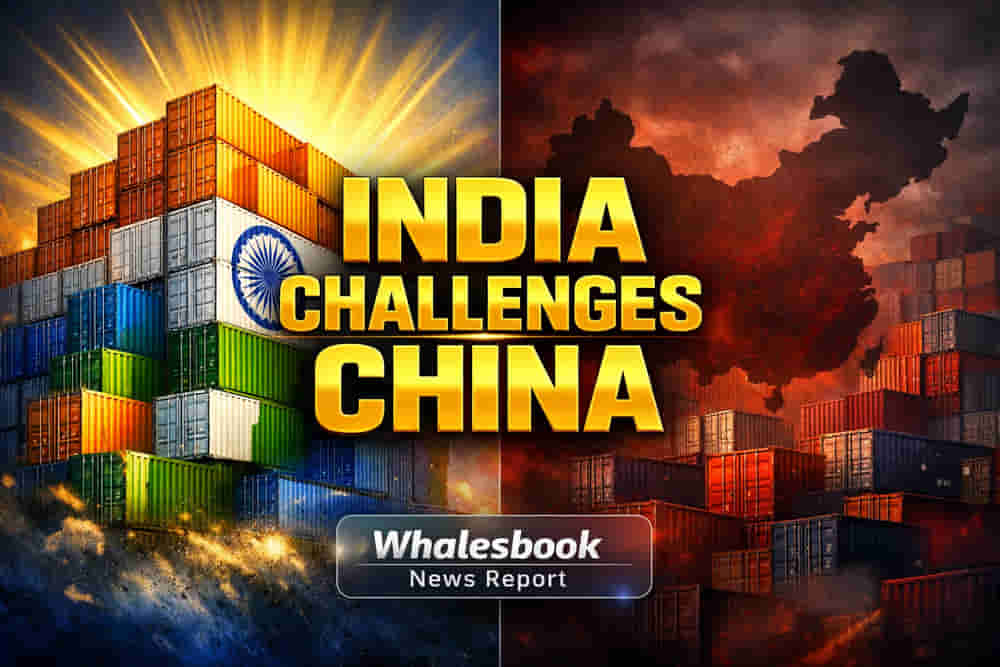
- THE SEAMLESS LINK
This substantial allocation marks the government's first direct intervention in container production, directly confronting China's near-monopoly in the global market. India's current annual capacity, estimated at 30,000 units, starkly contrasts with China's approximately 6 million units per year, highlighting the scale of the undertaking. The long-term implications for India's major steel producers like Tata Steel (Market Cap: INR 2.5 trillion, P/E: ~15.5) and Jindal Steel & Power (Market Cap: INR 550 billion, P/E: ~12.2) are significant, particularly concerning raw material supply chains and potential participation. Balmer Lawrie (Market Cap: INR 75 billion, P/E: ~22.1), with its logistics interests, may also see indirect benefits from enhanced domestic capacity.
Challenging Global Hegemony
The INR 10,000 crore infusion is designed to build a foundation for domestic investment in a segment where China's dominance is overwhelming. This initiative represents a significant policy pivot to cultivate local expertise and manufacturing power, aiming to capture a slice of the global market. Information from industry analysts suggests this direct foray addresses a critical gap exposed by past global supply chain disruptions.
- THE ANALYTICAL DEEP DIVE
Strategic Sourcing and Industrial Synergy
Container manufacturing is inherently labor-intensive and relies heavily on specialized materials like Corten steel. Ensuring a stable domestic supply of Corten steel, or competitive import channels, will be crucial for the program's success. The government's push aligns with a broader objective to strengthen India's logistics ecosystem. Analysts at SAMCO Securities project this will improve cargo mobility, reduce freight costs, and enhance supply chain efficiency. The anticipated higher availability of modern containers is expected to accelerate the modal shift from road to rail, driving faster turnaround times and more economical bulk transportation for manufacturing, agriculture, and export sectors. This move also complements the impending operationalization of the Bharat Container Shipping Line (BCSL), India's new national container carrier backed by major state-owned entities like the Shipping Corporation of India and Container Corporation of India.
Demand Drivers and Market Realities
Research indicates strong demand from the food and beverage sector, particularly for packaged foods and fresh produce. Pharmaceuticals, including vaccines, and the automotive industry for spare parts and engines are also significant demand centers. The global container shortage experienced during the COVID-19 pandemic served as a stark reminder of supply chain vulnerabilities, prompting this strategic domestic manufacturing push. While China currently dominates with a ~95% global market share, India's entry aims to capture a portion of this vital market, moving beyond its current capacity of approximately 30,000 units per year.
- THE FUTURE OUTLOOK
Reducing Dependence and Enhancing Self-Reliance
This scheme represents a determined effort to build a robust domestic manufacturing base, significantly reducing India's reliance on imported containers. It aims to foster job creation within a labor-intensive industry and integrate more tightly with the nation's burgeoning railway and logistics infrastructure. The success of this initiative will likely be measured not just by production volume but by its contribution to overall trade efficiency and the strengthening of India's position in global supply chains.