 Whalesbook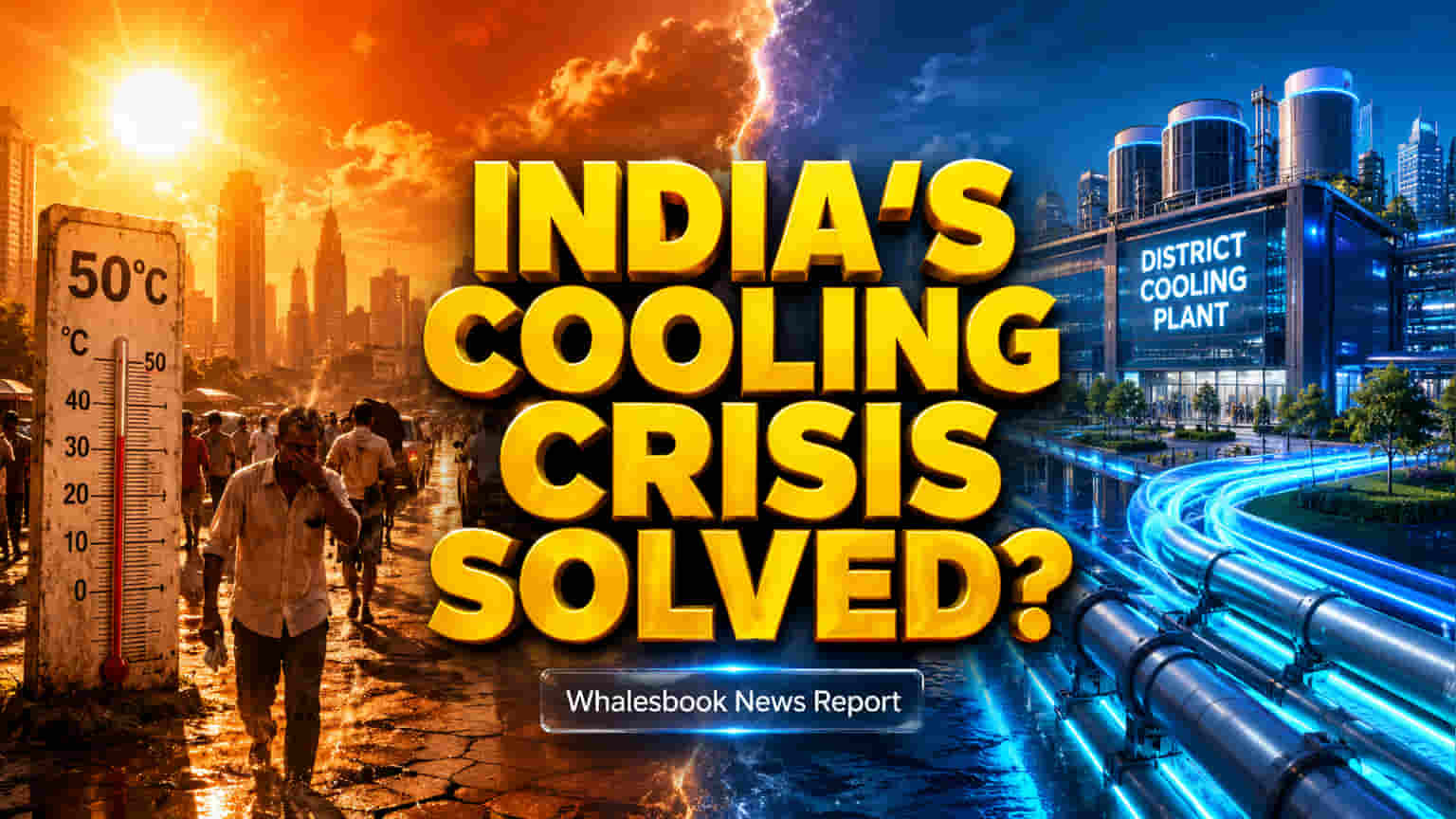


India's Heat Crisis Demands Cooling Solutions
India is facing an intense heat crisis, with record temperatures and heatwaves affecting over 57% of its districts. This is sharply increasing the nation's demand for cooling, forecast to surge eightfold by 2037-38. Standard air conditioning, the main solution now, actually worsens the problem by increasing urban heat and straining the national power grid. Cooling already uses about 10% of India's peak electricity demand, a figure set to rise sharply. Economically, heatwaves have historically cost billions in lost productivity and threaten rural livelihoods and food security. District Cooling Systems (DCS) offer a vital, scalable, and efficient alternative, promising 30-50% energy savings and up to 80% reduction in peak power demand compared to individual AC units. This proven technology is seen as key to sustainable urban growth and better climate resilience.
Cooling Market Growth and Key Projects
The Indian district cooling market is valued at an estimated USD 6.6 billion in 2025, projected to reach USD 8.2 billion by 2034, fueled by urbanization and efficiency efforts. Global forecasts also show a growing worldwide shift towards centralized cooling. Tata Power, Keppel, and Tata Realty are deploying a large Cooling-as-a-Service (CaaS) project at Intellion Park in Chennai. Set to operate by October 2026, the project will offer 12,100 TR cooling capacity and aims for over 20% energy reduction using AI and ML. This project highlights the move towards service-based infrastructure. Meanwhile, states like Tamil Nadu are pursuing urban heat resilience with pilot programs for passive cooling and overall urban cooling plans. India's overall infrastructure development, backed by substantial funding for green projects, supports the integration of DCS.
Regulatory Hurdles Slowing District Cooling Adoption
Despite the strong case for DCS and rising cooling demand, its widespread adoption in India is held back by a critical lack of clear regulations and policies. No comprehensive legal framework, clear technical standards, or predictable pricing creates significant uncertainty for investors and developers. India has no specific standards for DCS pipe networks, zoning rules, or master plan regulations. Some states, like Maharashtra, have started introducing DCS pricing. National standardization is needed for DCS to compete with traditional cooling costs and build market confidence. Guidelines from the Bureau of Energy Efficiency (BEE) and UNEP exist, but they need to become enforceable rules with clear pricing. A key issue is risk allocation: developers often must commit to long-term demand forecasts, a task better suited for utility providers who manage such risks. This regulatory uncertainty is a major barrier but also a chance for proactive companies to shape the sector, set standards, and attract investment by creating strong governance and policy.
The Path Forward for District Cooling
Successfully integrating DCS into India's cities depends on resolving these regulatory challenges. If these policy gaps are filled, DCS can transform how India meets its cooling needs sustainably, supporting climate goals like Net Zero by 2070. The market is set for steady growth, driven by urbanization, energy efficiency focus, and government support for clean energy. DCS expansion fits well with India's urban development plans, smart city projects, and the need for climate-resilient infrastructure, making it key to the nation's sustainable future.