 Whalesbook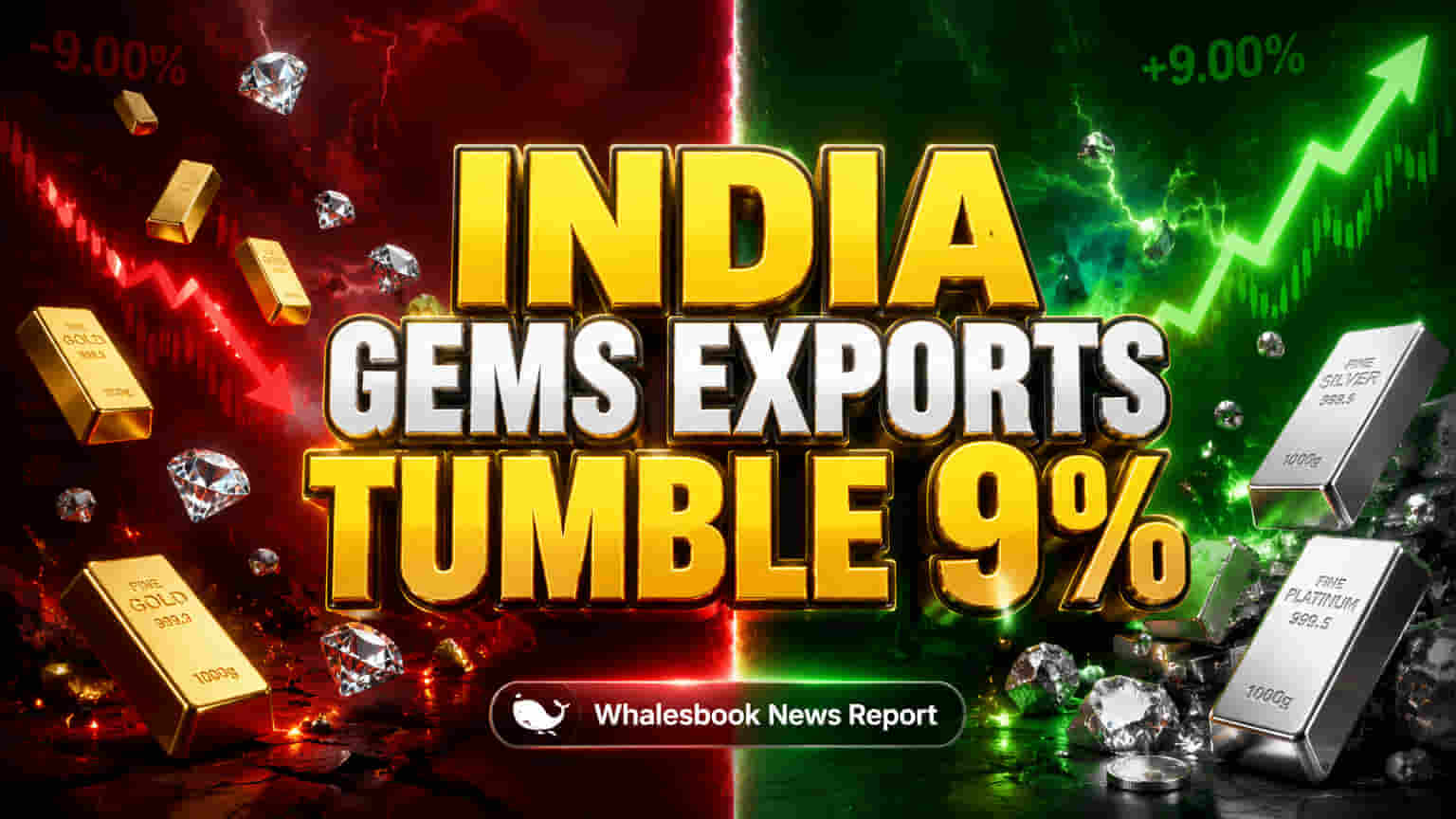


Mixed Fortunes for India's Jewel Exports
This performance highlights a market split, where traditional, high-value items face pressure from global economic uncertainty, while more affordable, modern alternatives are gaining popularity. The overall export drop doesn't tell the full story of changing consumer tastes.
Detailed Export Figures Show Stark Contrast
In April 2026, India's gem and jewellery exports fell 9.07% year-on-year to $2.45 billion (₹20,952 crore). Imports also decreased 9.54% to $2.03 billion. Industry sources point to global economic uncertainty, volatile precious metal prices, and cautious buyer sentiment due to geopolitical tensions as key reasons. However, the export data reveals a clear split. Silver jewellery exports more than quadrupled to $268.38 million, boosted by demand for affordable and fashionable items. Platinum jewellery exports rose 90.29% to $22.10 million, supported by demand in developed markets and contemporary designs. In contrast, traditional items struggled. Cut and polished diamond exports fell 19.65% to $890.91 million amid slow global demand and inventory adjustments. Plain gold jewellery exports saw a steep drop of 47.06% to $341.08 million, hit hard by high gold prices and reduced affordability. Overall gold jewellery exports, including studded items, declined 21.77% to $841.54 million, though studded gold jewellery exports showed strength, growing 16.02%. Polished lab-grown diamond exports also decreased 15.53% due to pricing pressures and increased competition, despite a slight rise in export volumes.
Global Pressures and Consumer Shifts
The sector's performance in April 2026 is tied to a difficult global economic and geopolitical climate. High inflation and the possibility of higher interest rates in the US, along with Middle East tensions, have reduced consumer confidence and spending on non-essentials globally. This has impacted luxury goods markets, with European luxury firms seeing considerable drops in market value. High gold prices, which rose sharply in early 2026 and stayed near record levels (around $4,700 per ounce by mid-May), directly reduced gold jewellery affordability. The significant price difference between gold and platinum, however, has made platinum a more appealing option for 'value luxury' buyers. This shift is evident in strong platinum jewellery sales, with many retailers planning to stock more. Silver, an affordable yet stylish choice, further highlights how consumers are prioritizing value and style over traditional luxury markers in uncertain economic times. For comparison, China's jewellery exports were $826 million in February 2026, and Italy remains a major global competitor. India's sector aims for broad growth, expanding beyond traditional markets like the US, which saw a 45% export drop in April 2025-Jan 2026 due to tariffs.
Risks Facing the Sector
Despite some strong segments, India's gem and jewellery export sector faces significant risks. Its reliance on the US market, even with trade agreements, is a vulnerability due to ongoing tariff uncertainties and possible policy changes. The large price gap between natural and lab-grown diamonds, combined with the latter's growing accessibility and ethical appeal, poses a threat, especially for mid-range diamonds. High gold prices continue to limit demand for plain gold jewellery, pushing a shift towards studded pieces instead of bulk plain items. Furthermore, global economic slowdowns and ongoing geopolitical instability could further reduce spending on luxury goods. Average P/E ratios for the Indian sector are around 61.65, with major players like Titan showing higher multiples. Kalyan Jewellers' valuation shifted from 'expensive' to 'fair' by May 2026 (P/E 28.82). However, the sector's high valuations suggest strong market expectations that might be tested by ongoing global challenges. Because the sector relies on non-essential spending, it's sensitive to economic downturns and fluctuating consumer confidence.
Outlook and Valuations
The future for India's gem and jewellery exports looks mixed. While polished diamonds and plain gold may continue to struggle with high commodity prices and changing consumer tastes, silver, platinum, and studded jewellery segments are set for growth, driven by affordability, new designs, and fashion trends. Analyst forecasts for the global luxury market predict 2-4% growth for 2026, suggesting a period of 'strategic normalization' rather than rapid expansion. The World Bank forecasts a significant 42% rise in precious metals prices for 2026, which could further pressure gold jewellery demand while potentially benefiting platinum. The Indian gems and jewellery market is expected to grow substantially long-term, with industry estimates projecting it to reach $130 billion by 2030. For FY 2025-26, total exports were $27.72 billion, a small 3.32% drop in dollar terms, showing some underlying strength. Major Indian retailers like Kalyan Jewellers (P/E 28.82) and Titan Company (P/E 84.5 as of early 2025/May 2026) reflect investor confidence in long-term potential, yet the current export performance points to ongoing short-to-medium term challenges.