 Whalesbook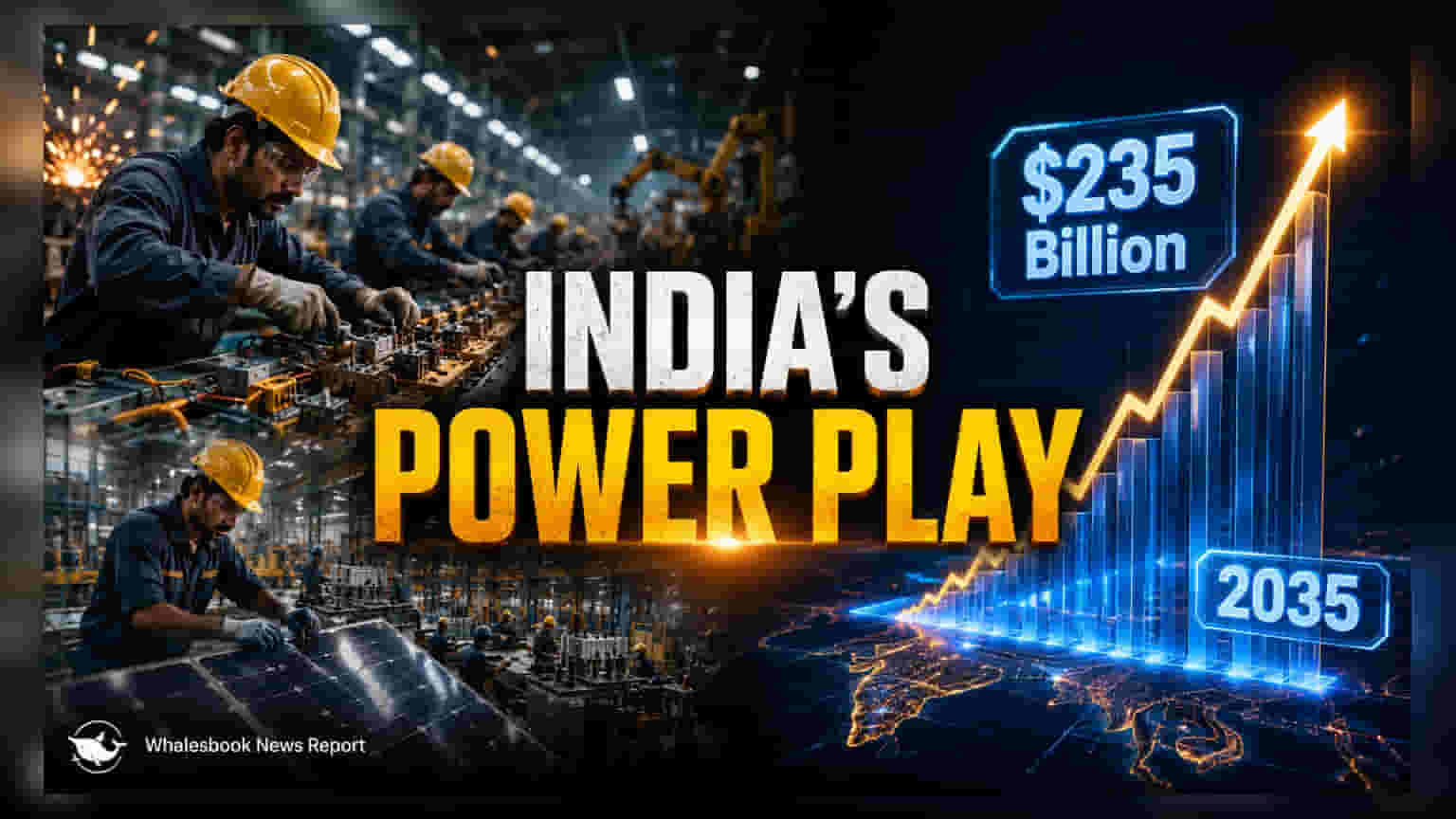


India's electrical equipment sector is set for significant expansion, aiming for $235 billion in production by 2035. This growth, projected at 11% to 13% annually, is fueled by rising electrification, renewable energy goals, and demand for power electronics. The country also aims to become a global leader in manufacturing and exports.
Growth Potential and Exports
McKinsey & Company predicts India's domestic production to reach between $195 billion and $235 billion by 2035, a sharp rise from an estimated $50 billion in 2025. Exports are expected to exceed $60 billion, supporting domestic consumption targets of $170 billion to $205 billion. Key sectors for localization and export growth include power electronics, batteries, solar photovoltaic (PV) cells and modules, and electrical subcomponents. India could capture over 7.5% of global solar PV exports by 2035. In 2024, transformer exports alone reached $3.33 billion, making India the 10th largest global exporter, with the U.S., U.K., and Netherlands as main buyers.
The Challenge of Import Dependence
Despite growth prospects, import dependence has climbed from 22% in 2020 to an anticipated 33% in 2025. McKinsey warns that this reliance could surpass 70% by 2035 if no action is taken, leading to a production deficit of over $130 billion. To avert this, domestic manufacturing capacity for power electronics, batteries, solar PV, and subcomponents needs to expand fivefold. Challenges like land acquisition delays, a lack of skilled labor, and slow technology adoption also hinder domestic manufacturing.
Opportunities and Global Standing
Significant localization opportunities exist in power electronics and batteries, with domestic demand for power electronics alone projected to exceed $17 billion by 2035. The solar PV sector also offers major potential for India to increase its global export share. Globally, the electrical equipment market is expected to reach $2.82 trillion by 2035, with Asia Pacific dominating. India's projected compound annual growth rate of 15.9% from 2025 to 2030 is strong, but its current share in the global market is less than 2%, far behind China's nearly 30%.
Risks and Weaknesses
Escalating import dependence is the primary risk, threatening a large production shortfall. The industry also faces infrastructure issues, such as insufficient testing facilities and transport networks. Shortages of skilled technical workers and slow technology adoption are further obstacles. While India's solar module exports are growing, reliance on imported solar cells and upstream manufacturing bottlenecks persist. China's dominance in global electrical equipment exports highlights the competitive challenge for India.
Future Outlook
McKinsey suggests that with coordinated efforts, India can shift from being a major electricity consumer to a key global player in enabling technologies. The sector's 11-13% annual growth is expected to continue through 2035. Analysts are positive on the transformer market, with some Indian companies receiving 'Strong Buy' ratings. Continued investment in grid modernization, renewable energy, and infrastructure development provides a solid base for future growth, provided the import dependence issue is resolved.