 Whalesbook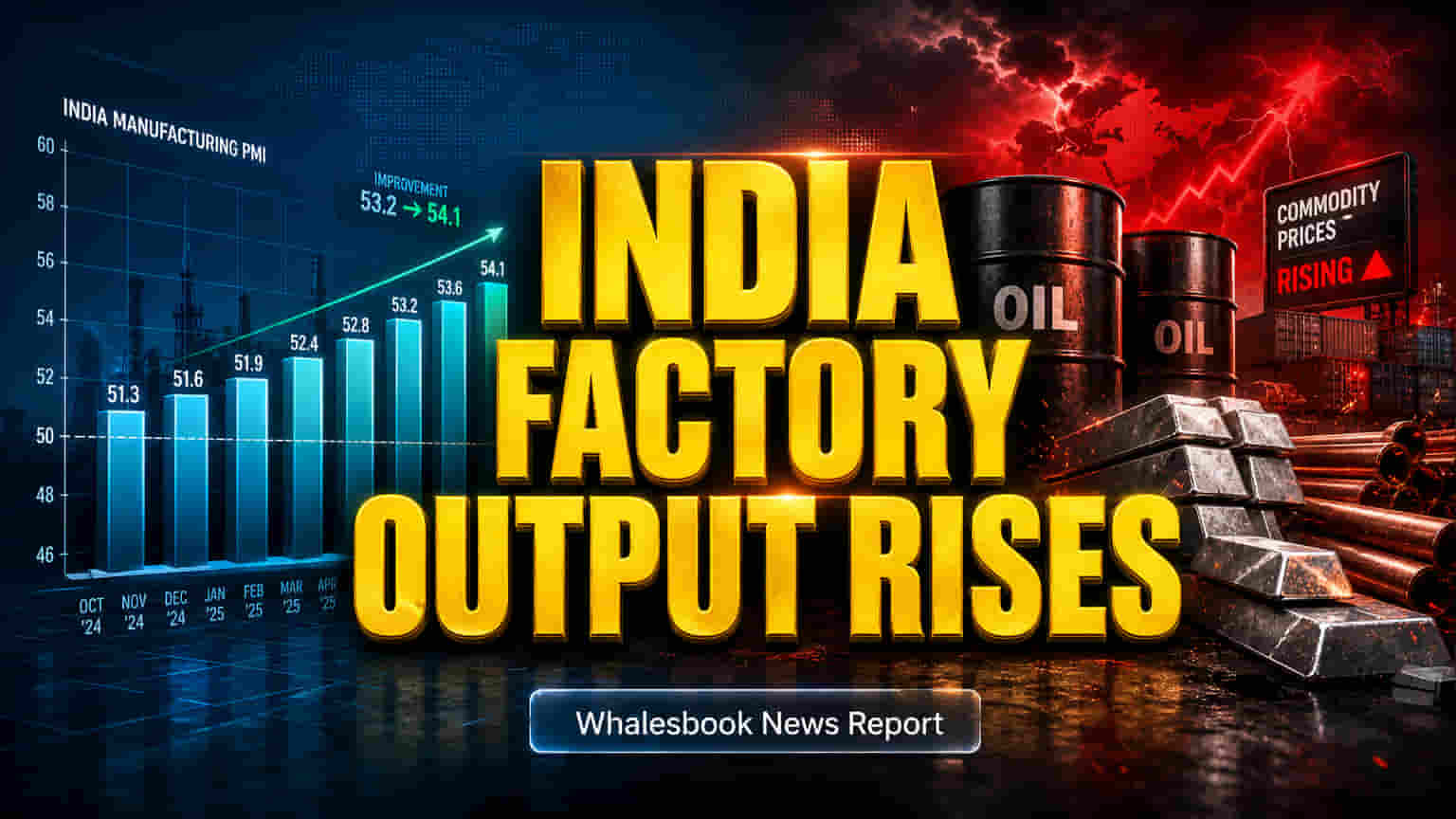


Sector Expansion Amid Cost Pressures
The sector's performance shows continued expansion despite rising global cost pressures and geopolitical uncertainty. While the headline Purchasing Managers' Index (PMI) reading improved, it hides underlying issues from higher inflation and slower demand growth. Manufacturers are boosting employment and taking advantage of export opportunities, but rising input costs pose a significant challenge to profit margins.
April PMI Reading
India's manufacturing sector activity expanded in April, with the HSBC India Manufacturing PMI rising to 54.7 from March's 53.9. This reading, revised down from a preliminary 55.9, indicates a slight recovery from March's 45-month low and is above the long-term average of 53.42. However, the pace of improvement in operating conditions was the second-slowest in nearly four years. Key demand indicators, production and new orders, grew at their second-slowest pace since mid-2022. This slower demand was attributed to competition, geopolitical conflict, and clients delaying approvals.
Inflation Drivers and Global Context
The surge in global commodity prices, heavily influenced by Middle East conflicts, is a key driver for Indian manufacturers. Projections show energy prices potentially jumping 24% by 2026, lifting overall commodity prices by 16%, with Brent crude oil expected to average $86 a barrel that year. This has led to Indian manufacturers experiencing the fastest rise in input costs since August 2022, affecting materials like aluminum, chemicals, and fuel. Consequently, output prices saw their sharpest increase in six months. In comparison, China's manufacturing PMI was stable at 50.3 in April, a slight dip from March. Japan's manufacturing PMI rose strongly to 55.1 in April, its highest since January 2022. Globally, manufacturing PMI stood at 51.3 in March, down from 51.8, indicating a general slowdown. Some reports suggest March saw the weakest global manufacturing growth in nearly four years, with input costs reaching a 43-month high. Despite these pressures, export orders expanded at their fastest pace in seven months, and business sentiment remained broadly positive, reaching its second-highest level since November 2023.
Inflation Risks and Demand Concerns
The main risk is persistent inflation driven by conflict. Input costs have surged to levels not seen since August 2022, putting significant pressure on manufacturers' margins. While they try to pass these costs on through accelerated output price hikes, moderate growth in output and new orders—among the slowest since mid-2022—shows demand is not strong enough to fully absorb these rising costs. Firms are also keeping inventories lean, with growth at its slowest pace in nearly five years. This signals caution due to expectations of subdued sales and the need to manage working capital amid higher prices. This careful inventory management, combined with rising raw material costs and geopolitical uncertainty, creates a volatile operating environment. Unlike some competing economies where output growth has accelerated, India's manufacturing sector's recovery from its March low remains modest.
Outlook and Economist's View
Despite these challenges, manufacturers are actively managing resources. Employment growth reached a ten-month high as firms expand capacity anticipating future demand. Business sentiment is optimistic, supported by marketing efforts and expected project completions. Pranjul Bhandari, Chief India Economist at HSBC, noted the sector's resilience but emphasized that inflation, driven by the Middle East conflict, is a growing concern for the economic outlook. The sector will likely continue managing these complex conditions by focusing on cost control and optimizing inventory.