

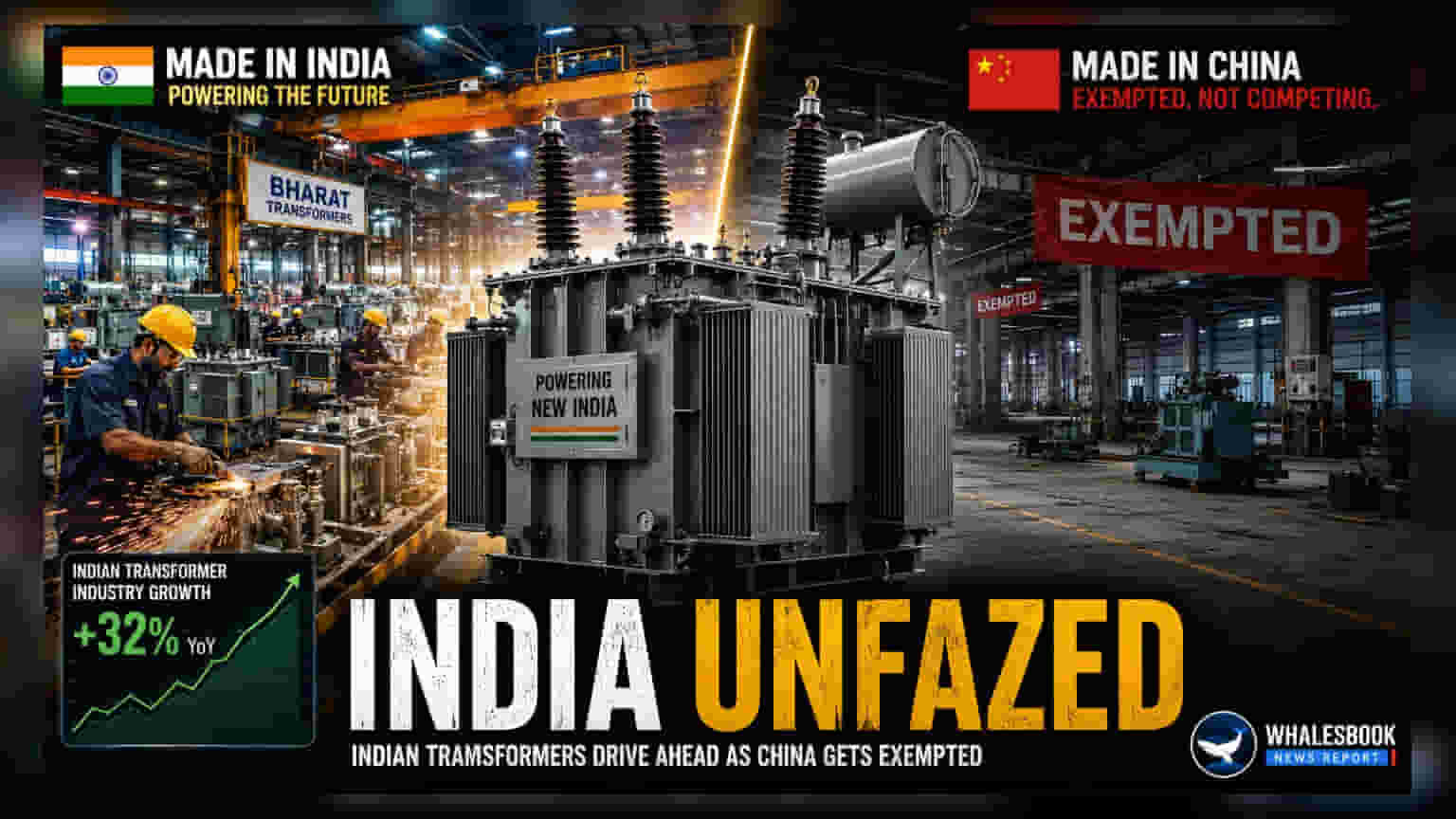
The Indian government has granted a two-year import exemption to four Chinese transformer manufacturers. Despite this, domestic industry leaders remain confident due to massive order backlogs and limited local capacity of the exempted foreign firms. Investors are monitoring how this policy affects raw material availability and project execution timelines.
Indian transformer manufacturers are maintaining a positive outlook following a recent government decision to grant a two-year import exemption to four Chinese competitors. While import exemptions often raise concerns about pricing pressure or market share loss, industry leaders and market analysts suggest that the impact on local players will be minimal in the near term.
Order Books Provide Revenue Visibility
For major players like Transformers and Rectifiers (India) Limited, the primary challenge is currently meeting the high volume of domestic demand rather than defending against new competition. The company has reported that its production capacity is fully committed for the next 30 months. This significant order book acts as a buffer, ensuring that the company maintains high utilization levels regardless of the regulatory change. With electricity demand across India continuing to rise, many manufacturers are prioritizing local project execution over international expansion or competitive pricing wars.
Supply Chain and Capacity Constraints
One of the main reasons experts remain calm is the limited manufacturing footprint of the exempted Chinese firms within India. Industry assessments indicate that only one of the four entities currently operates a production facility in the country, with an estimated annual output of roughly 144 transformers. Establishing new manufacturing operations, recruiting skilled technical staff, and localizing technology takes considerable time. Given that the exemption is valid for only two years, analysts at brokerage firms suggest it is unlikely that these companies will be able to scale up production quickly enough to disrupt the established market.
Furthermore, the policy could potentially act as a supporting factor for Indian companies. Some of the exempted Chinese manufacturers are also major suppliers of critical components such as bushings. If these companies increase their supply of parts to the Indian market, it could help reduce existing shortages, allowing domestic manufacturers to finish their own projects faster.
What Investors Should Monitor
While the immediate competitive risk appears low, the industry faces broader challenges that investors should track. The most critical factor is the execution of massive order books. Any delay in project commissioning or unexpected spikes in raw material costs could impact profit margins, even if demand remains strong. Investors should watch for management commentary on how effectively companies manage their supply chains and whether the domestic demand cycle continues to justify the current valuation premiums in the sector. The long-term sustainability of this demand, which some industry leaders project could last until 2037, remains a key element to track in future quarterly results.