

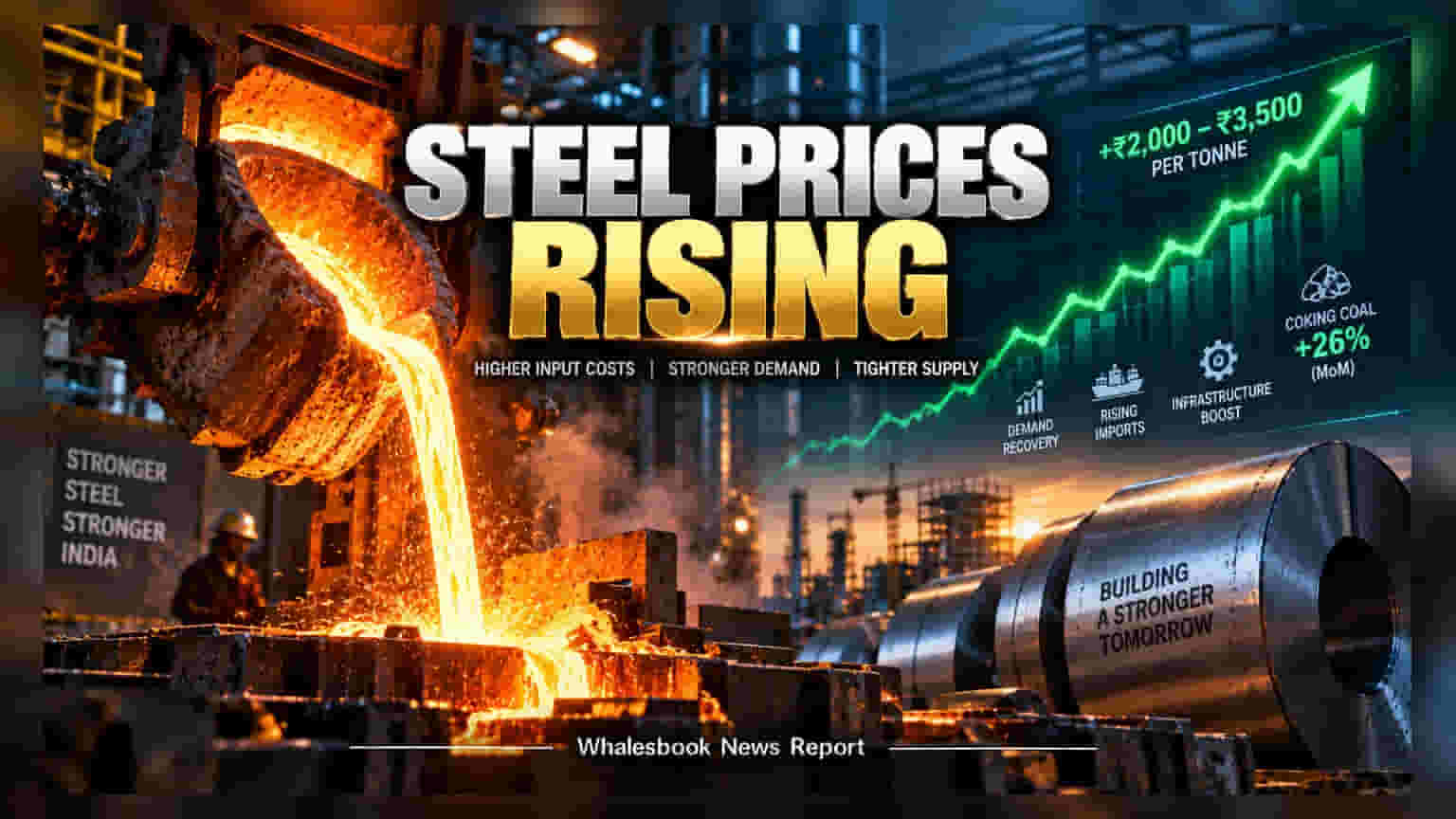
Indian steel producers are raising prices by ₹2,000 to ₹3,500 per tonne to offset a 26% surge in coking coal costs. While improved demand from infrastructure projects supports these hikes, the domestic industry faces pressure from a 36.6% rise in low-cost finished steel imports. Investors are monitoring whether manufacturers can pass on these costs without losing market share to foreign competition.
Indian steel manufacturers have begun increasing prices by ₹2,000 to ₹3,500 per tonne. This decision follows a steep rise in production costs, primarily driven by a 26% month-on-month jump in the price of coking coal. Steel producers often pass these input expenses to customers in the automotive and infrastructure sectors to protect their profit margins.
The price hike comes at a time when domestic demand is showing signs of recovery. Following the monsoon season, infrastructure activity typically accelerates, which provides a boost to steel consumption. Additionally, many steel mills had recently undergone maintenance shutdowns, which naturally reduced the supply available in the market. This tighter supply environment gives producers a window to implement these price increases.
The Challenge of Rising Imports
While the price hikes reflect higher costs, domestic steel makers face a significant hurdle: the influx of cheap, imported steel. Between April and July, India shifted to a position where it imports more finished steel than it exports, with import volumes jumping 36.6% compared to the previous year. China remains a primary supplier, contributing nearly one-third of these incoming shipments.
This trend creates a difficult situation for local companies. If domestic producers raise prices too aggressively to cover their own rising costs, they risk losing customers to lower-priced foreign steel. Even with safeguard duties currently in place, analysts note that the volume of these imports puts a cap on the industry’s ability to fully pass on cost increases to the market.
Impact on Market Players
The ability to manage these price changes varies significantly between large integrated steel producers and smaller, non-integrated players. Large, established companies like Tata Steel and JSW Steel often have more flexibility in their operations and can better manage their raw material sourcing, which helps in maintaining more stable profit margins.
In contrast, smaller producers who are more dependent on buying raw materials at spot market prices face greater pressure. If they cannot pass on the full impact of the 26% rise in coking coal costs, their profitability may come under pressure. Investors are keeping a close watch on how different companies manage this balance between protecting their margins and maintaining their market share against foreign competition.
Moving forward, the key factor for investors will be to track the volume of steel imports. If import levels remain high, it may limit the room for further domestic price hikes. Market participants will also focus on whether the upcoming quarters show consistent demand growth from government infrastructure spending to absorb the new, higher price points.