

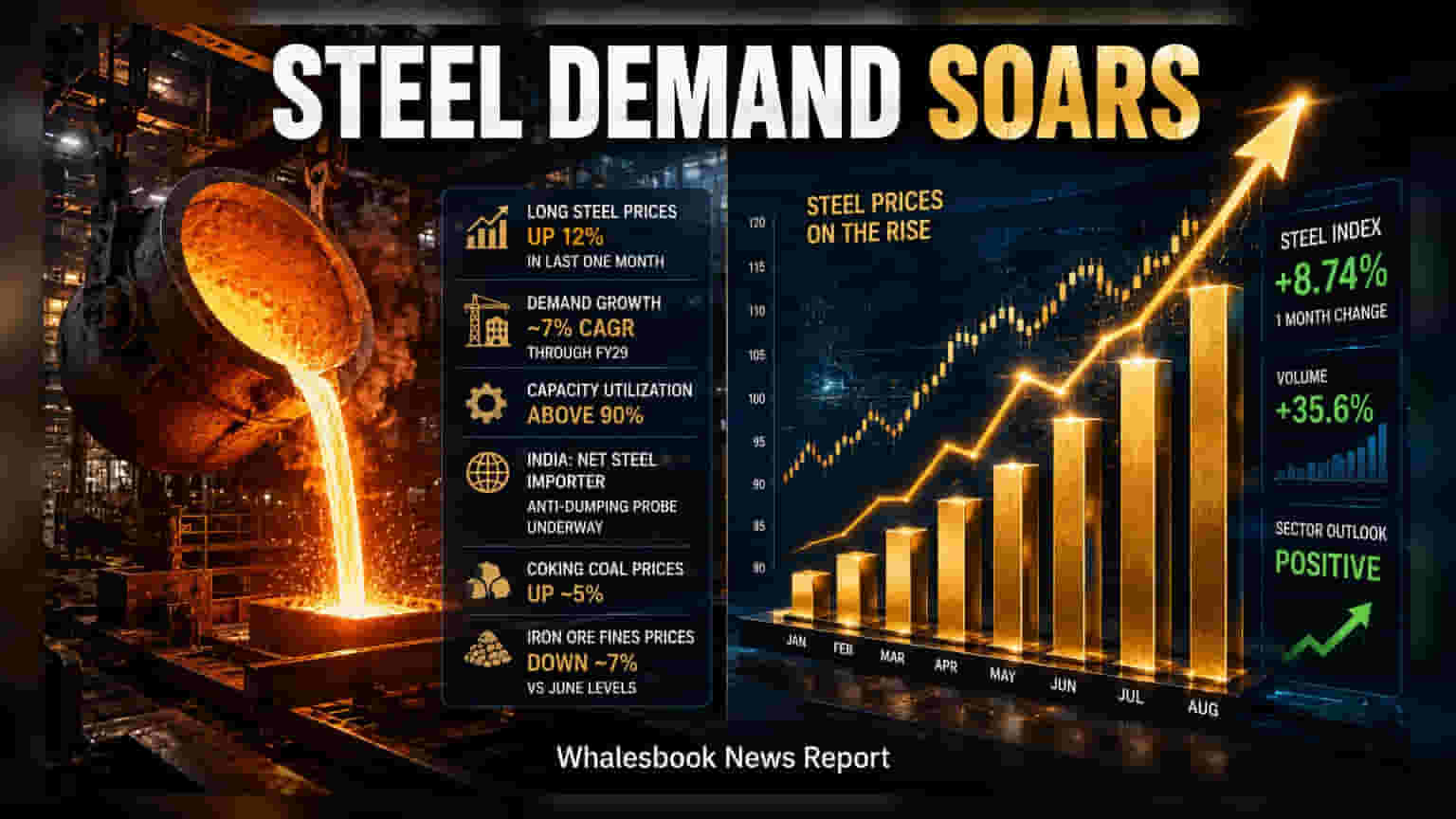
Indian steel demand is growing faster than supply, fueling a 12% price recovery following the recent monsoon slump. While high capacity utilization supports growth, the industry faces pressure from import volumes. Investors should monitor the impact of ongoing anti-dumping investigations and raw material cost fluctuations on future profit margins.
The Indian steel sector has begun a notable recovery, with long steel prices climbing 12% over the last month. This rebound effectively reverses the price dip that occurred during the monsoon season between June and July, as construction and infrastructure projects across the country regain momentum.
Supply-Demand Mismatch Drives Recovery
The current price uptick is driven by a structural imbalance in the market. Domestic steel demand is projected to maintain a compound annual growth rate of approximately 7% through fiscal year 2029. Crucially, this consumption growth is currently running faster than the speed at which companies are adding new production capacity. As a result, industry-wide capacity utilization rates are holding firm above 90%. For investors, this high level of operation indicates that plants are working efficiently to meet demand, which typically supports revenue growth.
Trade Dynamics and Import Pressure
While the demand picture remains strong, the trade environment presents a complex challenge. India is currently a net importer of steel, meaning the country brings in more steel than it sells abroad. This influx of imports often limits how much local manufacturers can raise prices, even when demand is healthy. The government is aware of this trend and is currently pursuing anti-dumping investigations to curb the entry of low-priced steel from international sources. The effectiveness of these measures will be a key factor in determining whether domestic manufacturers can maintain their current pricing power.
Financial Margins and Raw Material Costs
Profitability in the sector is seeing mixed signals from input costs. Coking coal, a critical raw material, has seen its price rise by about 5% due to supply constraints. This increases the cost of production for integrated steel players. On the positive side, domestic iron ore fines have seen a 7% price decline compared to June levels, providing some cushion for manufacturers.
Investors should look beyond just the top-line revenue growth and monitor whether companies can protect their profit margins. If coking coal prices continue to rise while cheaper imported steel keeps a lid on price hikes, profit margins could come under pressure. The next important updates to follow will be the outcome of the ongoing anti-dumping investigations and the upcoming quarterly financial results, which will clarify how these input cost and trade dynamics are impacting bottom-line performance.