

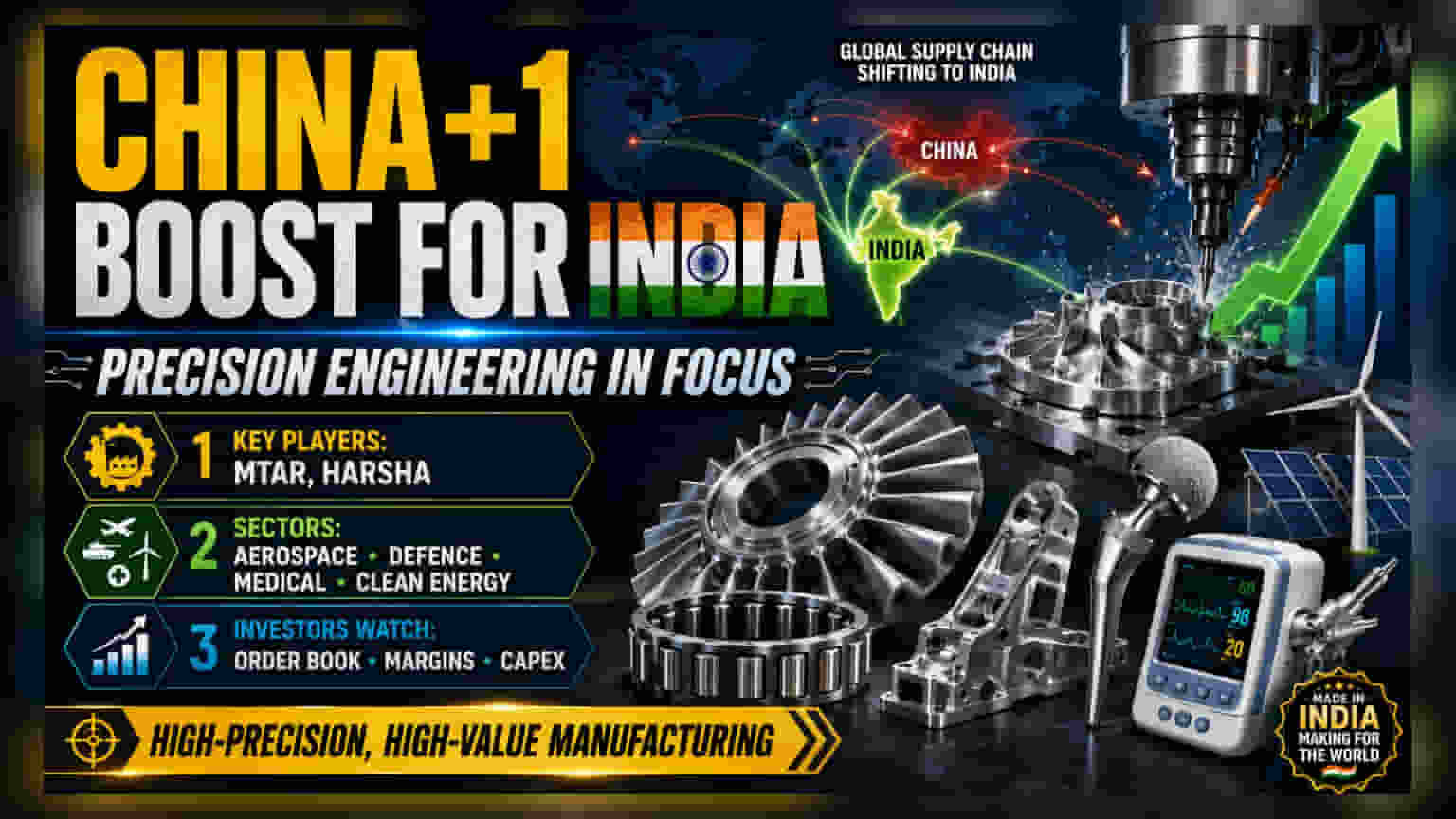
Indian manufacturers are attracting global demand as supply chains shift away from China, particularly in aerospace and defense. While listed players like MTAR Technologies and Harsha Engineers are capturing this trend, investors should consider the long qualification cycles and capital-intensive nature of this high-precision sector.
The Shift in Global Supply Chains
Global manufacturing is undergoing a significant transition. Many industries are moving their supply chains away from China to reduce dependence, a trend often called "China Plus One." This shift is creating opportunities for Indian precision engineering firms. These companies are now being tapped to produce complex components that require extremely fine tolerances, often thinner than a human hair. This is particularly visible in high-stakes sectors such as aerospace, defense, medical devices, and clean energy, where quality and reliability are more important than low cost.
Listed Players and Industry Leaders
Within the Indian market, several companies have positioned themselves as key suppliers. MTAR Technologies, for example, serves highly regulated sectors like aerospace, defense, and nuclear energy. Its business model relies on deep engineering capabilities and long-term client engagements with organizations like the Department of Atomic Energy.
Similarly, Harsha Engineers has established a strong presence as a leading manufacturer and exporter of precision bearing cages. By maintaining a global customer base and diversified manufacturing facilities, these listed entities aim to sustain growth by capitalizing on international demand for high-quality components.
Other industry players, such as Unimech Aerospace, Aequs, and Ameya Precision Engineers, are also active in this space. These companies focus on niche capabilities like 5-axis machining or pump and valve components. While some of these remain private and offer limited direct access to retail investors, their growth highlights the increasing depth of the Indian precision engineering ecosystem.
Risks and Execution Challenges
While the demand trend appears supportive, precision engineering is not without risks. These businesses operate on "high-mix, low-volume" models, meaning they produce a large variety of complex parts in smaller quantities. This requires high investment in sophisticated machinery and skilled labor.
One of the biggest hurdles is the "qualification cycle." Before a company can supply parts for an aerospace or defense project, its components must pass rigorous testing. This process can take years, meaning revenue growth is rarely overnight. Investors should also watch for capital spending pressures. Heavy investment in new technology or capacity is often required to stay competitive, which can impact cash flow and debt levels if project execution is delayed or demand does not meet expectations.
What Investors Should Track
To understand the health of these companies, investors should look beyond top-line revenue growth. First, monitor the order book status and, more importantly, the speed of execution. An order win is only the start; successful delivery within specific timelines determines profitability.
Second, keep an eye on profit margins. High-precision manufacturing is intended to yield better margins than commodity manufacturing, but cost overruns or inefficiencies can quickly erode these benefits. Finally, watch management commentary on debt and capital allocation. As these companies expand their capacities to meet global demand, maintaining a balanced balance sheet is essential for long-term stability.