 Whalesbook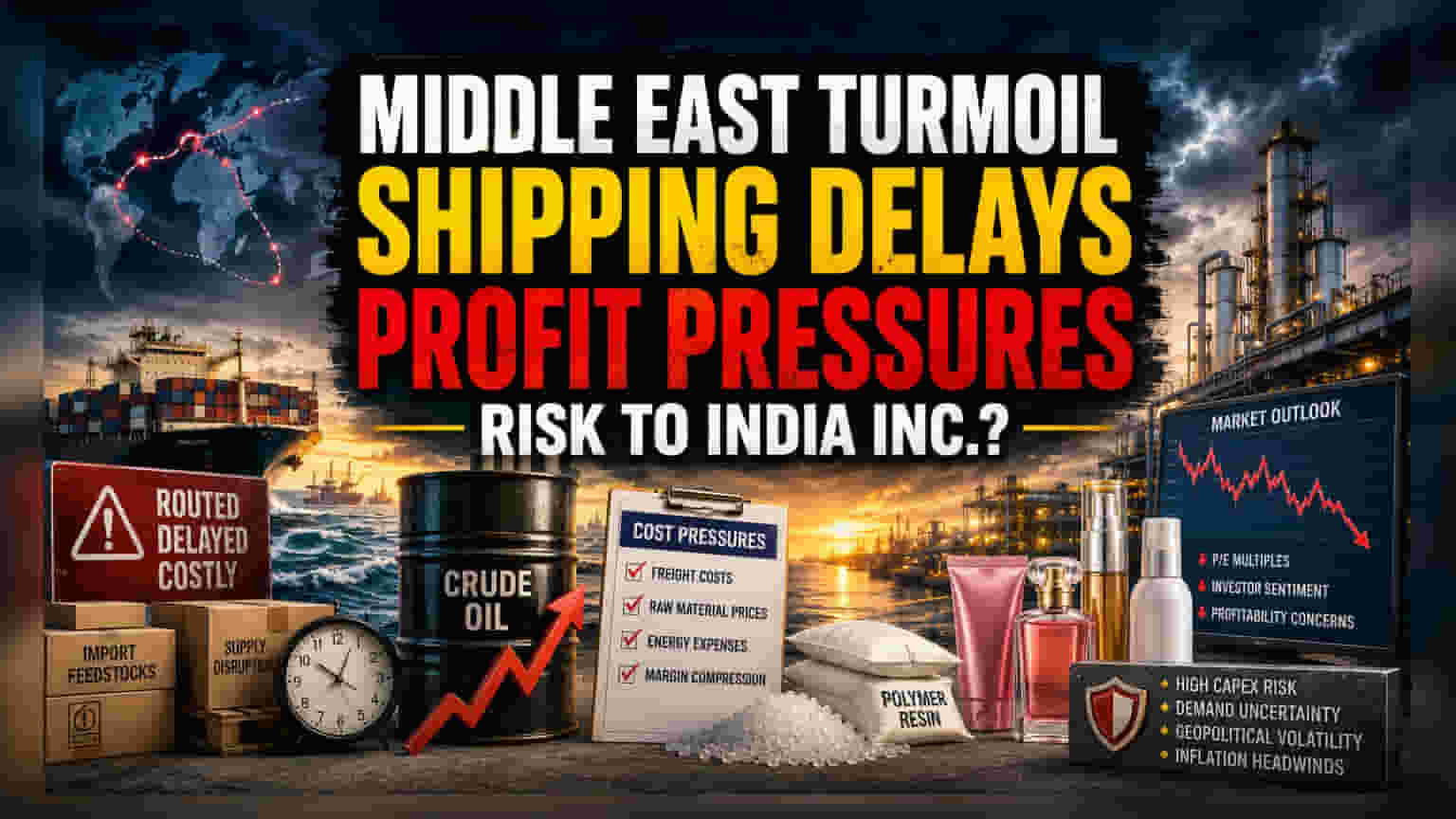


The Logistics Bottleneck
Shipping disruptions triggered by regional instability in the Middle East have forced a rerouting of trade corridors, significantly extending lead times for Indian manufacturers. For firms reliant on imported petrochemical feedstocks, this translates into a dual blow: escalated freight costs and a tighter supply window. While major players have attempted to hedge these risks through contractual pass-through agreements, the spot price volatility of polymers continues to threaten operating margins that are already compressed by elevated energy expenditures.
The Valuation Disconnect
Market participants are currently pricing in a divergence between volume growth and profitability. While companies like EPL Ltd. maintain a positive outlook on the beauty and cosmetics segment, recent trading data suggests a cautious sentiment. Industry P/E ratios are currently recalibrating as investors demand proof that top-line expansion can survive the current inflationary cycle. Compared to broad industrial manufacturing, the packaging sector remains uniquely sensitive to crude oil fluctuations, meaning any further escalation in global energy prices will likely act as a structural headwind for equity valuations.
The Forensic Bear Case
The industry's reliance on domestic volume growth is a double-edged sword. While it currently acts as a buffer against export disruptions for firms like TCPL Packaging, it creates an over-dependence on a single geographic market. Furthermore, capital expenditure intensity remains high as firms scramble to bring new capacity online in a high-interest-rate environment. There is a tangible risk that as these facilities become operational, the anticipated surge in demand may fail to materialize, leading to underutilized assets and significant balance sheet strain. Management teams are currently walking a tightrope between necessary expansion and maintaining liquidity in a period of restricted global trade.
Forward Trajectory
Brokerage sentiment remains cautiously optimistic, predicated on the assumption that global supply chains will normalize by mid-FY27. However, the reliance on, and vulnerability to, geopolitical variables leaves little room for operational error. Future performance will be heavily dictated by the ability of these firms to maintain market share in high-margin segments, such as luxury cosmetics and specialized pharmaceutical packaging, while successfully navigating the persistent inflationary pressures on input materials.