

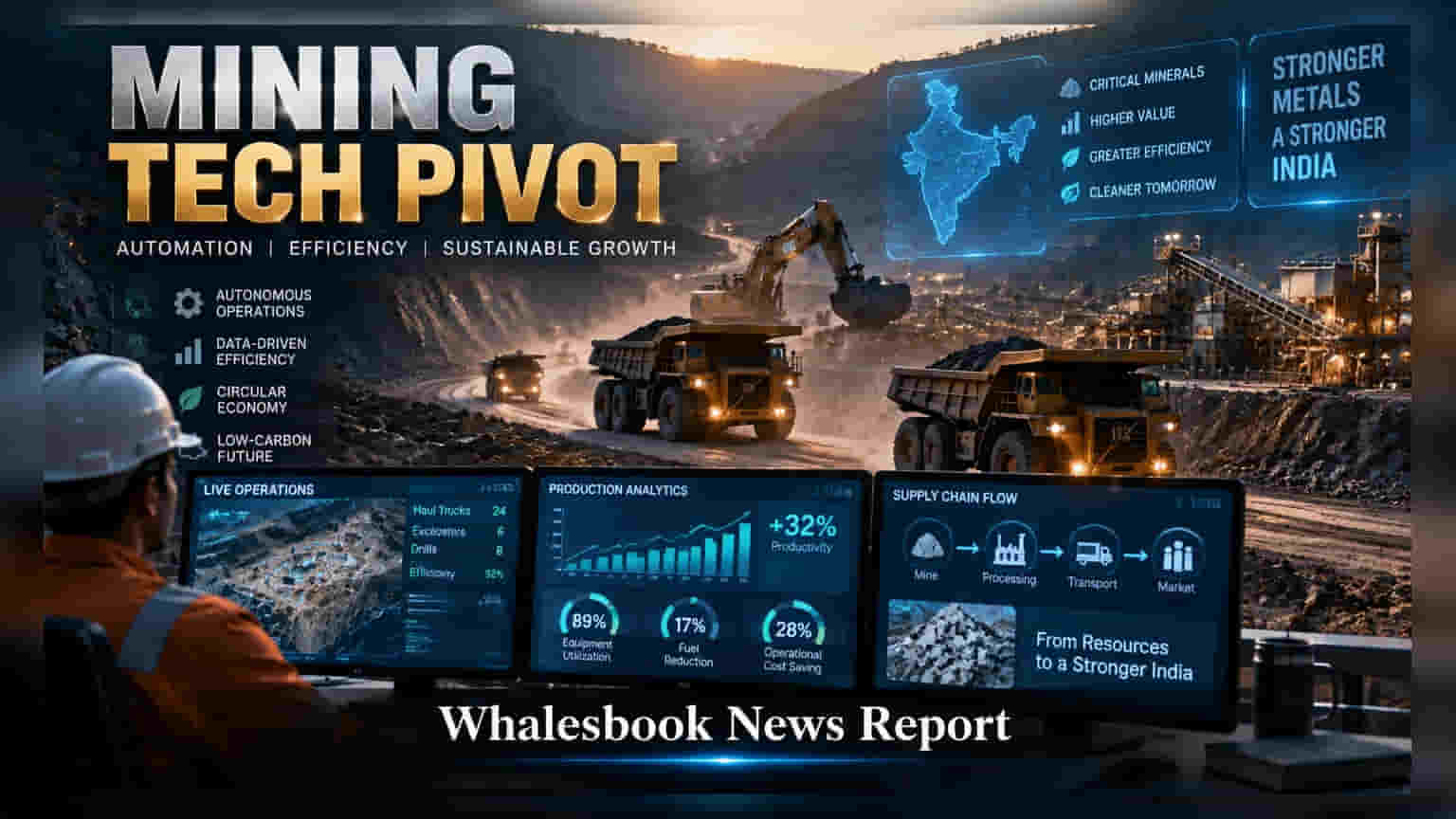
A new FICCI and KPMG report urges India’s mining and metals industry to prioritize technology and recycling over mere production volume. Meeting long-term capacity goals requires heavy spending on digital efficiency, which may impact near-term capital expenditure and profit margins for major industry players.
The Indian mining and metals sector is at a turning point where traditional methods of expanding production capacity may no longer be enough to remain competitive. A recent report from FICCI and KPMG indicates that the industry must move beyond chasing raw volume targets. Instead, the focus is shifting toward adopting advanced digital tools, automation, and circular economy practices to improve overall efficiency.
For investors, this transition highlights a shift in corporate strategy. The government has set ambitious long-term goals for the sector, including aiming for steel capacity to reach 500 million tonnes by 2047, alongside massive increases in aluminium and copper production. Achieving these targets requires more than just building new mines or plants. It requires extracting more value from existing assets, including the use of low-grade ores, tailings, and recycled scrap as raw materials.
Implementing these technologies is a capital-intensive task. Large players in the Indian steel and metal space, such as Tata Steel, JSW Steel, and Hindalco, have been gradually increasing their investment in digital infrastructure and green energy transitions. However, the cost of this technological overhaul can create pressure on company balance sheets, especially if global commodity prices remain volatile. Investors should consider that the need for constant modernization can lead to higher capital spending, which may keep free cash flow lower during the transition phase.
Beyond capital costs, the sector faces significant regulatory and environmental headwinds. As global standards for decarbonization become stricter, Indian companies must ensure their operations are compliant to maintain export competitiveness. The report notes that failure to integrate AI and data analytics could leave Indian producers lagging behind global peers in terms of cost efficiency and operational agility.
For investors tracking this sector, the key monitorables will be how companies balance their expansion projects with these digital and sustainability investments. It is important to watch for updates in quarterly results regarding debt levels, capital spending commitments, and whether companies can successfully improve profit margins through these efficiency improvements rather than relying solely on market-driven price hikes for metals.