

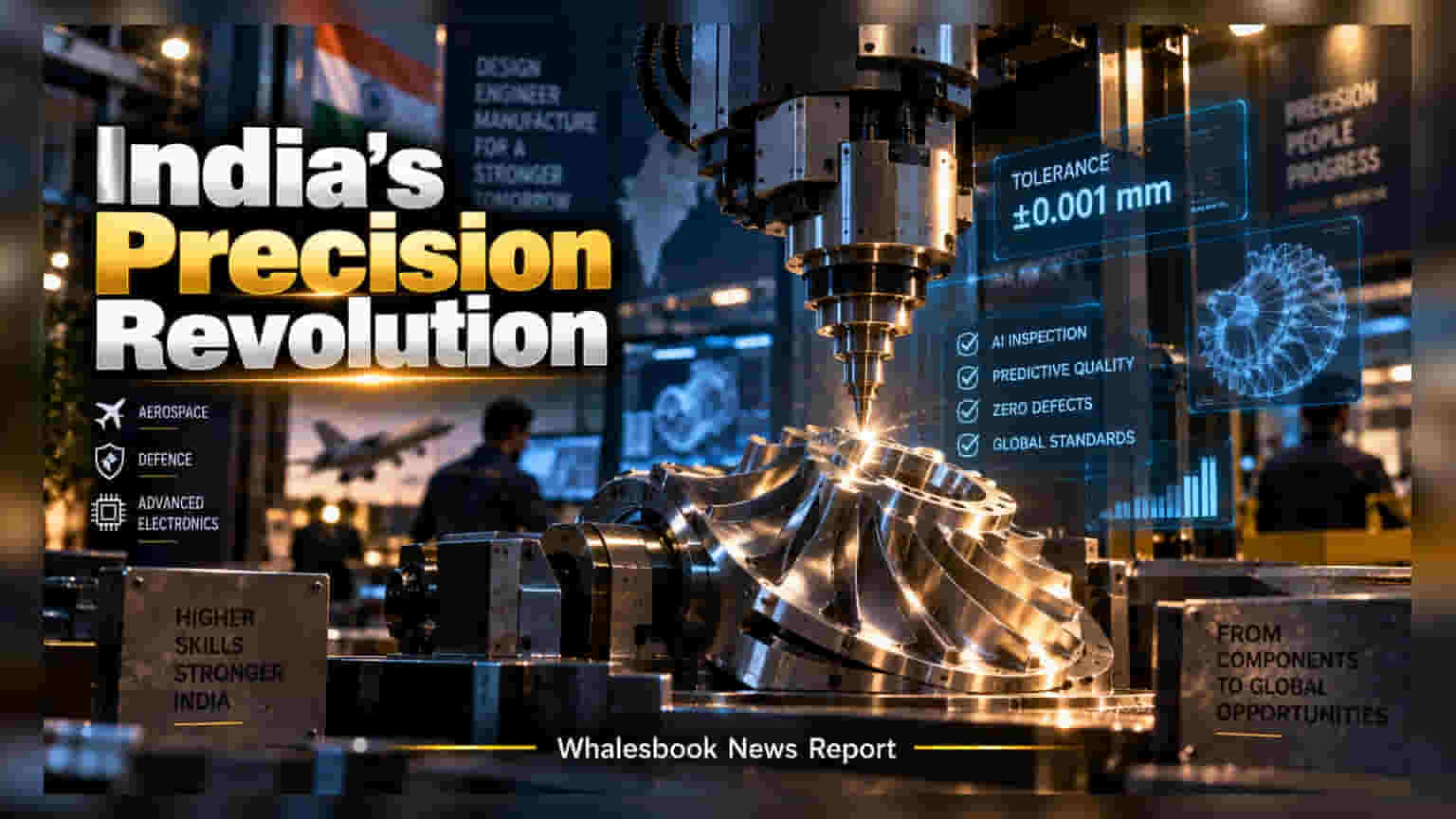
Indian manufacturers are shifting from cost-competitiveness toward high-precision work in defense, aerospace, and semiconductors. While this move into high-value markets aims to improve profit margins, investors should monitor the industry's ability to boost research spending to maintain a competitive advantage.
India's industrial sector is undergoing a meaningful shift. Companies are moving from basic manufacturing focused on low costs to high-precision engineering. This transition is essential for entering complex supply chains like aerospace, defense, and advanced electronics, where quality requirements are very strict. This evolution is moving the industry away from historical reliance on scale alone.
Precision engineering helps firms build better components. Technologies like artificial intelligence and advanced digital sensors now allow factories to catch defects before they happen, rather than after. This shift from manual inspection to predictive quality control is becoming a business advantage. It allows firms to become reliable partners for global clients who demand consistency and can pay higher prices for it.
This move toward high-value work helps firms build a stronger business position. For example, firms like Ethereal Machines and Accurate Engineering are using their technical expertise to cater to specialized industries. This strategy can lead to better profit margins, as clients are often willing to pay a premium for consistent, high-quality results that reduce their own operational risks. By providing components that meet strict global standards, these companies aim to become strategic partners rather than simple vendors.
However, investors should also consider the structural challenges. A major hurdle for the Indian manufacturing sector is the current level of research and development investment. India spends roughly 0.7% of its GDP on R&D, which is significantly lower than many innovation-led economies. Without higher investment in proprietary technology and advanced product design, companies may find it harder to maintain a long-term competitive edge against global rivals.
The transition toward what can be called institutional trust means manufacturers must prove they can deliver under pressure through repeated audits and strict qualification cycles. Investors may track how companies manage their capital spending toward research and whether they can successfully move up the value chain. Long-term success will likely depend on whether firms can build unique technical capabilities that remain relevant across different sectors regardless of economic cycles.