

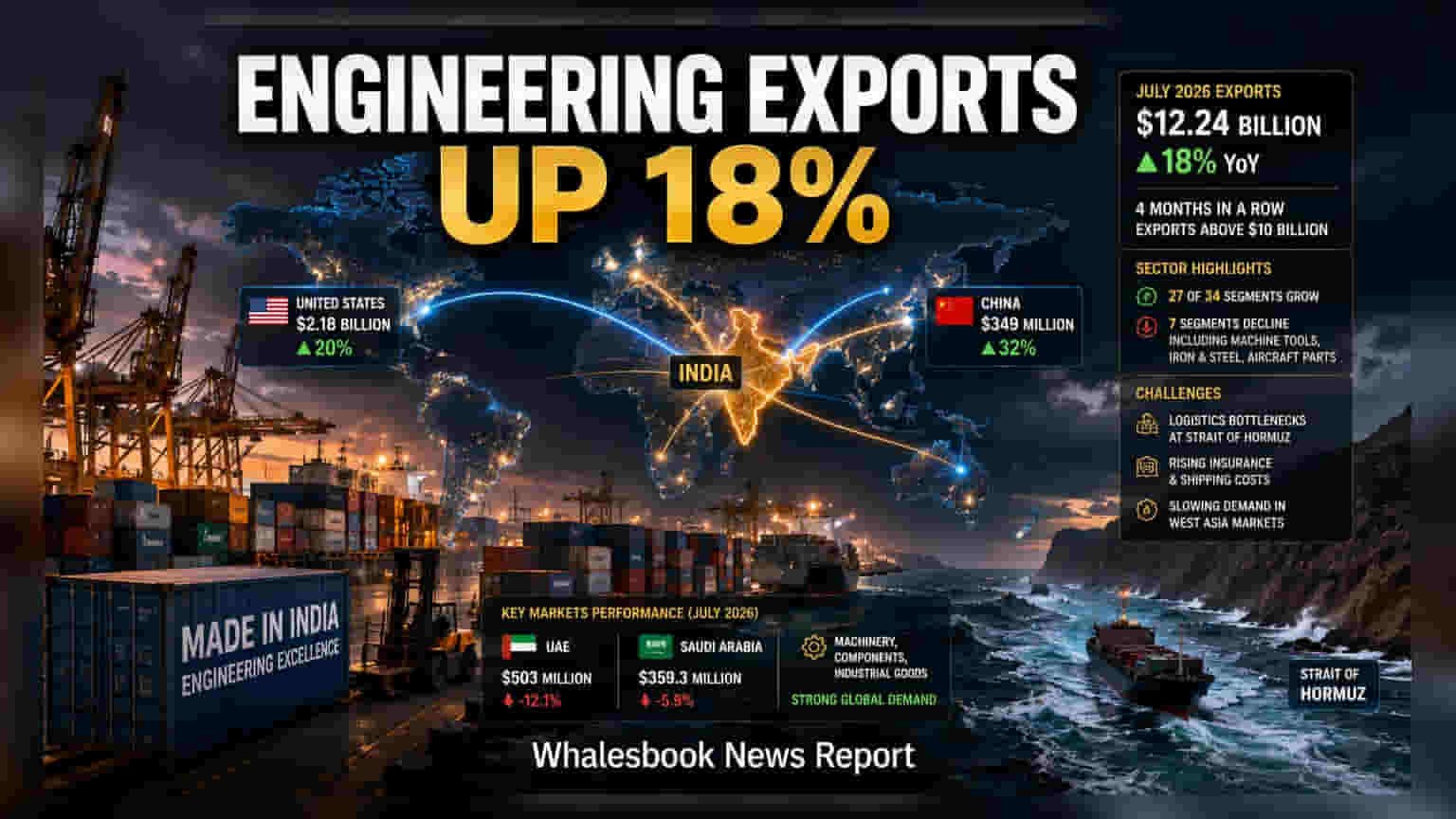
India’s engineering exports reached $12.24 billion in July 2026, driven by strong demand from the US and China. However, regional instability in West Asia is creating logistics hurdles, leading to a decline in shipments to the UAE and Saudi Arabia and raising concerns about shipping costs.
India’s engineering exports recorded a strong performance in July 2026, with shipments rising 18% year-on-year to reach $12.24 billion. This growth trajectory continues a trend of maintaining monthly exports above the $10 billion mark for the first four months of the current financial year. The data indicates that despite global uncertainty, Indian manufacturers are finding substantial buyers in North American and East Asian markets.
Growth Drivers in US and China
The steady rise in export numbers is largely supported by consistent demand for machinery and industrial components in the United States and China. The United States remains the largest buyer of Indian engineering goods, with exports to the country climbing 20% to $2.18 billion in July. China has also emerged as a significant growth driver, with a 32% increase in imports of Indian goods, totaling $349 million for the month. This suggests that Indian suppliers are successfully integrating into these large manufacturing supply chains.
Logistics Friction in West Asia
While exports to the West are growing, regional instability in West Asia is causing noticeable friction. Logistics bottlenecks, particularly around the Strait of Hormuz, are delaying deliveries and cooling demand in key markets. Shipments to the United Arab Emirates fell by 12.1% to $503 million, while exports to Saudi Arabia dropped by 5.9% to $359.3 million.
For investors, these disruptions represent a dual challenge. First, project-linked demand in these Gulf countries is slowing down as equipment delivery schedules face delays. Second, the logistics crisis is leading to higher insurance premiums and shipping costs, which can tighten profit margins for companies with high exposure to these specific regions.
Sectoral Performance and Risks
While 27 out of 34 engineering segments reported growth, the sector is not uniform. Seven categories, including iron and steel, machine tools, and aircraft parts, faced a contraction in July. The decline in segments like machine tools indicates changing demand patterns, such as the shift toward electric vehicles in markets like Thailand.
The sector now faces a complex road ahead. Beyond logistics, industry leaders are monitoring the impact of heightened protectionism and rising energy costs, which could force companies to spend more on upgrading technology to remain competitive. The next critical monitorable for investors will be whether companies can pass on higher shipping costs to customers or if these added expenses will lead to profit margin pressure in the upcoming quarterly results. The ability of manufacturers to diversify their export markets will also be a key factor in shielding their revenue from regional logistics problems.