

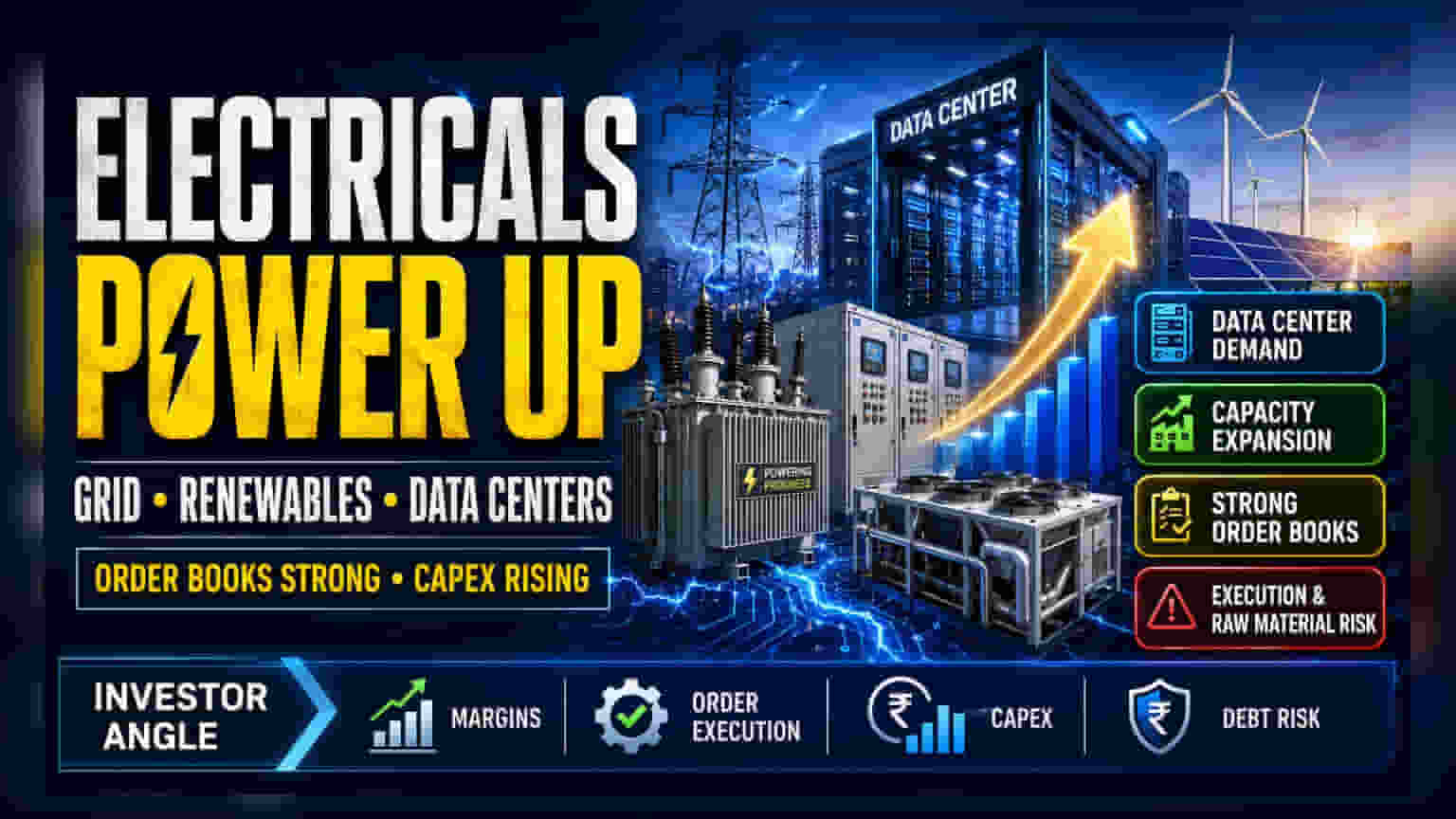
Companies in the electrical equipment, cable, and cooling sectors are ramping up capacity to meet demand from data centers, grid modernization, and renewable energy projects. With several firms reporting strong order books and long-term revenue targets, investors are now watching whether these businesses can effectively manage the costs and execution risks associated with this rapid expansion.
What Happened
India's electrical equipment sector is undergoing a shift as companies pivot toward grid modernization, renewable energy projects, and the rapidly growing data center market. Executives from manufacturers of cables, transformers, and industrial cooling systems recently shared positive outlooks, pointing to strong order books and planned capacity expansions. This change marks a move away from traditional power generation focus toward infrastructure that supports digital and green energy needs.
Data Centers as a New Growth Engine
Data centers have emerged as a primary demand driver for electrical infrastructure. Companies like Vivid Electromech, which manufactures electrical panels, report that data centers now account for roughly half of their revenue, with forecasts for further segment growth of 35% to 40%. The technical requirements for these facilities—which demand high-quality power supply and cooling—are keeping manufacturing facilities at near-full capacity. Similarly, Shree Refrigerations is entering the data center cooling space through a technology partnership to leverage its compressor technology, targeting a 40% growth rate for the business.
Expansion and Order Book Trends
Manufacturers are responding to this demand by expanding their physical capacity. Indo SMC, a medium-voltage product maker, has set revenue targets exceeding ₹1,000 crore by FY28-FY29, supported by an order book already topping ₹300 crore. In the cabling segment, JD Cables is also targeting revenue of ₹1,000 crore by FY28, with a current order book of around ₹515 crore. Other firms, such as KSH International, are doubling production capacity at their Supa facility to meet demand for high-voltage transformer components.
The Risks of Rapid Expansion
While the demand outlook appears positive, investors should consider the risks inherent in heavy infrastructure spending. First, the sector is sensitive to raw material prices, particularly copper and steel, which can squeeze profit margins if the company cannot pass these costs to customers. Second, aggressive capacity expansion requires significant capital spending. This can increase debt levels and put pressure on cash flow if project execution slows down or if demand does not materialize as expected. Third, execution risk is a major factor; large-scale projects, especially those tied to railways or government infrastructure, can face delays in billing, land acquisition, or regulatory approvals, which can lock up working capital for extended periods.
What Investors Should Track Next
For investors, the story is not just about the size of the order book, but the quality of execution. Key monitorables include whether companies can maintain profit margins despite rising material costs and if they can convert these orders into actual revenue without taking on excessive debt. Additionally, observing the pace of data center project commissioning will provide a clearer picture of whether the anticipated demand is sustainable over the next two to three years.