 Whalesbook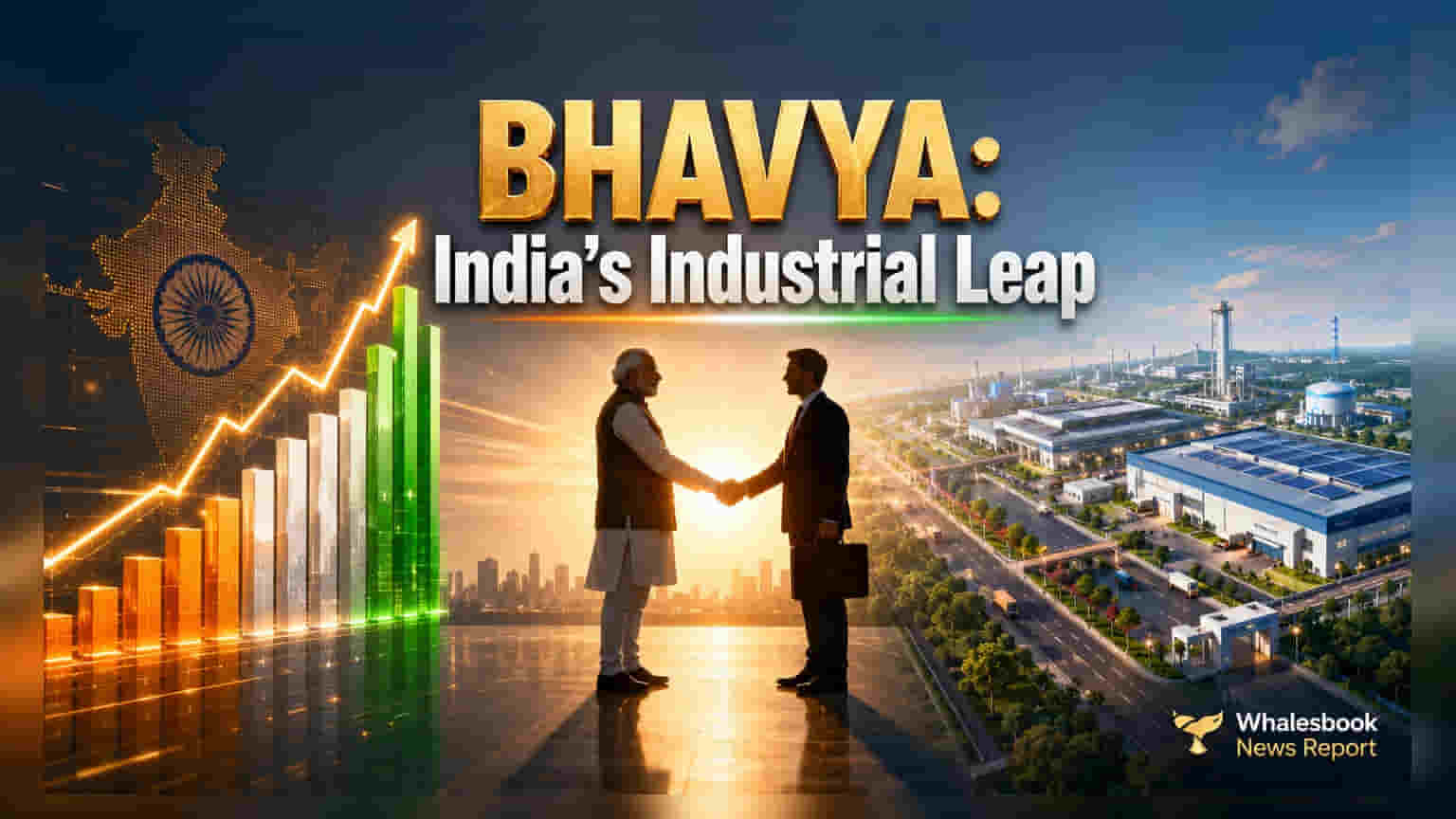


Catalyzing Industrial Growth
The Indian government has launched the Bharat Audyogik Vikas Yojna (BHAVYA) scheme to create a strong manufacturing ecosystem. With about ₹33,660 crore budgeted for six years (FY 2026-27 to 2031-32), the plan is to develop 100 industrial parks ready for immediate investment. The Department for Promotion of Industry and Internal Trade (DPIIT) will manage a competitive selection process for up to 50 parks in the first phase, focusing on viability and planning. This effort aims to simplify business operations by offering essential plug-and-play infrastructure, advanced logistics, and worker amenities to improve the ease of doing business. Businesses can start quickly with pre-approved land and ready infrastructure, reducing entry barriers. The scheme supports parks from 100 to 1,000 acres, providing up to ₹1 crore per acre for core infrastructure like roads and utilities, plus warehousing and factory sheds.
Building on Past Successes and Future Potential
The BHAVYA scheme learns from previous industrial development efforts, including the National Industrial Corridor Development Programme (NICDP). It aims to build integrated industrial ecosystems through partnerships between state governments and private companies. Key features include digital governance and sustainable development to align with global manufacturing trends. The initiative seeks to draw domestic and foreign investment by offering investor-friendly reforms and streamlined single-window systems managed by the states. This strategy is expected to drive economic growth and create jobs.
Competitive Landscape and Investment Outlook
While immediate stock market reactions were not detailed, the BHAVYA scheme is expected to benefit companies in infrastructure, construction, and industrial real estate. This program could increase competition for entities like the DMIC Trust and state industrial development corporations. However, the improved infrastructure and ease of doing business should boost the overall attractiveness of India's manufacturing sector. Companies supplying raw materials, construction equipment, and industrial services may see positive long-term impacts. Successful implementation, state coordination, and sustained investor confidence are crucial for BHAVYA's potential. Past industrial development programs have yielded mixed results, highlighting the need for strong execution.