 Whalesbook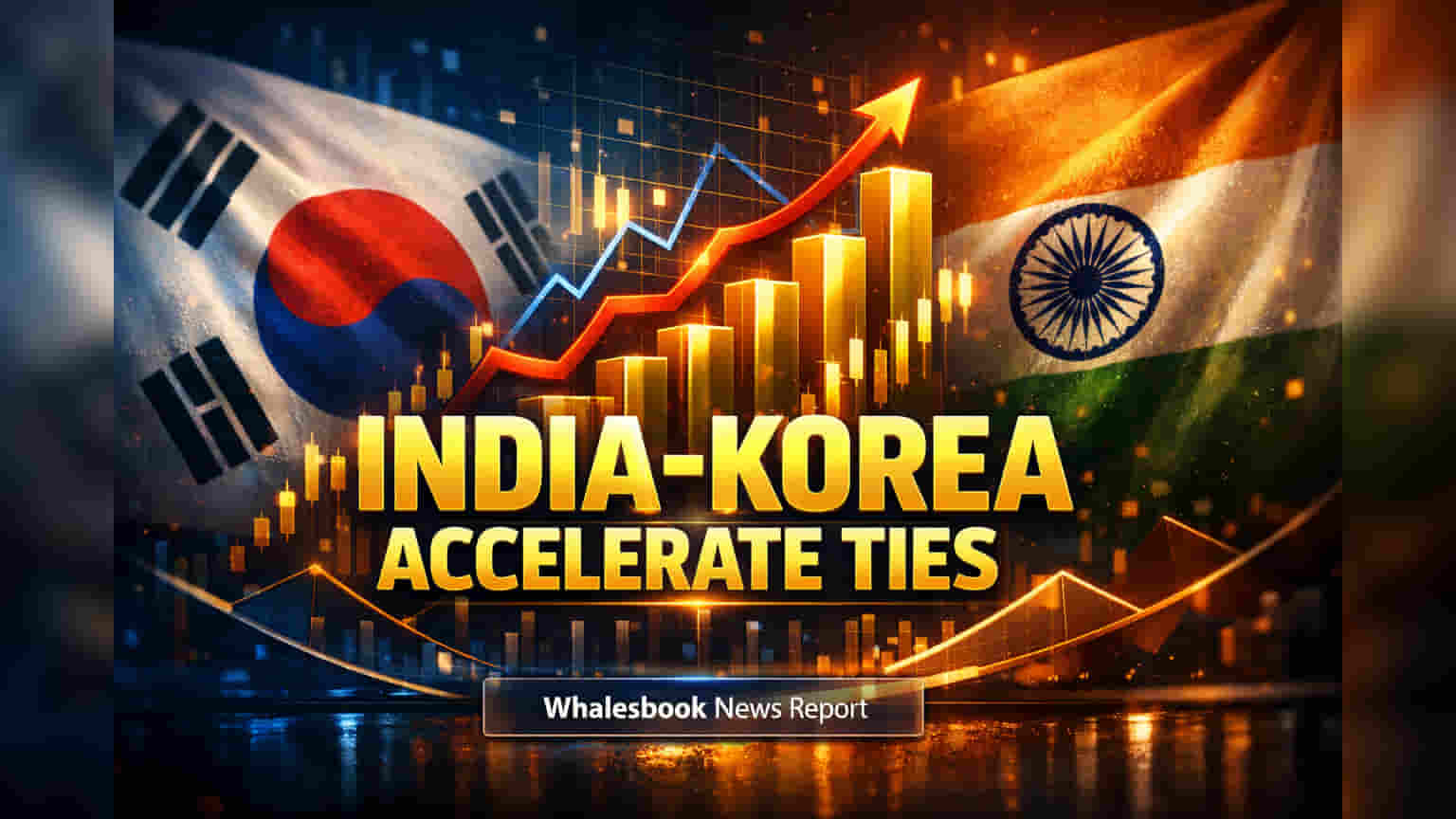


Geopolitical Shifts Boost Deeper India-South Korea Ties
South Korean President Lee Jae-myung's state visit to India is forging a more integrated economic and technological alliance, moving beyond traditional diplomacy. The 'Special Strategic Partnership,' deepened in 2015, is now driven by a shared need to navigate global supply chain disruptions and technological competition. President Lee noted India's growth from a consumer market to a vital hub for global production and supply chains. This visit, the first by a South Korean leader in over eight years, aims to leverage this convergence and build a strong framework for mutual growth and security. The ambition is reflected in a projected bilateral trade target of $50 billion by 2030, up from $26.89 billion in FY25.
Key Sectors: Semiconductors, Green Energy, and Defense
South Korea, a global semiconductor leader with companies like Samsung and SK Hynix, offers expertise to aid India's goal of becoming a global hub by 2030. India's Semiconductor Mission (ISM) and incentives aim to attract investment and build a full supply chain. South Korea's 'K-Semiconductor Belt' initiative mirrors this ambition, aiming to boost domestic production and next-generation chip technologies. Collaboration includes joint R&D for AI chips and 3D packaging, aiming to reduce reliance on China-centric supply chains.
India's renewable energy targets and National Green Hydrogen Mission align with South Korea's strengths in solar, wind, and energy storage. This synergy creates opportunities for joint ventures and technology transfer, accelerating India's energy transition.
Significant defense collaboration is also underway. South Korea is India's fifth-largest conventional arms exporter, with projects like the K9 Vajra howitzer demonstrating successful co-production under India's 'Make in India' initiative, targeting over 60% local manufacturing. Both nations are exploring joint technology development and co-production of defense equipment. Shipbuilding collaboration is also a priority, leveraging South Korea's expertise, with plans for technology transfer and expanded production in Indian shipyards.
Boosting Trade and Investment
The Comprehensive Economic Partnership Agreement (CEPA), signed in 2010, provides a foundation for trade expansion. Bilateral trade grew significantly to $23.7 billion in 2021 and is projected to reach $50 billion by 2030. South Korean investment in India is substantial, with over 600 firms contributing an estimated $6.8 billion in FDI from April 2000 to June 2025. Major companies like Samsung, Hyundai, and LG have established manufacturing bases, showing long-term commitment. The India-Korea Electronic Origin Data Exchange System (EODES) aims to streamline trade by facilitating electronic exchange of origin data under the CEPA.
Geopolitical Goals and Supply Chain Strategy
This partnership is a response to global geopolitical shifts, including the US-China rivalry and international conflicts, which have exposed supply chain vulnerabilities. Both nations seek to diversify dependencies, especially for critical minerals and semiconductors, where reliance on single geographies poses strategic risks. India's growing role as a manufacturing and logistics hub aligns with South Korea's 'New Southern Policy,' aimed at diversifying economic ties away from overreliance on China. This strategic convergence reinforces a 'strategic mirror' partnership, boosting the policy autonomy and regional influence of both middle powers in the Indo-Pacific.
Challenges and Potential Hurdles
Despite strategic alignment, significant execution hurdles persist. Regulatory bottlenecks and coordination gaps in high-tech sectors could slow progress. While South Korea leads in manufacturing, India is still developing its advanced sector ecosystems and faces challenges like talent shortages and project delays in its semiconductor goals. South Korea's export-dependent economy is vulnerable to global slowdowns and trade policy shifts. India faces a significant trade deficit with South Korea, and its reliance on imported raw materials like Gallium for defense semiconductors is a strategic concern. Differing geopolitical stances, such as South Korea's US ties versus India's strategic autonomy, also present a complex balancing act.
Looking Ahead
The enhanced India-South Korea strategic partnership is set to foster significant economic growth and technological advancement. Continued focus on semiconductors, green energy, defense manufacturing, and shipbuilding, alongside government support, is expected to drive deeper value chain integration. By addressing challenges and leveraging strengths, India and South Korea are positioning themselves as key anchors for resilient global supply chains and innovation in a dynamic international order.