

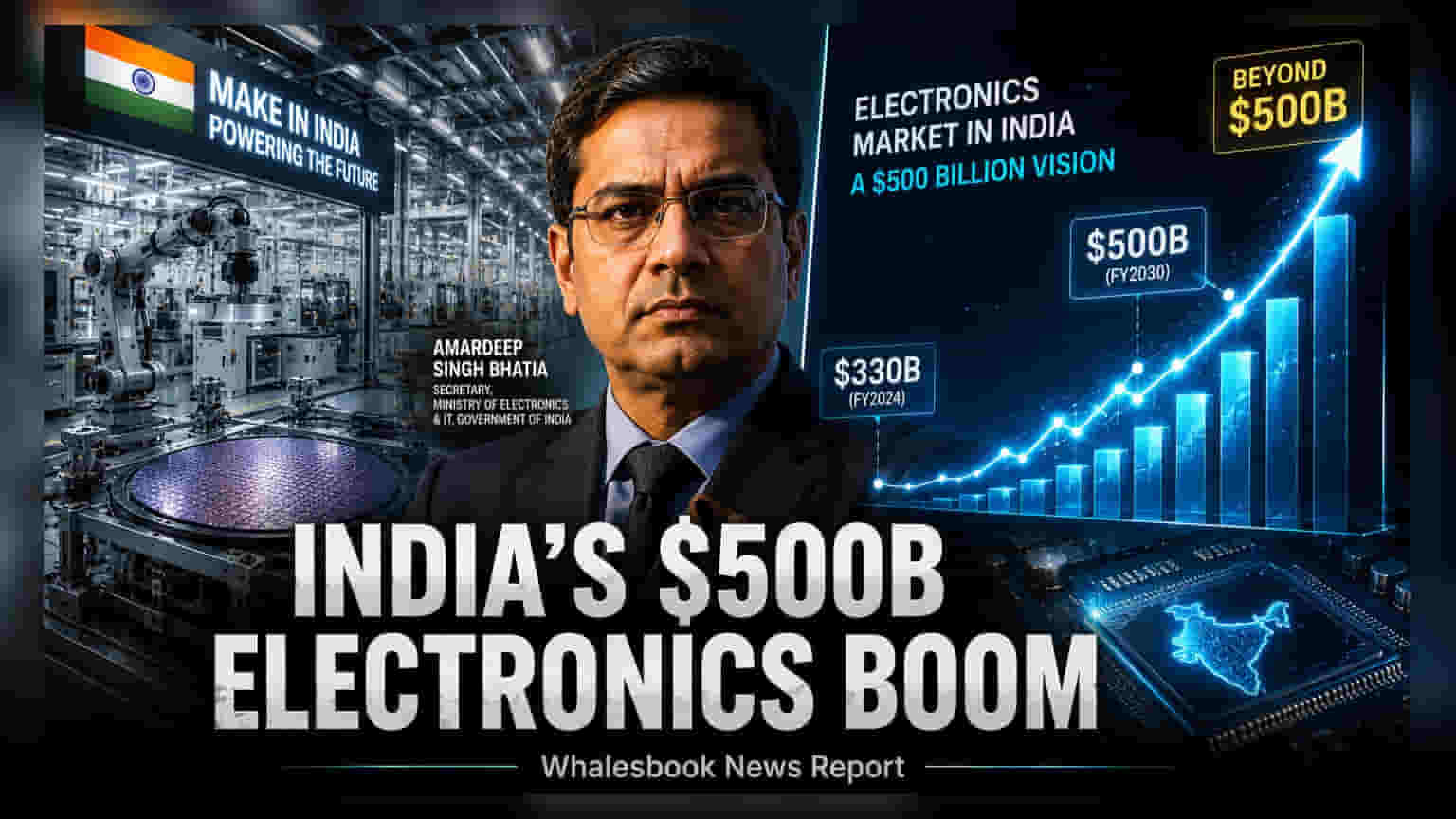
The government has set an ambitious target to reach $500 billion in annual electronics production by 2030. This initiative aims to scale manufacturing and advance the 'Viksit Bharat' goal, with specific roadmaps developed for the electronics and semiconductor sectors.
The Indian government has outlined a significant expansion plan for its electronics and semiconductor manufacturing sector, aiming to reach an annual production value of $500 billion by 2030. This target is part of a broader, long-term vision to grow production capacity toward a range of $5.3 trillion to $8 trillion by 2047, as part of the country's development roadmap.
Strategic Manufacturing Roadmaps
According to the Department for Promotion of Industry and Internal Trade (DPIIT), the government is using specific sector-focused plans to reach these goals. While the current baseline for annual electronics production is reported at $330 billion, moving to the $500 billion target will require substantial investment in domestic infrastructure and supply chain capabilities. To facilitate this growth, the Cabinet Secretariat has established a dedicated deregulation cell aimed at simplifying state-level regulations and improving the ease of doing business for manufacturers.
Focus on Semiconductor and Industrial Growth
For investors, this shift highlights the government's sustained focus on building a domestic electronics value chain, which currently relies heavily on imports for critical components like semiconductors. The initiative follows ongoing efforts under the Production Linked Incentive (PLI) schemes for electronics, which have already incentivized global and domestic firms to increase local assembly and manufacturing. The success of these targets will depend on how effectively the government can address challenges such as high capital costs, the need for skilled labor, and the integration of India into global value chains.
Regulatory and Economic Context
Beyond domestic reforms, the government is emphasizing deeper international cooperation to attract technical expertise and capital. Recent dialogues with international partners, such as the Indo-German Chamber of Commerce, highlight the intent to strengthen strategic economic ties to support this industrial expansion. The government is also working through central committees to identify and resolve bottlenecks in industrial approvals.
Investors may monitor the progress of these sector-specific roadmaps and the actual utilization of capital in new semiconductor and electronic manufacturing projects. Key indicators to track include the inflow of fresh investments in component manufacturing, progress in achieving domestic value addition targets, and the pace of regulatory improvements at the state level, which are critical for the commissioning of large-scale manufacturing plants.