

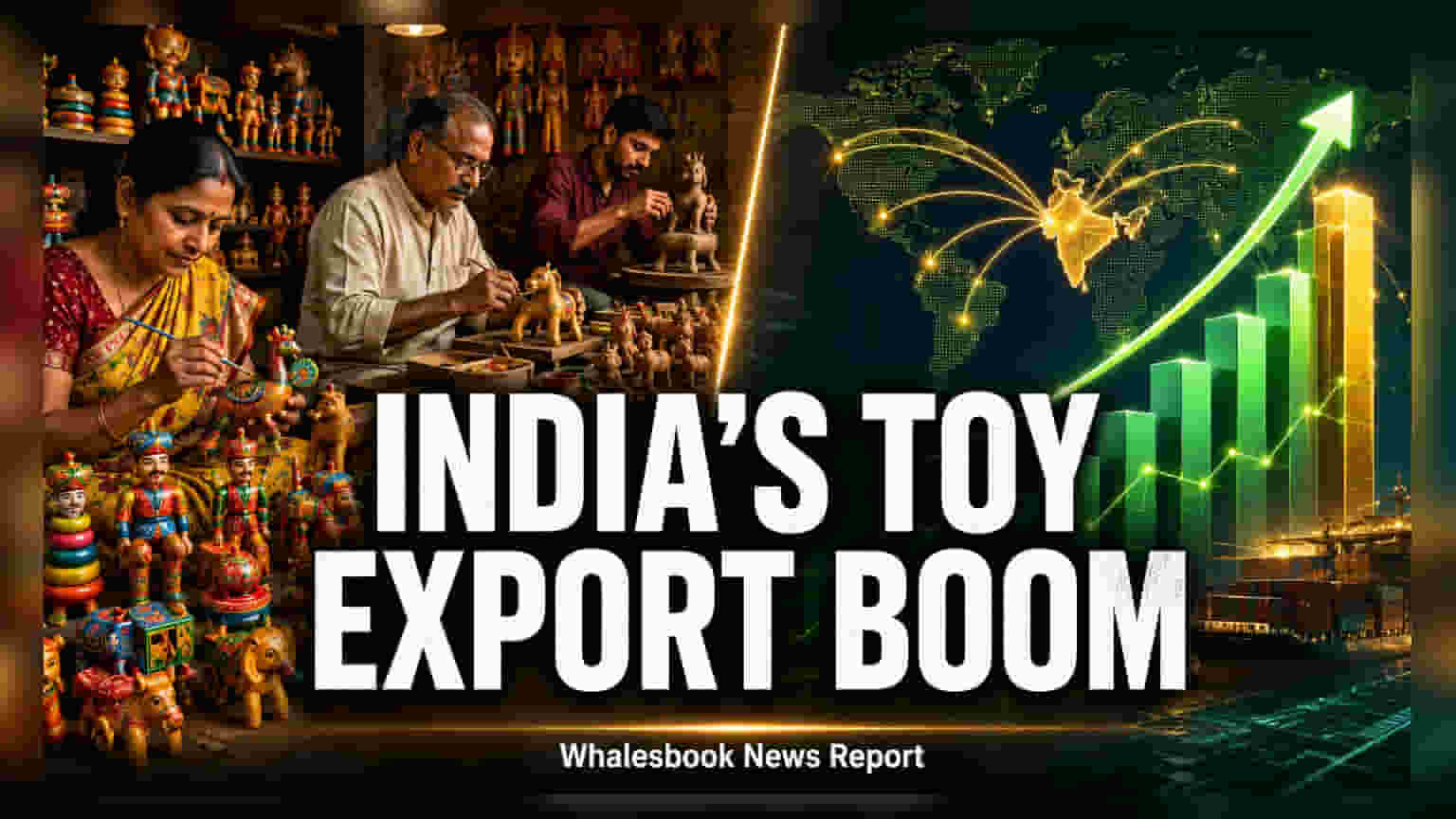
The government has launched a dedicated task force to increase India's global toy market share from 1.9% to 5% by 2032. This initiative focuses on boosting domestic manufacturing through over 21,000 MSMEs and 770 recognized startups. Investors should monitor how these policy changes impact production costs, export volumes, and the competitiveness of domestic toy manufacturers.
Detailed Coverage
The Indian government has formed a specialized task force to accelerate the growth of the domestic toy industry, setting a target to reach a 5% share of the global toy market by 2032. Currently, India accounts for approximately 1.9% of global toy trade. This strategic move, announced by Commerce and Industry Minister Piyush Goyal, is part of a broader push to position India as a global manufacturing hub and integrate local producers into international supply chains.
Scaling the Domestic Toy Ecosystem
The task force is tasked with streamlining the manufacturing environment across six key areas, including supply chain efficiency, workforce development, and innovation. The domestic sector currently relies on a wide base of over 21,000 micro, small, and medium enterprises (MSMEs) and more than 770 startups recognized by the Department for Promotion of Industry and Internal Trade (DPIIT). With nearly 50 dedicated toy clusters and over 1,800 Bureau of Indian Standards (BIS) license holders, the industry has a wide network of existing production capabilities.
For investors, the success of this initiative depends on the government's ability to reduce production costs and improve quality standards to compete with established global players. Historically, the Indian toy industry has faced challenges related to fragmented production and reliance on imported components for certain categories. Efforts to foster deep localization and advanced manufacturing technologies could help reduce these dependencies.
Market and Operational Context
While the government is actively promoting the sector, investors may monitor how these policy supports translate into actual capacity utilization and export growth for listed companies or large players in the consumer goods space. The focus on quality standards and BIS licensing is designed to ensure products meet global benchmarks, which is essential for increasing exports. However, execution risk remains a factor, as the industry must navigate global competition and the need for continuous design innovation to maintain margins.
The next monitorable developments include specific budgetary support or incentive schemes that may be announced for these 50 toy clusters, as well as quarterly export data that will indicate if the 5% target is on track. Investors may also track management commentary from companies involved in the toy or educational products segment regarding their expansion plans and ability to leverage these new government-led support structures.