

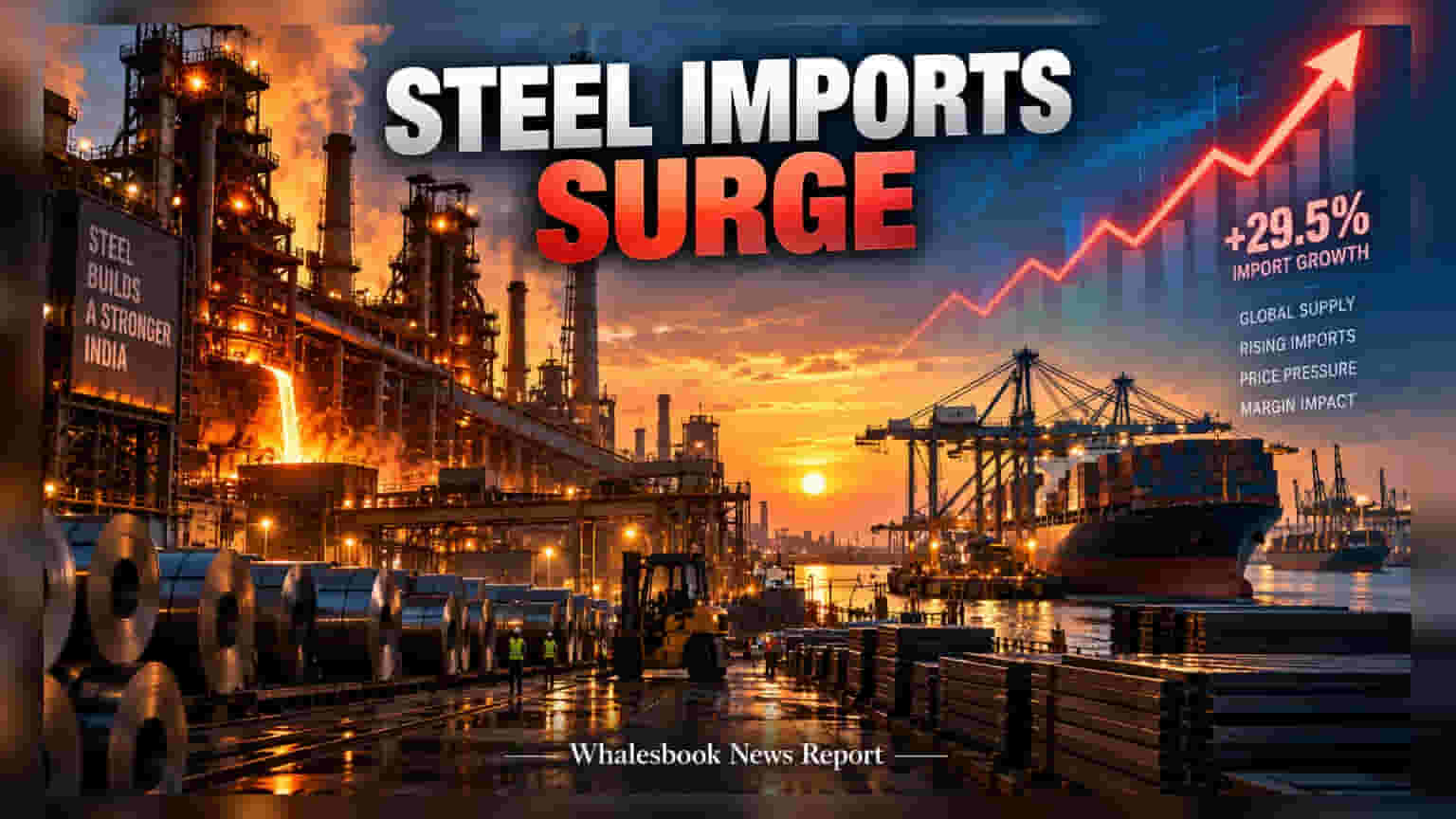
India imported 3.5 million metric tons of finished steel between April and August 2026, a 29.5% rise year-on-year. This shift creates competitive pricing pressure for domestic mills, potentially impacting their profit margins. Investors should track upcoming quarterly financial results and any potential government trade policy updates in response to this supply-demand gap.
India remained a net steel importer for the first five months of the current fiscal year, as domestic demand continues to outpace local production capacity. Government data shows that finished steel imports climbed to 3.5 million metric tons by August 2026, representing a 29.5% increase compared to the same period last year. This trend highlights a persistent supply-demand gap in the domestic market, forcing local industries to rely more heavily on external suppliers.
Impact on Domestic Producers and Margins
For investors, the primary concern with rising steel imports is the impact on profit margins for large domestic manufacturers such as Tata Steel, JSW Steel, and Jindal Steel & Power. When lower-cost steel from international markets floods the local market, domestic mills often face pressure to lower their selling prices to remain competitive. This pricing competition can compress operating margins, as companies find it difficult to offset the lower realization rates with cost efficiencies alone.
Historically, the domestic steel sector has navigated similar periods of competitive pressure by focusing on higher-value products and cost-management strategies. However, when global oversupply drives international prices down, the price gap between imported and domestic steel often widens, making it difficult for local players to maintain market share without sacrificing profitability.
Sector Dynamics and Regulatory Monitoring
Investors are now evaluating whether the current level of imports will prompt government intervention. The Ministry of Steel frequently monitors import volumes and price trends to determine if local manufacturers require protection from international price volatility. Historically, trade measures like anti-dumping duties or stricter quality standards have been used to level the playing field, though these decisions involve complex trade-offs with industries that rely on low-cost raw materials, such as automotive and construction.
Looking ahead, the critical monitorable for investors is the operating margin trend in the upcoming quarterly financial results for major steel companies. Additionally, any policy announcements or changes to trade tariffs will be essential to track, as these can quickly alter the supply environment and the competitive outlook for the sector. Shareholders should continue to monitor both domestic demand growth and the sustainability of international pricing, as these two factors will dictate whether the current import pressure continues into the next quarter.