

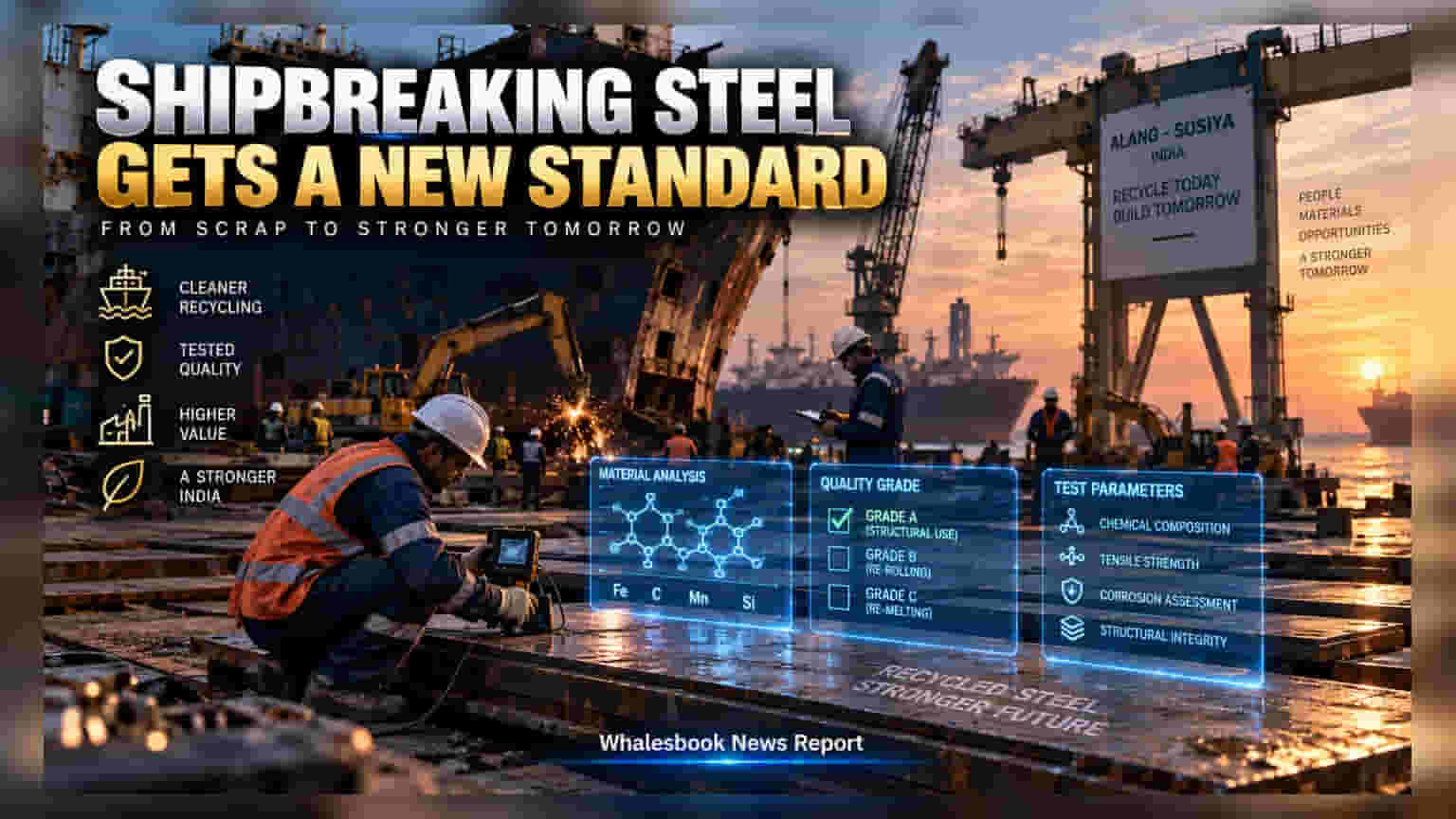
The Indian government is developing clear testing and classification rules for steel recovered from decommissioned ships. This move aims to allow the recycled metal to be used for more industrial applications, moving beyond basic scrap. India, which holds over 35% of the global ship-recycling market, expects this to improve value across the supply chain.
The Ministry of Steel and the Ministry of Ports, Shipping and Waterways have started work on a new regulatory framework for steel recovered from decommissioned ships. The goal is to set clear testing and classification standards that will allow this secondary material to move from low-value scrap to higher-specification industrial use.
Currently, there is no uniform system to classify steel taken from old ships. This creates inefficiencies because manufacturers cannot easily trust the quality of the recycled metal. Unlike new steel produced in mills, material recovered from vessels is inconsistent. Ships often have structural repairs, modifications, and varying degrees of corrosion from spending decades at sea. Without a proper classification system, it is difficult to determine whether a batch of steel is suitable for structural work, re-rolling, or simple re-melting.
This initiative is significant because India is a global leader in the ship-breaking business. The country holds approximately 35.4 percent of the global ship-recycling market. With domestic demand for ferrous scrap rising to 33.36 million tonnes in FY2024, the government aims to professionalize the sector. The Alang-Sosiya industrial hub in Gujarat remains the central point for these activities. By establishing rigorous testing protocols, the government hopes to ensure that only certified, safe steel enters critical infrastructure and construction applications.
For investors and stakeholders in the recycling supply chain, this move could change how scrap is priced and sold. Currently, ship-breakers often sell material as bulk scrap. Standardized testing could allow them to secure better prices by providing higher-grade, certified material to secondary steel producers. However, the success of this shift will depend on how effectively the government can manage the implementation of these tests without increasing costs too much for the recyclers. The key monitorable for the industry will be the final testing guidelines and whether they succeed in building trust with end-users in the construction and manufacturing sectors.