

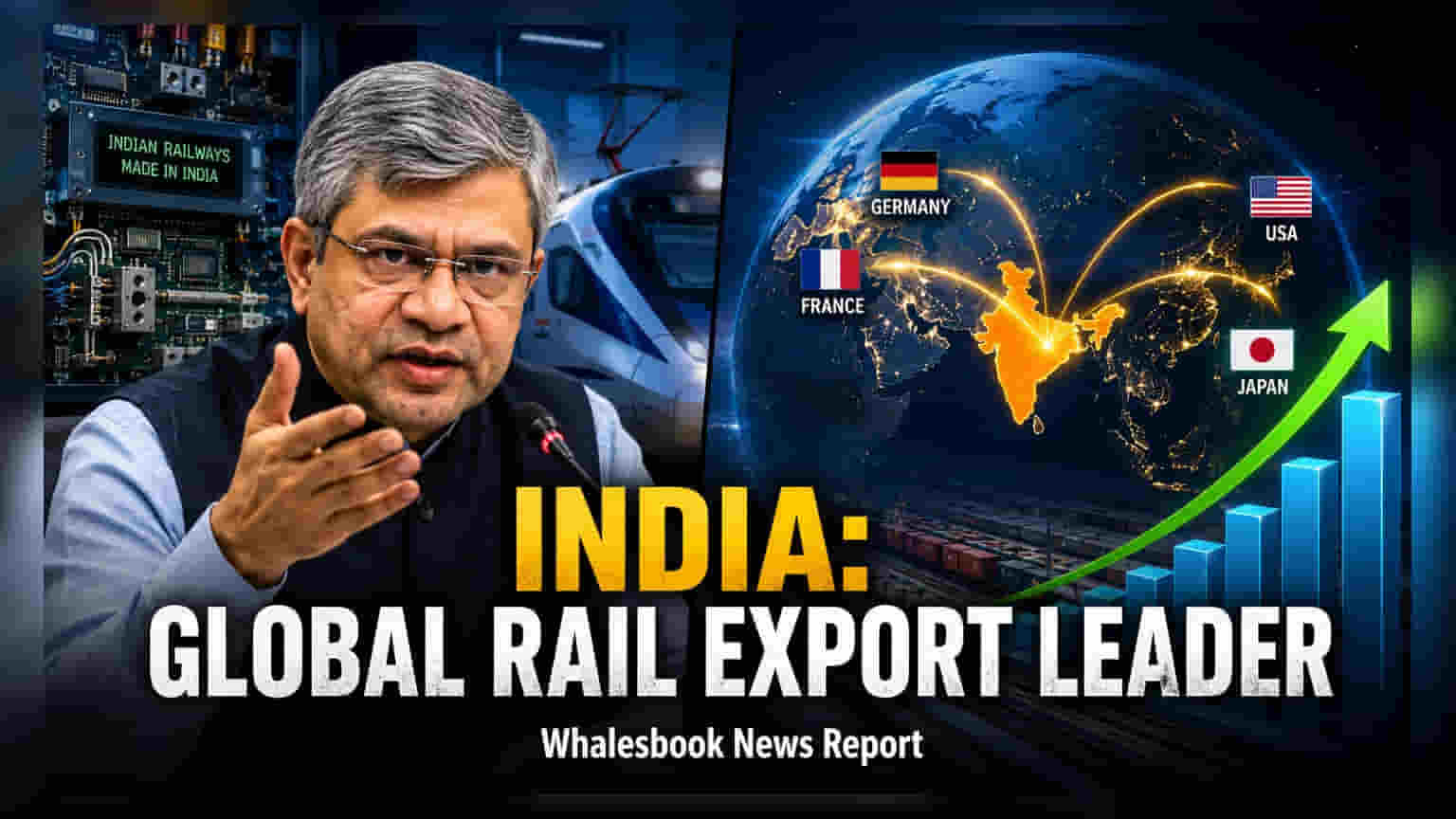
Railway Minister Ashwini Vaishnaw confirmed that India is now exporting complex propulsion systems and electronics to nations like France, Germany, and Japan. This shift highlights a move from importing critical rail parts to domestic design and manufacturing. Investors should track how this export growth impacts the margins and order books of domestic engineering and rail equipment companies.
Union Railway Minister Ashwini Vaishnaw has highlighted India's growing role as a global manufacturer and exporter of advanced railway components. During a visit to the Medha Bogies factory in Hyderabad, the Minister noted that critical systems such as propulsion technology and complex electronics are now being designed and produced locally. These products are currently being exported to several developed countries, including France, Germany, Japan, and the United States, marking a shift in India’s industrial capabilities.
Impact on Domestic Manufacturing
The move toward local production of high-value components is part of a broader push to reduce reliance on imports. Historically, the Indian railway sector depended heavily on foreign technology for propulsion and control systems. By developing these capabilities domestically, manufacturers are aiming to improve their cost structures and increase their independence from global supply chain disruptions. For investors, the shift toward higher-value products represents a potential transition from simple assembly to more complex engineering work, which can sometimes lead to better profit margins over time.
Quality Standards and Global Competition
Competing in markets like Japan and Germany requires meeting stringent quality and safety standards. The ability of Indian firms to secure contracts in these nations suggests that domestic quality benchmarks are rising to meet international requirements. As these companies increase their export footprint, they must balance this growth with the risks of global economic fluctuations and competitive pricing pressures. The success of this strategy will depend on the ability of domestic manufacturers to maintain technical excellence while scaling their production capacity to handle international orders alongside domestic demand.
Monitoring Future Developments
Investors may monitor upcoming quarterly results and management commentary from Indian companies involved in rail equipment and electronics manufacturing to see how export revenue contributes to their overall growth. Key focus areas include the stability of these export order books, the impact of raw material price fluctuations on profitability, and the ability of companies to manage the execution risks associated with complex, high-technology projects. As the sector expands, the utilization levels of these new manufacturing facilities and the long-term sustainability of international demand will be the primary factors determining the financial health of the players in this space.