

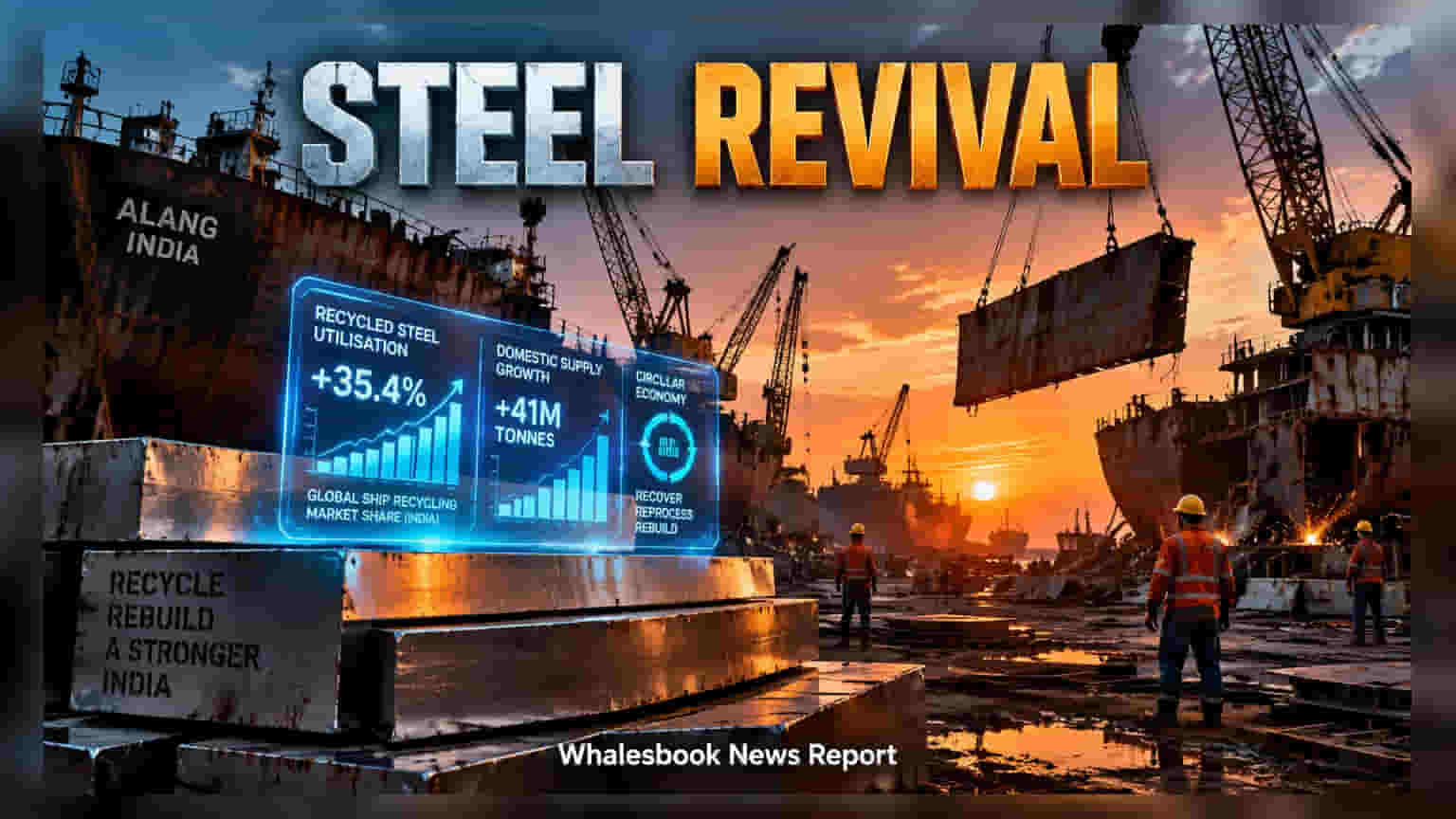
The government held a high-level meeting on September 16, 2026, to standardize the use of steel from decommissioned ships in domestic manufacturing. This initiative aims to bridge the national scrap supply gap and support industrial growth. Success for this policy depends on setting new quality norms and improving the collection efficiency of secondary steel.
The Union government initiated a high-level push on September 16, 2026, to incorporate steel salvaged from decommissioned ships into the broader industrial supply chain. Ministers of Steel and Heavy Industries, along with the Ministry of Ports, Shipping and Waterways, met to discuss how to remove regulatory barriers that currently prevent secondary steel from being used in heavy manufacturing and construction.
India has established itself as a global leader in this niche, capturing a 35.4% share of the global ship recycling market in 2025. By formalizing the use of this material, the government aims to reduce the country’s reliance on raw ore processing while strengthening the domestic circular economy.
Standardizing Quality to Unlock Supply
The central challenge addressed during the meeting was the quality of recycled steel. Currently, only about 25% of steel recovered from ship-breaking yards qualifies as high-grade melting scrap suitable for heavy-duty industrial production. Because of this, much of the salvaged material has been restricted to lower-value applications.
The government is working with the Bureau of Indian Standards and the Department of Science and Technology to overhaul these norms. The goal is to create consistent, high-quality standards that would allow secondary steel to be safely used in more structural projects. If successful, this could create a reliable, domestic source of raw material for mid-tier manufacturers who are currently dependent on imports or primary steel producers.
Addressing the Domestic Scrap Deficit
This policy push comes as India faces a persistent deficit in scrap availability. Domestic industry consumes approximately 41 million tonnes of ferrous scrap annually, while the country generates only about 32 million tonnes. This gap forces manufacturers to rely on imports or face higher procurement costs. By streamlining the collection and processing at major hubs like those managed by the Gujarat Maritime Board, policymakers hope to narrow this deficit.
This integration is also linked to the Ship-breaking Credit Note Scheme, which offers financial incentives—valued at 40% of the scrap’s worth—to ship owners. By allowing these credits to be applied toward new shipbuilding costs in Indian yards, the government hopes to create a self-sustaining cycle where recycling directly feeds into new manufacturing.
Challenges and Market Risks
Investors and industry observers should note that the transition is not without significant hurdles. The profitability of the ship-breaking sector is highly sensitive to fluctuations in global steel scrap prices and foreign exchange rates. When global steel prices drop or the rupee depreciates, the margins for companies operating these recycling yards can shrink rapidly.
Additionally, the industry faces strict environmental and safety regulations. As India seeks to align with international agreements like the Hong Kong International Convention, the operational costs for yards remain high. The ultimate impact of the government’s plan will depend on how quickly and effectively these quality standards are implemented without raising the cost of secondary steel to a level where it loses its competitive advantage against primary steel. The next key updates to track will be the specific quality benchmarks released by the Bureau of Indian Standards and any new logistical policies regarding the transport and certification of recycled steel across the country.