

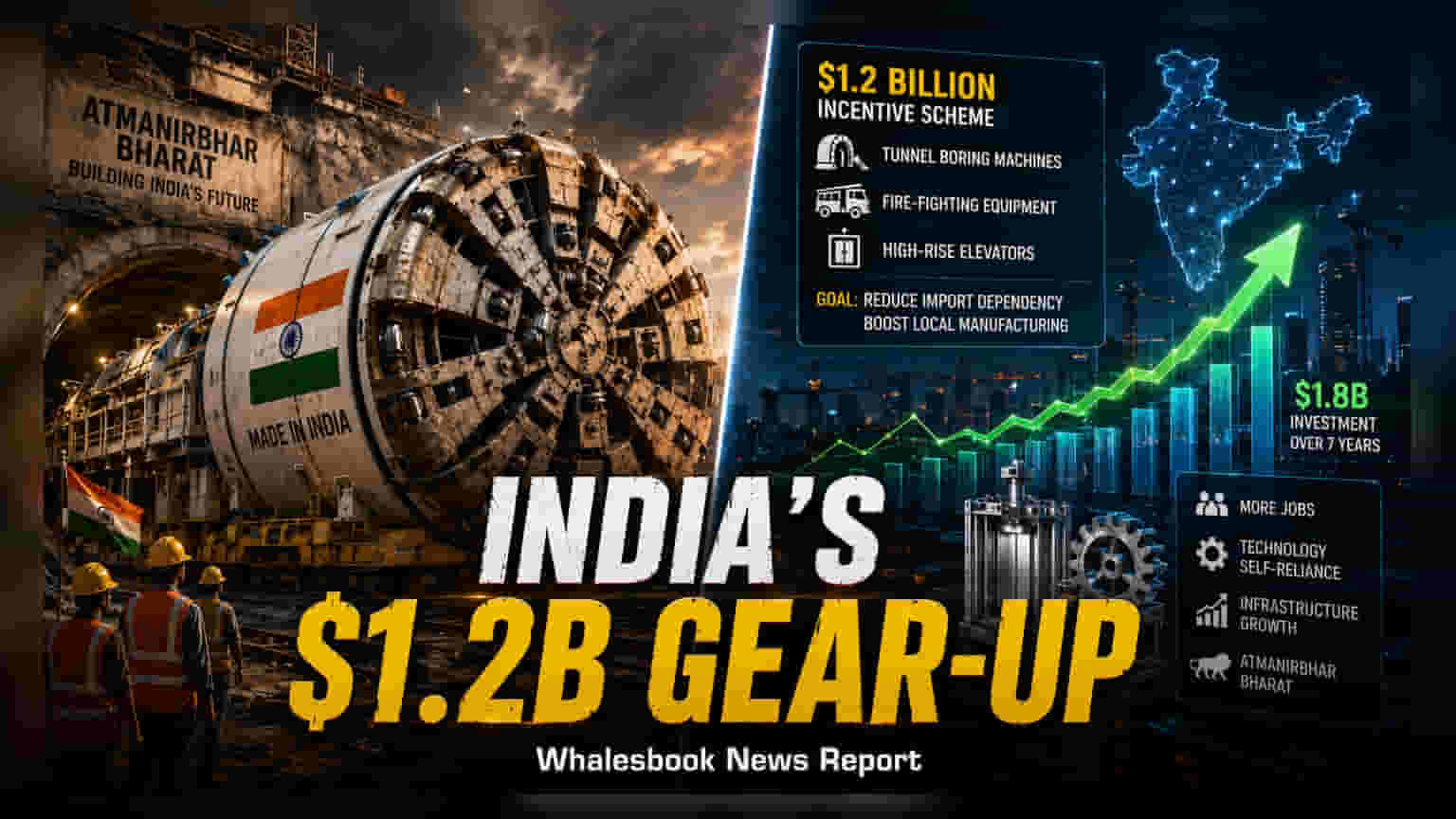
The Indian government is preparing a $1.2 billion incentive scheme to boost domestic production of high-value construction machinery like tunnel boring machines and elevators. This move aims to reduce reliance on Chinese imports and attract $1.8 billion in new investments over the next seven years. The policy, which aligns with 'Make in India' goals, is currently awaiting final Union Cabinet approval.
The Indian government is moving to finalize a $1.2 billion incentive program designed to revitalize the domestic manufacturing of high-value construction and infrastructure equipment. This policy, which aims to reduce the country’s dependency on Chinese imports for essential machinery, is expected to receive formal approval from the Union Cabinet by the end of August 2026.
Targeting High-Value Infrastructure Equipment
The proposed scheme focuses on technologically advanced equipment that is currently imported, often from China. This includes tunnel boring machines (TBMs), which are vital for rapid metro rail and highway network expansion, as well as fire-fighting equipment and high-rise elevators. By providing financial incentives, the government hopes to make local production of these complex machines economically viable and competitive.
Potential Beneficiaries and Strategic Goals
Several companies are expected to play a key role in this initiative. State-run Bharat Earth Movers Limited (BEML) has already signaled interest in domestic production of tunnel boring machines. Major private sector players such as Larsen & Toubro and Johnson Lifts are also viewed as potential participants that could benefit from the scheme's provisions. The initiative seeks to bring in approximately $1.8 billion in new investments over a seven-year period, aiming to shift the focus from merely assembling imported parts to manufacturing and high-value-added production within India.
Risks and Implementation Challenges
While the plan aims to strengthen local capabilities, its success will depend on effective execution. Domestic manufacturers face significant competitive pressure from established global suppliers who currently dominate the high-value equipment market. Additionally, the scheme will likely require companies to meet strict local value-addition targets to qualify for the incentives. Failure to meet these criteria could limit the effectiveness of the support.
Broader economic factors also pose risks. Global geopolitical uncertainties and fluctuations in raw material costs could impact the demand for new machinery and affect project timelines for infrastructure developers. Furthermore, the reliance on a multi-stakeholder policy framework means that any delays in administrative approvals or inter-ministerial coordination could postpone the project's impact.
Investors and industry watchers will track the formal announcement from the Union Cabinet later this month for specific details on eligibility, payout structures, and the exact roadmap for implementation.