 Whalesbook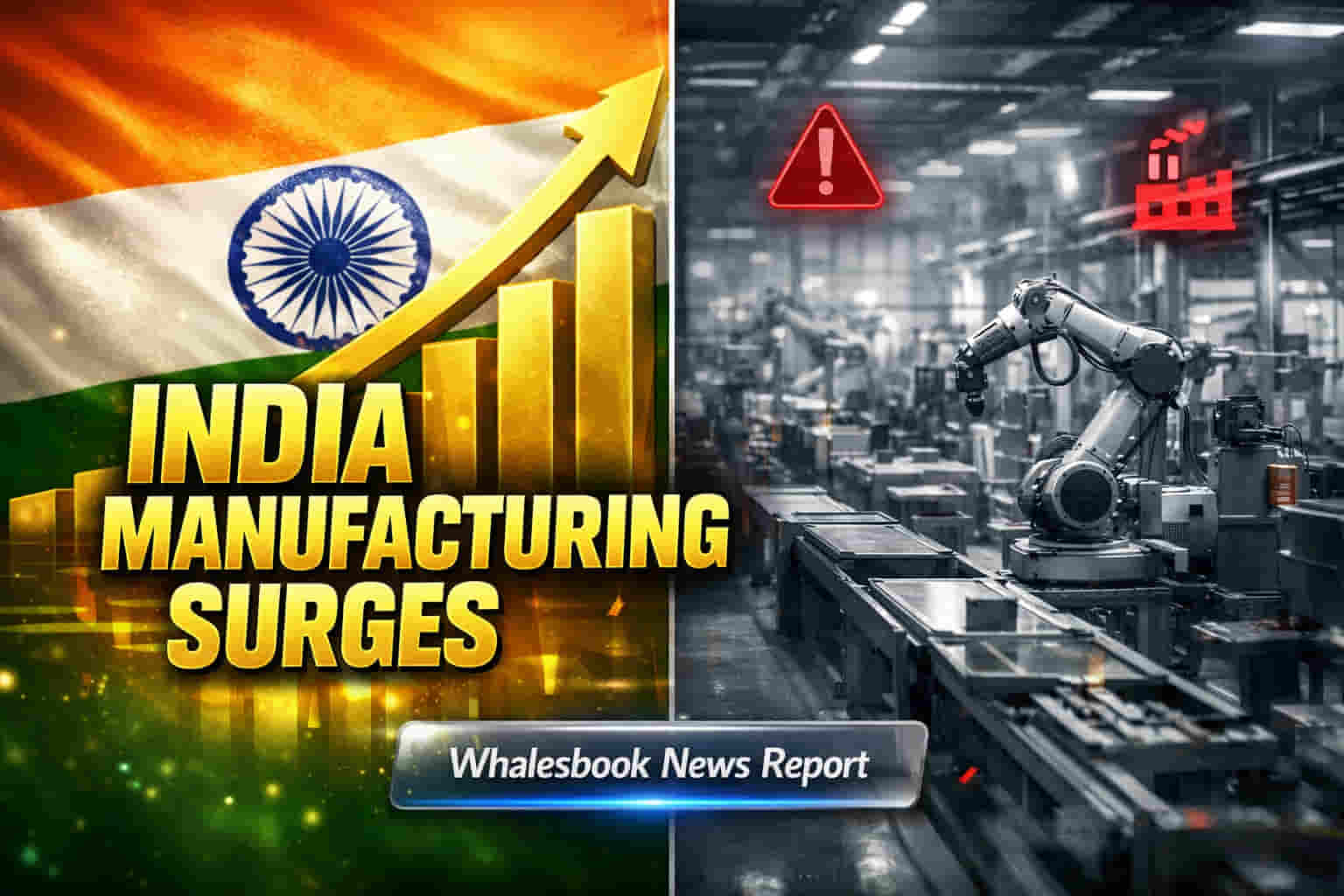


### Domestic Demand Fuels Manufacturing Surge
The Indian manufacturing sector demonstrated significant resilience in February, with its Purchasing Managers' Index (PMI) reaching a four-month high of 56.9. This expansion was primarily fueled by buoyant domestic demand, which drove new business intakes to their strongest rate since October. Panel members cited demand strength, strategic marketing initiatives, and rising client requirements as key drivers. Output growth accelerated, surpassing its long-run average, attributed to efficiency improvements, healthy underlying demand, and technological investments. Manufacturers increased their input purchases and inventories to meet these rising production needs and demand. The Nifty India Manufacturing index has a P/E ratio of 28.64.
### Export Headwinds and Measured Employment Growth
A notable counterpoint to the domestic strength is the continued slowdown in new export orders. Growth in this segment decelerated to its slowest pace in 17 months, converging towards its long-run average. While companies reported modest gains from Asia, Europe, the Middle East, and the US, these were insufficient to counteract broader global demand trends. Consequently, factory employment expanded only slightly, reaching its quickest pace in four months. This measured hiring was partly supported by a seven-month high in outstanding business volumes, indicating manufacturers are managing increasing workloads. This contrasts with periods of higher growth, such as July 2025, when PMI reached 59.1, driven by strong new orders and output. Historically, global economic slowdowns have impacted India's exports, leading to job concerns in export-oriented sectors.
### Regional Comparison and Macroeconomic Context
India's manufacturing performance, while strong domestically, presents a mixed picture when compared regionally. Vietnam's manufacturing PMI rose to 54.3 in February 2026, with production accelerating to an 18-month high. Thailand's PMI also increased to 53.5, driven by new orders and output. China's PMI stood at 50.3 in January 2026, showing slight expansion with a return to growth in new export orders. The broader ASEAN manufacturing sector saw solid improvement in January, though new order growth moderated. Globally, factors such as high interest rates, geopolitical tensions, and supply chain disruptions continue to create uncertainty, negatively impacting export sectors worldwide. Despite these external pressures, India's domestic demand and government initiatives like 'Make in India' provide a buffer and attract investment.
### The Forensic Bear Case
The reliance on domestic demand, while currently a strength, poses a risk if external market conditions do not improve or worsen. The continued deceleration in export orders, a trend observed since mid-2025, suggests a vulnerability to global economic slowdowns. This has implications for job creation, which, despite recent acceleration, remains measured, potentially limiting broader economic uplift. While the PMI above 50 signals expansion, the divergence between domestic dynamism and export stagnation could create future imbalances. Past global recessions have shown significant negative impacts on Indian exports and employment. The manufacturing sector's contribution to GDP remains around 16-17%, with India holding only a 2% share of global manufacturing output, indicating room for growth but also highlighting its sensitivity to external demand shocks.
### Future Outlook
Looking ahead, year-ahead assessments of output volumes remain positive, with 16% of companies forecasting growth. Favorable demand conditions and marketing efforts are expected to support the sector's trajectory. Analysts anticipate continued support from favorable policy environments and strong consumption trends. The manufacturing sector is projected to grow by 7% in FY26. However, the sustainability of this growth will likely depend on the extent to which domestic demand can continue to offset global headwinds and the potential for export markets to recover.