

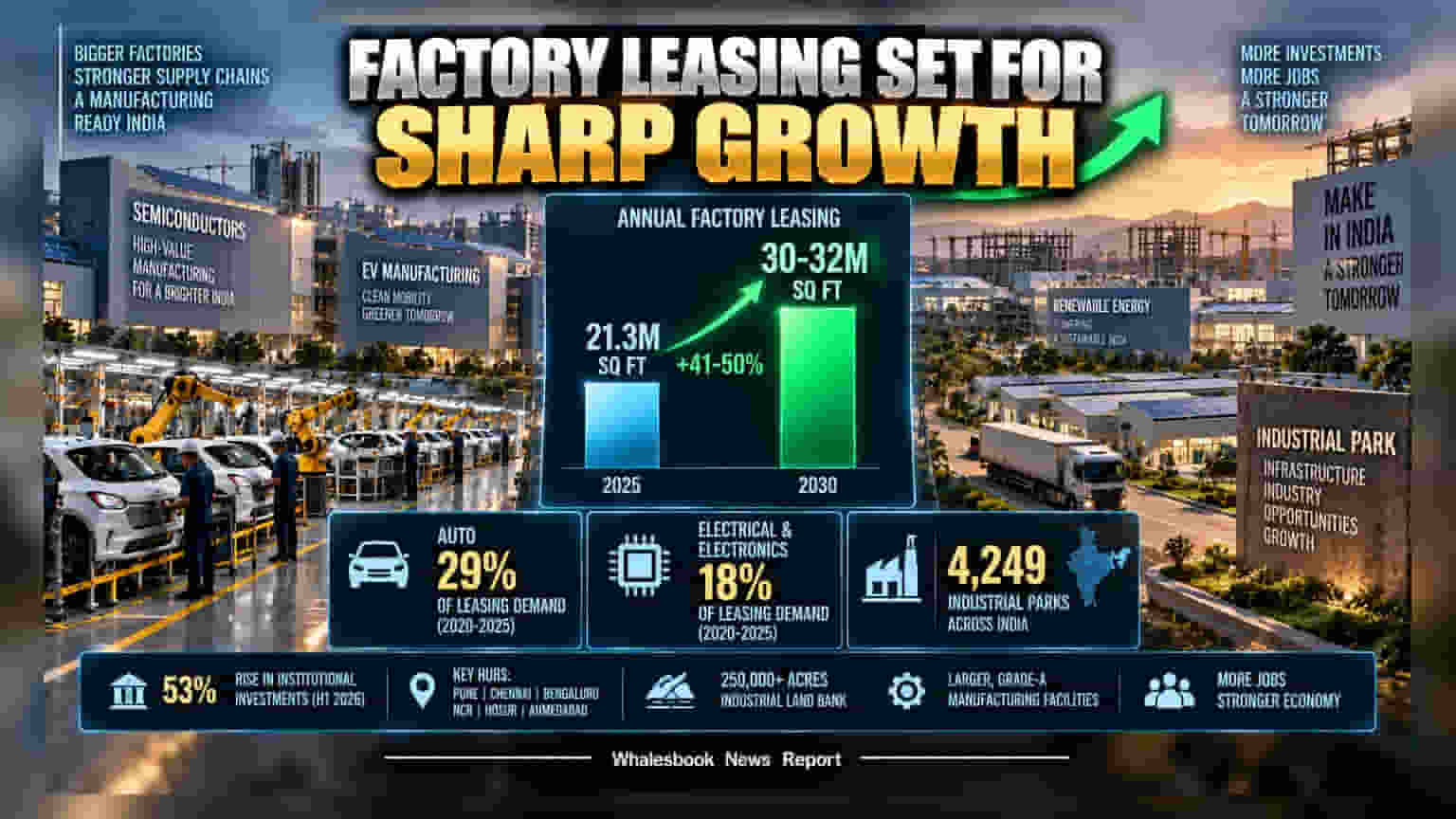
Annual factory leasing in India is expected to climb to 32 million sq ft by 2030, up from 21.3 million sq ft in 2025. This growth is driven by expanding manufacturing in electronics, electric vehicles, and semiconductors. Investors should note that while industrial demand is rising, the pace of future supply versus actual occupancy remains a key factor to monitor.
India is witnessing a sustained increase in demand for industrial space as manufacturers prioritize capacity expansion and supply chain localization. Industry projections indicate that annual factory leasing is set to rise to 30-32 million sq ft by 2030, a notable increase from the 21.3 million sq ft recorded in 2025. This trend reflects the country's push to become a global manufacturing hub, particularly in high-value segments like electronics, semiconductors, electric vehicles, and renewable energy.
Investment and Growth Drivers
The growth in industrial space is not limited to traditional manufacturing. Newer, technology-driven sectors are contributing significantly to the demand for larger, high-specification facilities. This shift has attracted significant interest from institutional investors. In the first half of 2026, institutional investment in India's warehousing and industrial real estate rose by 53% compared to the previous year. This inflow of capital is helping developers build more modern, institutional-grade industrial parks that meet the needs of large-scale occupiers.
Currently, the automotive and auto components sector remains a primary driver, accounting for roughly 29% of manufacturing space leasing between 2020 and 2025. Electrical and electronics manufacturing followed, contributing 18% of the demand. As companies scale, there is a clear trend toward consolidation, with the average space leased by individual occupiers increasing from roughly 71,000 sq ft in 2022 to 94,000 sq ft in 2025.
Regional Hubs and Market Dynamics
Manufacturing activity remains concentrated in established industrial corridors. Pune continues to lead the leasing market, followed by Chennai and Bengaluru. These cities benefit from existing infrastructure, skilled labor, and proximity to supply chains. However, newer hubs like the National Capital Region, Hosur, and Ahmedabad are also gaining market share as industrial policy incentives encourage decentralized manufacturing.
India’s available industrial land bank is substantial, with over 250,000 acres ready for development across thousands of industrial parks. While this supply provides a buffer for future growth, the real estate sector faces challenges that investors must consider.
Risks and Monitorables
While the long-term trend appears positive, the sector is not without risks. A significant concern for the market is the potential for oversupply. If the pace of new industrial park launches consistently outstrips actual occupancy or absorption rates, it could put downward pressure on rental yields and valuation for property developers.
Furthermore, macroeconomic uncertainty and geopolitical tensions continue to impact global supply chains, which could influence the timing of expansion for multinational manufacturers. The real estate sector also carries elevated credit risks, as high leverage can limit the ability of some developers to weather prolonged periods of low demand. For investors, the next critical update will be tracking the actual absorption rates against new project completions to determine if demand growth remains robust enough to support the increasing supply of industrial space.