

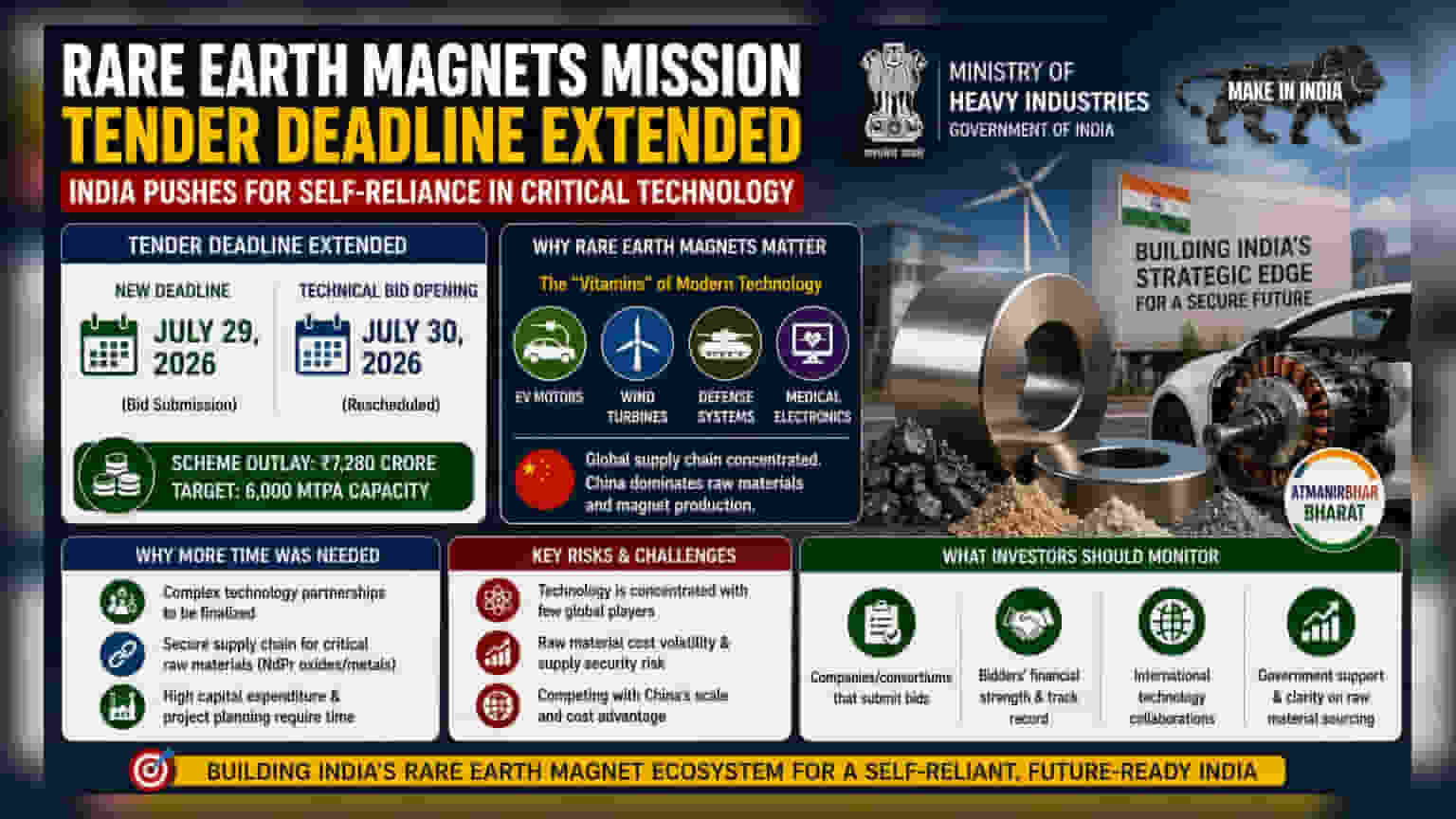
The Ministry of Heavy Industries has moved the bid deadline for the ₹7,280 crore rare earth magnet manufacturing scheme to July 29, 2026. This program seeks to build a domestic supply chain for magnets used in electric vehicles and defense, reducing reliance on imports. The extension provides more time for companies to prepare proposals for this complex, high-tech manufacturing project.
What Happened
The Ministry of Heavy Industries (MHI) has extended the deadline for the global tender under its Scheme to Promote Manufacturing of Sintered Rare Earth Permanent Magnets (REPM). The new date for bid submission is July 29, 2026, pushing back the previous June 29 deadline. Consequently, the date for opening technical bids has been rescheduled to July 30, 2026. The government initiative involves a financial outlay of ₹7,280 crore, with a target to set up a domestic manufacturing capacity of 6,000 metric tonnes per annum (MTPA).
The Strategic Push for Magnets
Rare earth permanent magnets are often called the "vitamins" of modern technology. They are essential components for high-efficiency electric vehicle (EV) motors, wind turbine generators, defense equipment, and advanced medical electronics. Currently, the global supply chain for these magnets is heavily concentrated, with China holding a significant share of both raw material extraction and magnet production. The Indian government’s move is part of a broader push to localize the production of these critical materials, aiming to ensure long-term supply security for the growing green energy and defense sectors in India.
Why Stakeholders Needed More Time
Manufacturing rare earth magnets is not just a standard industrial process; it requires specialized technology and access to raw materials like Neodymium-Praseodymium (NdPr) oxides or metals. Many industrial stakeholders requested more time because finalizing a bid for this sector is complex. Companies need to secure technology partnerships, establish a reliable supply chain for raw materials, and plan for high capital expenditure before committing to a project of this scale. The extension suggests the government wants to ensure maximum participation and high-quality proposals rather than rushing the selection process.
Key Risks and Challenges
While the scheme aims to build local capacity, investors should understand the inherent challenges in this sector. First, the technology for manufacturing high-grade magnets is tightly held by a few global players. Any Indian company entering this space will likely need a strong technology partner or significant R&D investment. Second, the cost of raw materials can be volatile, and securing stable, long-term supply agreements is critical to maintaining profit margins. Third, competing with established global suppliers, particularly those in China with massive economies of scale, is a long-term challenge that requires consistent government support and operational efficiency.
What Investors Should Monitor
As the July 29 deadline approaches, the most important development to watch is which companies or consortiums submit bids. The financial strength of the bidders, their existing manufacturing track record, and whether they announce any international technology collaborations will be key indicators of the project's viability. Additionally, investors may track whether the government offers further policy support or clarifications regarding raw material sourcing, which remains the backbone of this manufacturing endeavor.