 Whalesbook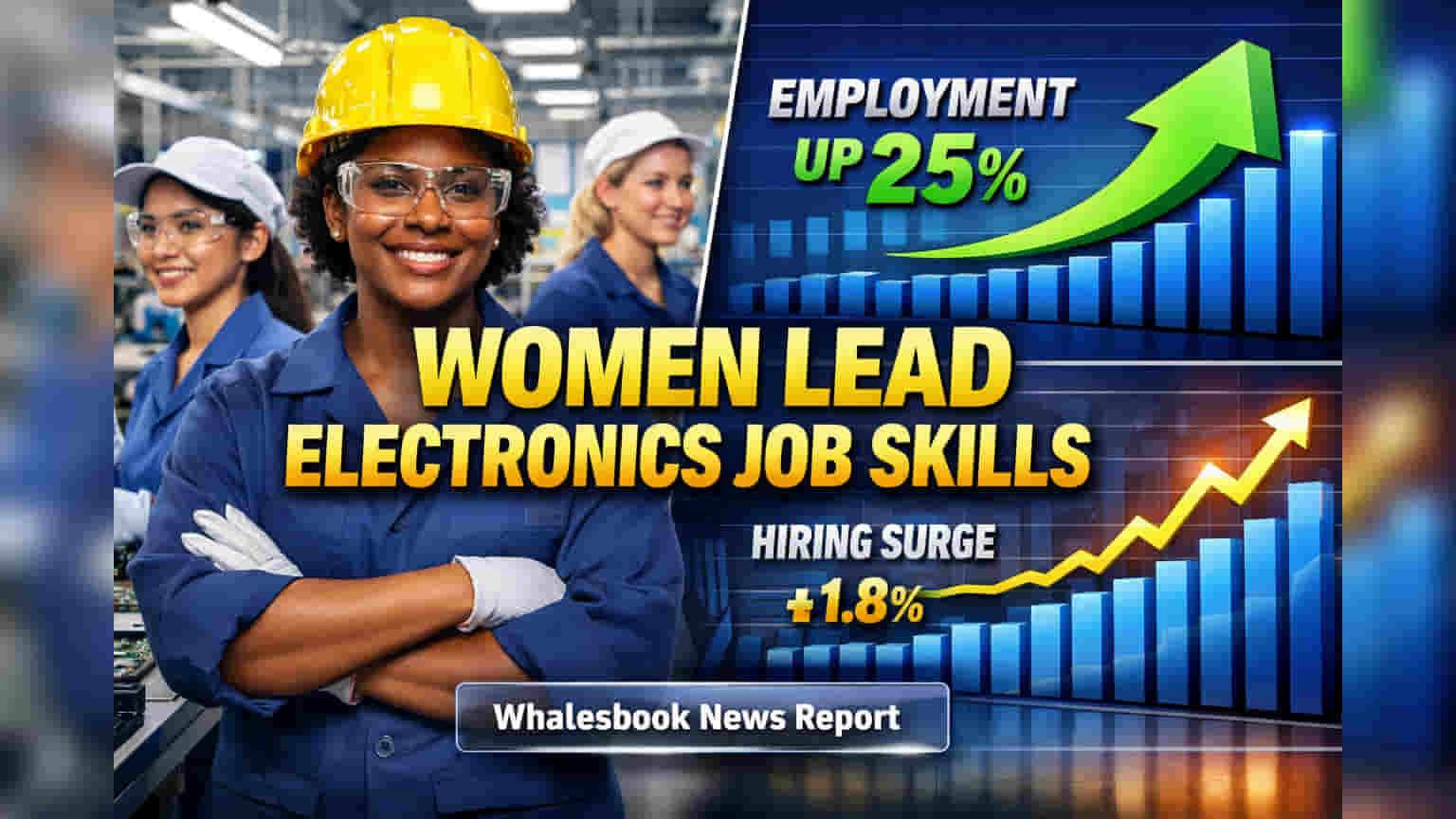


India's Electronics Manufacturing Sector
Women's Skills Drive Hiring Surge in India Electronics
India's electronics manufacturing sector is seeing a significant shift, with female employability climbing to 54%, exceeding the male rate of 51.5%. Staffing firm TeamLease notes this trend is fueled by more women performing well in training and having the skills needed for factory floor jobs. Employers increasingly favor women for their manual skill, reliability, and careful following of production steps. These qualities lead to less absenteeism and fewer workers leaving, creating a steadier workforce vital for jobs like smartphone assembly, where women now make up almost 90% in some areas. The sector is growing, boosted by government support like the Production Linked Incentive (PLI) scheme. This scheme has created over 1.33 million jobs, with many going to women, showing the high demand for skilled workers.
Regional Divide: Southern India Leads Female Hiring
This rise in female hiring isn't spread evenly across the country, showing big differences by region. South India, especially Tamil Nadu and Karnataka, is leading the way. Major manufacturers like Foxconn and Tata Electronics are key drivers here. These companies have copied a successful model from China, offering complete on-site facilities such as safe housing, food, and transport. This has created an environment where over 80% of the workforce is female. In sharp contrast, North India sees much lower female hiring, often 25-30%. This is mainly because these integrated campus setups are missing, leading to parental worries about safety and housing. This concentration shows the sector depends heavily on these specific setups to draw and keep female workers, limiting wider inclusion across the nation.
Challenges Ahead: High Attrition and Structural Hurdles
However, despite the good hiring numbers, major structural problems threaten the long-term success and inclusivity of this growth. A main issue is worker turnover, with about 43% of trained women leaving to handle caregiving duties. This is made worse by a lack of childcare facilities from employers. Although the Maternity Benefit (Amendment) Act of 2017 requires larger employers to offer crèche services, putting this into practice widely is still difficult. Safety worries also stop women from moving to manufacturing centers, particularly in areas without secure housing and transport. A significant skill gap also remains across the manufacturing sector, affecting even fast-growing companies like Tata Electronics and Foxconn. This gap, along with limited worker mobility – especially for women facing high housing costs in industrial areas – prevents the sector from fully using its growing female workforce. Globally, India's manufacturing sector's female representation of about 31.9% lags behind countries like Vietnam (55.1%) and Thailand (48.7%), even as India makes progress.
What's Needed for Future Growth
India's electronics manufacturing sector is expected to grow significantly, with output potentially reaching over $610 billion by 2030. This growth will be driven by domestic demand, efforts to replace imports, and government incentives like the PLI scheme. Major companies are expanding their operations, planning to create tens of thousands of new jobs. But achieving this ambitious growth depends on tackling the core structural problems. Closing skill gaps, providing safe workplaces and housing for all, and establishing strong childcare support are essential. Without these basic foundations, the sector could face ongoing labor shortages and high turnover, limiting its potential for inclusive and sustainable economic contribution. The current model's reliance on specific regions needs to change to encourage wider participation across the country.