 Whalesbook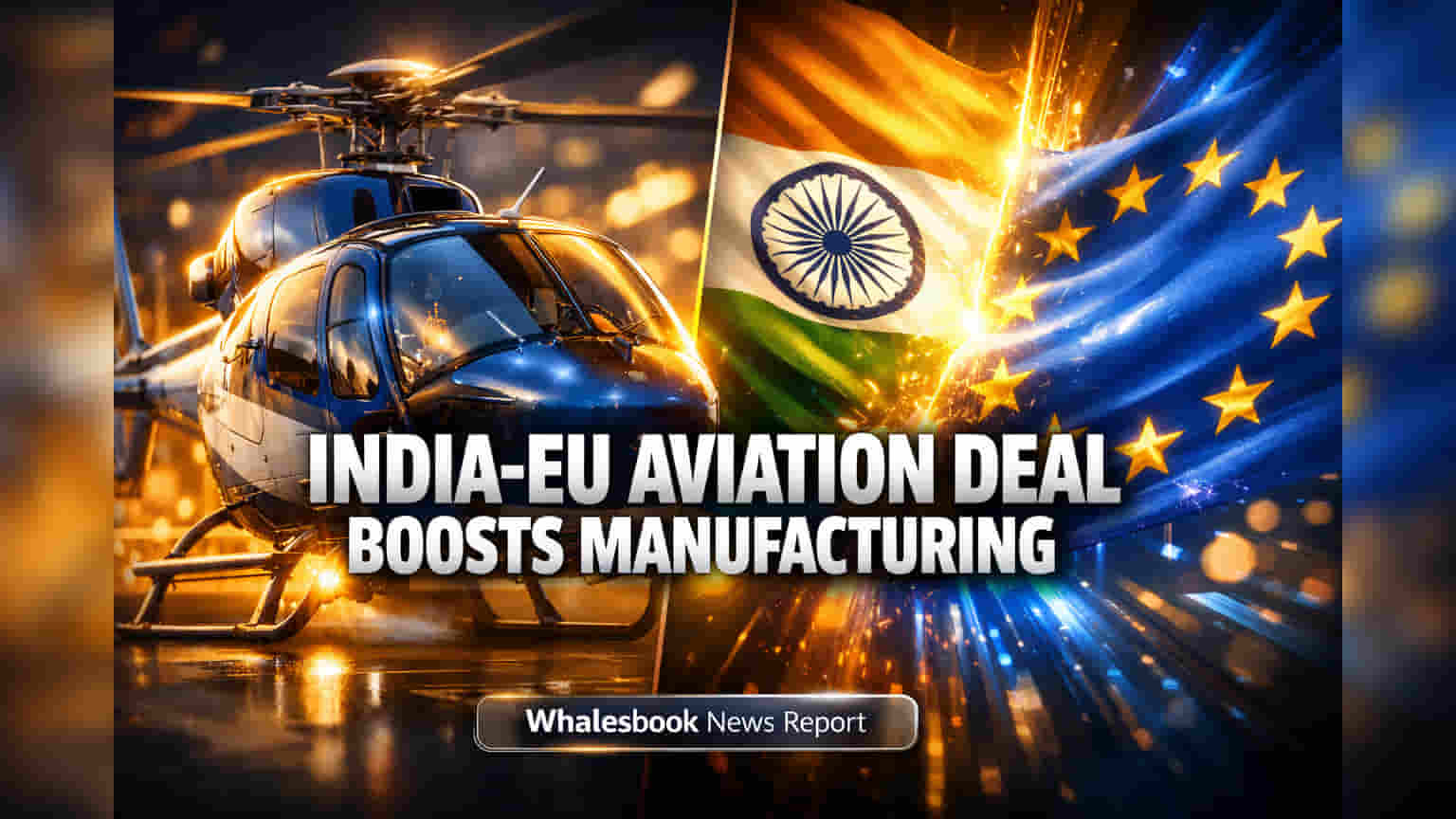
The new working arrangement between India and the European Union is set to position India as a key manufacturing hub in the global aerospace supply chain. This pact goes beyond simple cooperation, aiming for tangible industrial integration that could drive foreign investment and technological transfer into the country's growing aviation sector.
Boosting Aviation Manufacturing
This EU-India pact focuses on strengthening industrial collaboration, particularly in aligning manufacturing processes with strict European safety standards. It is expected to significantly boost the 'Make in India' initiative in aerospace. A key outcome will be the assembly of Airbus Helicopters' H125/AS350 models in Karnataka. This deepens bilateral ties and establishes India as a crucial production site for European aircraft makers. Such ventures are projected to draw considerable foreign investment and facilitate vital technology transfers, enhancing India's domestic aerospace capabilities and creating a strong ecosystem for growth, while harmonizing regulations and improving safety.
Global Competition and India's Edge
The global aviation sector is currently dealing with complicated supply chain issues and renewed demand for aircraft. India aims to use this agreement to expand its manufacturing capabilities. However, it faces competition from established aerospace centers and other emerging nations like Brazil and Turkey, which are also building their manufacturing strength through partnerships and government backing. India's strengths include its large domestic market, a growing skilled workforce, and government backing for industrial policies like 'Make in India'. Success, however, depends on smooth integration with European standards and managing technological dependencies. As global aviation firms reassess supply chain resilience, India's increased manufacturing capacity becomes appealing, especially for companies like Airbus. Analysts observe that India's aerospace sector has grown steadily, but this EU deal marks a major step toward large-scale assembly and production matching Western standards.
Challenges and Potential Risks
Despite the positive outlook, India's aerospace ambitions face challenges with this pact. A key concern is that the partnership might focus mainly on foreign manufacturing, potentially limiting the growth of India's own aerospace design and innovation. While 'Make in India' is a priority, relying on foreign aircraft assembly could foster a 'screwdriver economy' rather than achieving true technological independence. Additionally, complex and evolving international aviation regulations could create ongoing compliance burdens for India's Directorate General of Civil Aviation. Compared to established aerospace companies with extensive R&D, Indian firms might find it harder to compete on innovation and long-term product development. Past issues with project delays, bureaucratic obstacles, and the need for constant workforce training remain risks. Companies must balance adopting foreign technology with investing in domestic R&D to foster innovation, not just assembly. European manufacturers' interest might also stem from diversifying away from geopolitically unstable regions, meaning priorities could shift if global dynamics change, potentially leaving India with infrastructure but less partner commitment.
Growth Prospects Ahead
Projections for India's aviation manufacturing sector are cautiously optimistic, strengthened by this strategic pact. The EU's commitment to deeper engagement indicates a long-term plan for growth and aligned regulations. Experts expect the agreement to create new opportunities for investment and exports, boosting demand for parts, services, and more complex manufacturing. Analysts anticipate sector-wide growth, provided the pact is implemented effectively and the government continues to support skill development and research. Long-term success will hinge on India's capacity to advance from assembly to higher-value manufacturing and design contributions within the global aerospace industry.