 Whalesbook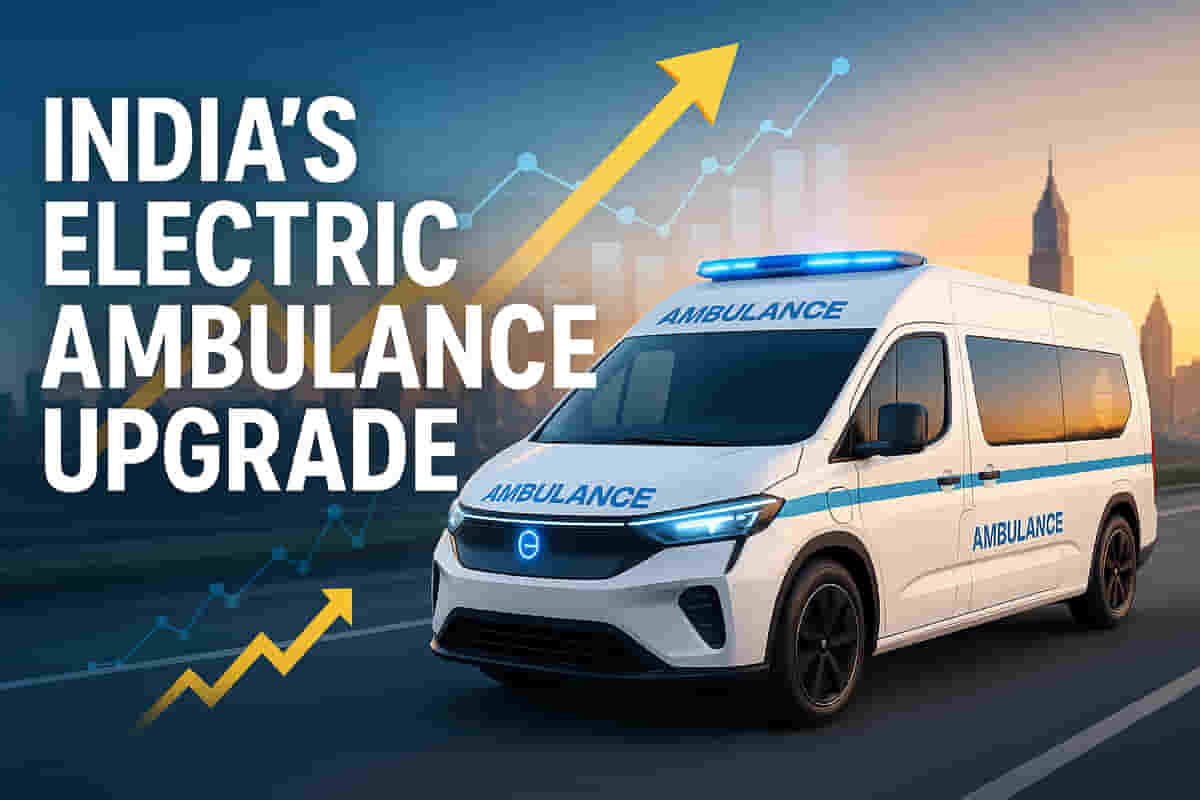


The Ministry of Heavy Industries has introduced draft regulations for electric ambulances (e-ambulances) as part of the ₹10,900 crore PM E-Drive scheme. These rules aim to bolster domestic manufacturing while acknowledging current supply chain realities.
E-Ambulance Localization Draft
The proposed phased manufacturing programme (PMP) allows manufacturers to import traction motors fitted with rare earth magnets, battery management systems, and DC-DC converters until March 3, 2026. This temporary import window is designed to facilitate the initial rollout of electric ambulances.
Conversely, the draft mandates that components such as heating, ventilation, and air-conditioning (HVAC) systems, charging inlets, electric compressors for brakes, traction battery packs, and vehicle control units must be sourced domestically.
Government's Goal
This policy aims to accelerate the adoption of electric ambulances by providing manufacturers with a clear roadmap. The government seeks to ensure that India builds its own capabilities in critical EV components over time, fostering self-reliance and supporting the broader 'Make in India' initiative.
Stakeholder Input and Expert Analysis
The ministry plans to consult with various stakeholders to gather feedback on the draft PMP. Amit Bhatt, India director of the International Council on Clean Transportation, noted that OEMs have been cautious due to uncertain demand for e-ambulances. He believes a staggered PMP will provide adequate time for supply chain development and create a clearer market trajectory.
Scheme Incentives and Industry Interest
The government has allocated ₹500 crore to incentivize electric and hybrid ambulances under the PM E-Drive scheme, marking the first instance of such support for these vehicles. Maruti Suzuki India Ltd and Force Motors Ltd are among the companies that have expressed interest in manufacturing electric or hybrid ambulances under the scheme.
Global Supply Chain Challenges
Securing traction motors, which are crucial for EVs, faces challenges due to global supply constraints, particularly regarding rare earth magnets. China's export controls on these magnets have impacted manufacturers worldwide. India is also pursuing a ₹7,280 crore scheme to establish domestic magnet manufacturing facilities.
Viability of Electric Ambulances
Experts highlight that electric ambulances are a viable use case for electrification, given their high daily utilization (120-200 km). Similar to taxi services in large cities, their frequent use leads to significant fuel consumption and emissions, making electric alternatives environmentally beneficial and potentially cost-effective.
Impact
This policy is expected to stimulate growth in India's electric vehicle component manufacturing sector. Companies involved in producing HVAC systems, battery packs, and control units may see increased demand. It could also encourage investment in domestic rare earth magnet production. The initiative supports the overall EV ecosystem development and investor confidence in the Indian automotive and clean energy sectors.
Impact Rating: 7
Difficult Terms Explained
- Phased Manufacturing Programme (PMP): A government strategy that outlines a timeline for increasing the domestic content of a manufactured product.
- Traction Motors: Electric motors that provide the power to move a vehicle.
- Rare Earth Magnets: Powerful permanent magnets made from rare earth elements, essential for efficient electric motors.
- Battery Management System (BMS): Electronic circuitry that monitors and manages a rechargeable battery pack's health, performance, and safety.
- DC-DC Converter: A device that converts direct current (DC) electricity from one voltage level to another.
- HVAC System: Heating, Ventilation, and Air Conditioning system used for climate control within a vehicle.
- OEM (Original Equipment Manufacturer): A company that manufactures parts or products sold under another company's brand.
- Gross Vehicle Weight (GVW): The maximum loaded weight of a road vehicle like a truck or bus.
- Sops: Short for 'schemes of assistance' or 'special offers'; here referring to government incentives or subsidies.