

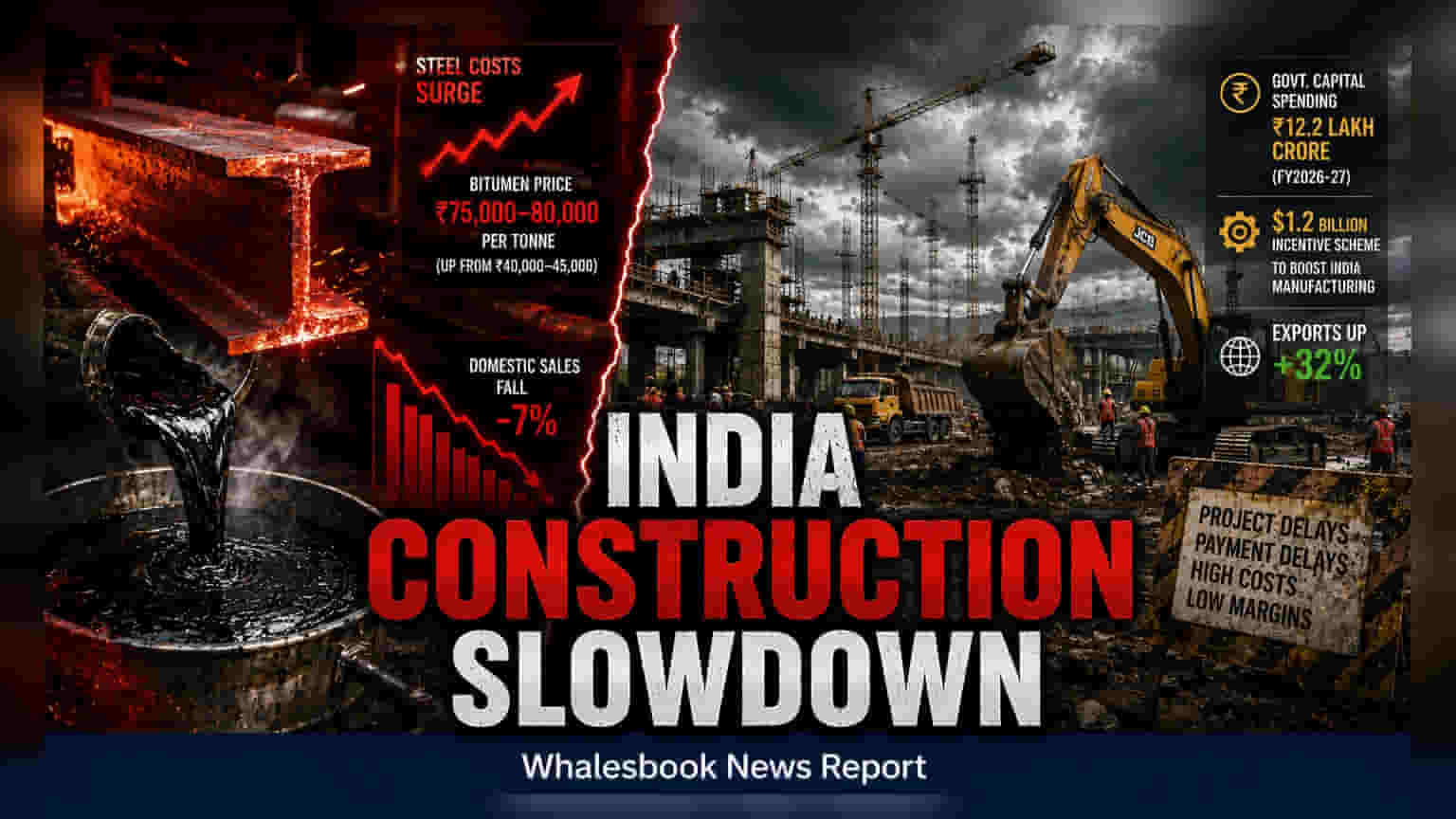
The Indian construction equipment sector expects single-digit growth this fiscal year due to high raw material costs and project execution delays. While domestic sales dropped 7% in FY26, rising exports provide a buffer. Investors may watch how companies navigate margin pressures from expensive steel and bitumen, alongside ongoing government infrastructure investments.
The Indian construction equipment industry, which had been on a path of strong expansion, is now facing a more cautious outlook for the current fiscal year. Industry leaders have revised their expectations to single-digit growth, moving away from previous forecasts. This change in outlook is primarily driven by rising costs for raw materials, particularly steel and bitumen, combined with challenges in moving infrastructure projects forward on the ground.
Impact of Rising Raw Material Costs
Profit margins for the sector are feeling the pressure as input costs remain high. Bitumen, which is essential for road construction, has seen a sharp price increase, with rates moving from around Rs 40,000–45,000 per tonne to as high as Rs 75,000–80,000 per tonne recently. This steep rise has strained the financial plans of many road contractors, especially those who secured projects at earlier, lower price points. When contractor economics suffer, they tend to delay or reduce their spending on new equipment, which directly impacts the order books of manufacturing companies.
Sales Trends and Export Resilience
Performance data from the previous financial year highlights this shift. Total sales in FY26 saw a decline of 2% to 1,36,995 units, compared to 1,40,191 units the year before. Domestic sales specifically dropped by approximately 7% to 1,13,229 units. Industry experts have attributed this to slower implementation of large infrastructure projects and payment delays to contractors, which reduces liquidity throughout the construction ecosystem. However, there is a positive sign from global markets: exports of Indian-manufactured construction equipment surged by roughly 32% in the same period, showing that local manufacturers are becoming more competitive on the global stage.
Infrastructure Spending and Policy Support
Despite the current headwinds, the sector remains a critical part of the nation's economic growth. The government has allocated Rs 12.2 lakh crore for public capital spending in FY2026-27, which is intended to support long-term infrastructure development. Additionally, the government is planning a $1.2 billion incentive scheme to boost the domestic manufacturing of heavy construction and infrastructure equipment. The goal of this policy is to reduce dependence on imports, particularly from China, and strengthen the local supply chain.
Risks and Future Monitorables
Investors should be aware of several risks that could affect the sector. Supply chain vulnerability remains a concern, particularly for bitumen, as a significant portion is imported and remains exposed to maritime trade disruptions, such as those caused by ongoing geopolitical tensions in West Asia. Furthermore, the transition to stricter emission standards (CEV Stage V) has increased production costs, which has made equipment more expensive for smaller buyers who rely on financing. The key monitorables for shareholders moving forward will be the pace of project execution, improvements in payment cycles for contractors, and the ability of companies to manage margin pressure while waiting for the government's infrastructure spending to translate into sustained equipment demand.