

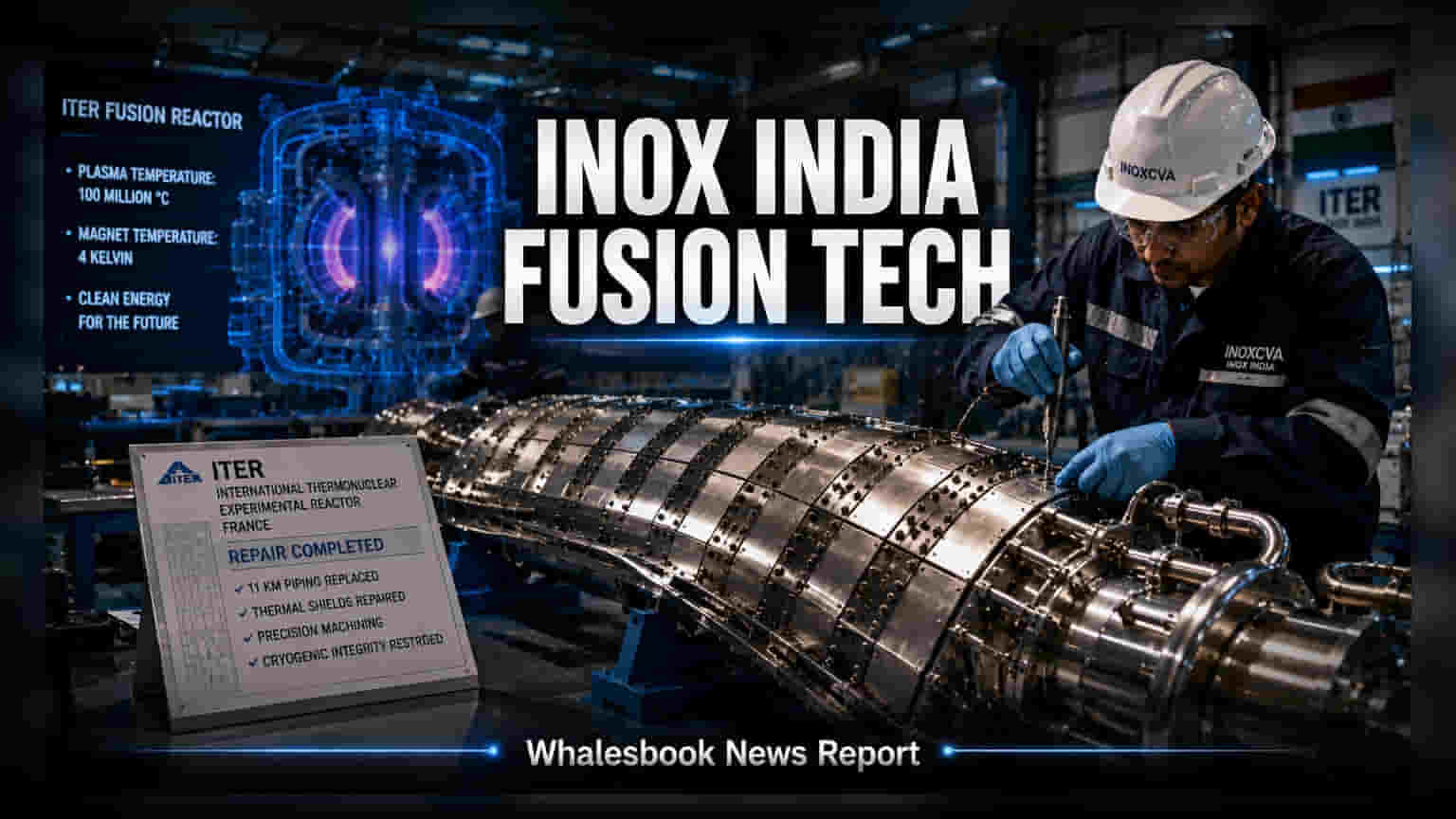
INOX India (INOXCVA) has successfully repaired critical vacuum-vessel thermal shields for the ITER fusion research project in France. This high-precision engineering feat underscores the firm’s technical capabilities in the cryogenic sector. The company reported a 9.18% revenue increase in Q1 FY27, though investors remain focused on margin stability and project execution risks.
Vadodara-based INOX India, operating under the INOXCVA brand, has successfully completed the repair of critical vacuum-vessel thermal shields for the International Thermonuclear Experimental Reactor (ITER) project located in France. The initiative, which aims to replicate solar energy production through plasma confinement, faced a technical challenge after its thermal shields developed microscopic cracks due to chlorine contamination. INOX India’s intervention involved the removal and replacement of 11 kilometers of piping and the precision machining of thermal panels, a task that required high-level engineering accuracy to ensure the components fit back perfectly into the fusion core.
The company’s ability to execute this repair highlights its specialized position in the cryogenic and industrial gas infrastructure sector. INOX India has been associated with the ITER project since 2014, when it first began working on the reactor's cryogenic piping systems. This long-standing relationship serves as a benchmark for its technical capabilities, particularly in environments requiring extreme temperatures, such as maintaining magnets at 4 Kelvin while the plasma core operates at 100 million degrees Celsius.
From a financial perspective, INOX India reported revenue of Rs 370.79 crore in the first quarter of the 2027 financial year, marking a 9.18% increase compared to the same period the previous year. While the revenue growth shows consistent demand, the company's net profit stood at Rs 58.07 crore. Investors are generally monitoring how the company balances its top-line growth with profitability, as maintaining stable margins is essential in this high-tech manufacturing segment.
As of September 3, 2026, the company's stock price was trading at approximately Rs 2,180.15. While the successful completion of this project is a positive operational indicator, the business model faces specific risks that shareholders may track. These include potential volatility in raw material prices, which can impact operating margins, and the inherent complexity of high-precision cryogenic projects, where execution delays or cost overruns can occur. Additionally, as an export-oriented player, the company remains susceptible to currency fluctuations, which can affect profitability.
Looking ahead, the key monitorables for investors will be the company’s ability to maintain its EBITDA margins, which have historically hovered around 23.8%, and the continued expansion of its order book in the industrial gas and cryogenic sectors. The market will also be watching for further project updates from its international contracts and how the company manages operational costs amid fluctuating global supply chain conditions.